

Sponsored

CalvinT

Badlands
Well-Known Member
First Name
Calvin
Joined
Mar 15, 2022
Threads
16
Messages
2,558
Reaction score
3,202
Location
Phoenix, AZ
Vehicle(s)
2002 Subaru WRX Wagon, 2023 Badlands (nonSAS)
Your Bronco Model
Badlands
Clubs
 
Element E50 is not a fire extinguisher by definition. I will swear by them being a bigger hazard to have inside the vehicle than any help they can offer as they can not be shut off.
I bought an Element E50 for my kitchen. I think HalGuard/Halon is better for Automotive use. You can stay back from the fire. Years ago I helped someone whose tire caught on fire. An Element extinguisher would have been completely useless since you have to hold it over the fire.
Sponsored


swamp2

Raptor
Well-Known Member
Joined
Dec 19, 2022
Threads
156
Messages
4,112
Reaction score
4,242
Location
San Diego
Vehicle(s)
911 Carrera S / 4Runner TRD Pro
Your Bronco Model
Raptor
Is that comparable to the crosslinked TEFZEL prowire in the original post? (I’m only familiar with crosslinked fluids for the purpose of proppant transport in hydraulic fracturing operations. Which is another way of saying I’m fuching retarded)
Looks like TEFZEL is really the shit, assuming this AI generated (below my 2 cents) comparison is valid... I've had very mixed results with this kind of research...

My 2 cents/TLDR:

XLPE is a durable and high quality cable jacket suitable for harsh underhood applications in modern vehicles.

If cost is no object and one desires the extra safety/security and design margin, TEFZEL is a superior and amazing cable jacket material choice.

TEFZEL (ETFE) and Cross-Linked Polyethylene (XLPE) are both widely used in wire and cable insulation, but they have different properties that make them suitable for specific applications.

1. Material Composition

TEFZEL (ETFE): It is a type of fluoropolymer, specifically ethylene tetrafluoroethylene, known for its high chemical resistance and durability.

XLPE: Cross-linked polyethylene is a form of polyethylene with cross-links, making it stronger and more heat-resistant than standard polyethylene.

2. Temperature Resistance

TEFZEL (ETFE): High-temperature tolerance, typically up to 150°C (302°F), and can briefly withstand higher temperatures.

XLPE: Usually has a temperature rating of 90°C to 105°C (194°F to 221°F), depending on the specific type and application.

3. Mechanical Strength

TEFZEL (ETFE): Has excellent mechanical strength, good abrasion resistance, and is tough even at lower temperatures.

XLPE: Also has good mechanical strength but is generally less durable than TEFZEL in extreme environments.

4. Chemical Resistance

TEFZEL (ETFE): Extremely resistant to chemicals, oils, and solvents. This makes it suitable for harsh industrial or chemical environments.

XLPE: Offers good chemical resistance but is not as robust against chemicals as TEFZEL, especially against solvents and oils.

5. Dielectric Properties

TEFZEL (ETFE): Has excellent dielectric properties, making it a top choice for high-performance electrical and electronic applications.

XLPE: Also has excellent dielectric properties but is generally used in lower voltage applications than TEFZEL.

6. Flame Resistance

TEFZEL (ETFE): Naturally flame-resistant and has a low smoke emission, which is critical in fire-sensitive environments.

XLPE: While XLPE can be formulated to be flame-retardant, it generally does not have the same inherent fire-resistant properties as TEFZEL.

7. UV and Weather Resistance

TEFZEL (ETFE): Superior UV resistance, making it ideal for outdoor or high-exposure applications like aerospace or solar panels.

XLPE: Can degrade over time when exposed to UV light unless treated with additives to improve weather resistance.

8. Cost

TEFZEL (ETFE): Generally more expensive due to its superior performance in extreme environments and its fluoropolymer nature.

XLPE: More cost-effective, making it suitable for a wider range of general applications, especially where extreme resistance is not required.

Summary:

TEFZEL is ideal for harsh environments where chemical, temperature, and UV resistance are critical.

XLPE is more suitable for general-purpose insulation, especially in electrical applications where cost is a concern but some level of temperature and chemical resistance is needed.

In short, TEFZEL is a high-performance material suitable for specialized applications, while XLPE is more common in consumer and industrial uses where extreme resistance is less of a concern.
EDIT: Looks like TEFZEL is right about 300% the cost of XLPE (in 14 Ga as a common size). 😯😯
 
Last edited:
OP
OP
SierraBronco

SierraBronco

Wildtrak
Well-Known Member
Joined
Mar 27, 2024
Threads
41
Messages
5,216
Reaction score
14,087
Location
USA
Vehicle(s)
2022 Wildtrak, 2024 Wildtrak, 2024 Wildtrak
Your Bronco Model
Wildtrak
Looks like TEFZEL is really the shit, assuming this AI generated (below my 2 cents) comparison is valid... I've had very mixed results with this kind of research...

My 2 cents/TLDR:

XLPE is a durable and high quality cable jacket suitable for harsh underhood applications in modern vehicles.

If cost is no object and one desires the extra safety/security and design margin, TEFZEL is a superior and amazing cable jacket material choice.


EDIT: Looks like TEFZEL is right about 300% the cost of XLPE (in 14 Ga as a common size). 😯😯
The owner of a very large and very expensive aftermarket parts company (74Weld) that recommended that specific company did mention there is a bit of an entry fee to purchase the stuff
 

swamp2

Raptor
Well-Known Member
Joined
Dec 19, 2022
Threads
156
Messages
4,112
Reaction score
4,242
Location
San Diego
Vehicle(s)
911 Carrera S / 4Runner TRD Pro
Your Bronco Model
Raptor
For large diameter power cables I've also found this AI comparison helpful. Since TEFZEL (also known a ETFE) is quite rare in such sizes, TPE is preferred to the more common PVC for the jacket material.

PVC (Polyvinyl Chloride) and TPE (Thermoplastic Elastomer) are two common materials used for cable jackets, but they have distinct properties suited for different applications. Here’s a comparison of the two:

1. Flexibility

PVC: Generally stiffer, especially in colder temperatures. It can become brittle over time or when exposed to extreme conditions.

TPE: More flexible and maintains elasticity over a wider temperature range. It’s often used in applications requiring frequent movement or bending.

2. Durability

PVC: Durable but prone to cracking and hardening with age, particularly when exposed to UV light, heat, or chemicals.

TPE: More resistant to wear and tear, providing better longevity in harsh environments. It resists cracking and holds up better against UV and chemical exposure.

3. Temperature Resistance

PVC: Performs well in moderate temperatures, usually between -20°C and 70°C, but can become brittle in very cold conditions.

TPE: Tolerates a broader temperature range, typically between -40°C and 125°C, making it more suitable for extreme hot or cold environments.

4. Chemical Resistance

PVC: Good resistance to oils, acids, and many chemicals, but may degrade with prolonged exposure.

TPE: Superior chemical resistance, especially to oils, solvents, and fuels, making it ideal for industrial applications.

5. Environmental Impact

PVC: Contains chlorine and other additives, which can release harmful substances during production, disposal, or in case of fire (emits toxic fumes).

TPE: More environmentally friendly, often considered a "greener" option. It is non-toxic and recyclable, without the harmful chlorine content found in PVC.

6. Cost

PVC: More cost-effective and widely available, making it a common choice for general-purpose applications.

TPE: Generally more expensive than PVC due to its enhanced performance characteristics, but the longer lifespan may justify the cost for certain uses.

7. Applications

PVC: Often used in low-cost, indoor, or general-purpose cables, such as household appliances, telecommunications, and basic electrical wiring.

TPE: Commonly found in high-performance cables, including automotive wiring, robotics, outdoor or industrial cables, and applications where flexibility and resistance to harsh conditions are needed.

Summary:

PVC is a cheaper, stiffer, and more common material, suitable for standard, indoor, or low-demand environments.

TPE offers superior flexibility, durability, and environmental resistance, making it the better choice for demanding or harsh environments, albeit at a higher cost.
 

swamp2

Raptor
Well-Known Member
Joined
Dec 19, 2022
Threads
156
Messages
4,112
Reaction score
4,242
Location
San Diego
Vehicle(s)
911 Carrera S / 4Runner TRD Pro
Your Bronco Model
Raptor
The owner of a very large...aftermarket parts company (74Weld)
Ha, they are a very small/specialty company here in San Diego. Great yes, large no.
 

Sponsored

Tye

Raptor
Well-Known Member
First Name
Tye
Joined
Oct 26, 2020
Threads
74
Messages
1,047
Reaction score
1,187
Location
San Francisco
Vehicle(s)
Porsche GT3, Landrover Defender V8, BMW X3 Msport
Your Bronco Model
Raptor
Clubs
 
Aside from carrying a handheld extinguisher, if you really want to cover your bases install an electric or mechanical fire suppression system. Have this is the race car, strongly considering putting one in the braptor.

https://www.lifeline-fire.co.uk/zero-360-series

FWIW, Novec 1230 was trademarked by 3M so the exact same alternative is zero-fk.
 
OP
OP
SierraBronco

SierraBronco

Wildtrak
Well-Known Member
Joined
Mar 27, 2024
Threads
41
Messages
5,216
Reaction score
14,087
Location
USA
Vehicle(s)
2022 Wildtrak, 2024 Wildtrak, 2024 Wildtrak
Your Bronco Model
Wildtrak
Aside from carrying a handheld extinguisher, if you really want to cover your bases install an electric or mechanical fire suppression system. Have this is the race car, strongly considering putting one in the braptor.

https://www.lifeline-fire.co.uk/zero-360-series

FWIW, Novec 1230 was trademarked by 3M so the exact same alternative is zero-fk.
Well that’s badass
 

murphtron

Badlands
Well-Known Member
First Name
T
Joined
Mar 11, 2021
Threads
18
Messages
579
Reaction score
713
Location
Berkeley, CA
Vehicle(s)
2023 Badlands, 2013 Toyota Highlander, 2000 Miata
Your Bronco Model
Badlands
Clubs
 
I bought an Element E50 for my kitchen. I think HalGuard/Halon is better for Automotive use. You can stay back from the fire. Years ago I helped someone whose tire caught on fire. An Element extinguisher would have been completely useless since you have to hold it over the fire.
Fire blankets are generally recommended by fire departments for kitchens. Easier to use and more effective than extinguishers. (Despite what the Wikipedia article says about the Netherlands not recommending them for grease fires). Fire blankets are effective on kitchen grease fires.
 
OP
OP
SierraBronco

SierraBronco

Wildtrak
Well-Known Member
Joined
Mar 27, 2024
Threads
41
Messages
5,216
Reaction score
14,087
Location
USA
Vehicle(s)
2022 Wildtrak, 2024 Wildtrak, 2024 Wildtrak
Your Bronco Model
Wildtrak
Fire blankets are generally recommended by fire departments for kitchens. Easier to use and more effective than extinguishers. (Despite what the Wikipedia article says about the Netherlands not recommending them for grease fires). Fire blankets are effective on kitchen grease fires.
I recognize you guys started talking about kitchen fires, but I did have an acquaintance suggest carrying fire blankets as an alternative to the Halon extinguisher. Sounds cool but…couldn’t get our hood open. Fire blankets wouldn’t have been of any use for our particular fire.
 

Sponsored
OP
OP
SierraBronco

SierraBronco

Wildtrak
Well-Known Member
Joined
Mar 27, 2024
Threads
41
Messages
5,216
Reaction score
14,087
Location
USA
Vehicle(s)
2022 Wildtrak, 2024 Wildtrak, 2024 Wildtrak
Your Bronco Model
Wildtrak
Updated the list to reflect T class fuses. Very interesting devices. Standard AMG and ANL fuses have much lower AIC (ampere interference capacity) which, as I understand it, can result in the filament welding itself back together if exceeded. AMG is the lowest at 2000 AIC and can easily be exceeded by one of our stock batteries. (I believe ours come out to ~3300 during a max discharge event. If someone actually knows please chime in) ANL seems to typically be around 6000, but I’m now wary of what these fuses are really rated at. In the other thread a video is shared where small 2A fuses were tested and some didn’t pop until 8-10 amps. Quite frightening. Today I looked up ANL fuses and the cheapest 100A fuses available from Amazon popped within 1%, where the more expensive Blue Sea fuses (thought to be reputable) didn’t pop until 224! So I don’t even know what to believe anymore. I hate everything.

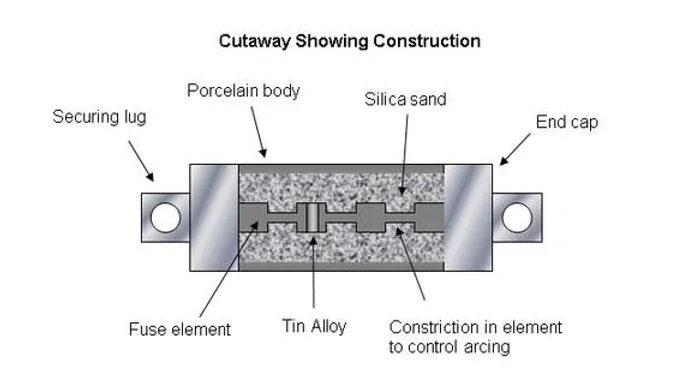
Back to AIC-assuming everything is exactly the same-amp rating, connections, fuse block, wiring, in a maximum discharge event there exists a potential that the cheaper AMG and ANL fuses can pop but weld themselves back together, closing your circuit and burning your shit down. Enter the T-class fuse with a 20,000 AIC. It’s pretty interesting as it is filled with sand. The sand acts as a medium to help dissipate heat to prevent popping during a momentary spike that might otherwise be harmless. They are ideal for circuits where the motor turns on and off frequently-great description of a winch. In the event that you do overload the circuit, the sand prevents arcing and keeps the circuit open. Very neat. But they are expensive, especially when jumping up to a 500A fuse. 400A is ~$45 and the best I could find for what seems to be something not of sketchy origins (no guarantees) is $130. Without the $60 600A fuse holder.

https://shop.pkys.com/class-t-500

Ordered from these guys and they had the “order shipped” email sent in less than an hour. With a tracking number.

Ford Bronco Fire Extinguisher & Tested / Approved Electrical Parts Compilation Thread IMG_3669
 
Last edited:

CalvinT

Badlands
Well-Known Member
First Name
Calvin
Joined
Mar 15, 2022
Threads
16
Messages
2,558
Reaction score
3,202
Location
Phoenix, AZ
Vehicle(s)
2002 Subaru WRX Wagon, 2023 Badlands (nonSAS)
Your Bronco Model
Badlands
Clubs
 
Fire blankets are generally recommended by fire departments for kitchens. Easier to use and more effective than extinguishers. (Despite what the Wikipedia article says about the Netherlands not recommending them for grease fires). Fire blankets are effective on kitchen grease fires.
Maybe the fire departments where you are. Not ones local to me.

Consumer Reports compared five fire extinguishers and two fire blankets. The dry chemical fire extinguishers worked best to extinguish a kitchen fire. The fire blankets would make a fire smaller but didn't extinguish the flames completely because air could still get to the fire.

They rated the fire blankets as least effective of the products they tested.
 
OP
OP
SierraBronco

SierraBronco

Wildtrak
Well-Known Member
Joined
Mar 27, 2024
Threads
41
Messages
5,216
Reaction score
14,087
Location
USA
Vehicle(s)
2022 Wildtrak, 2024 Wildtrak, 2024 Wildtrak
Your Bronco Model
Wildtrak
Updated OP to include the following-


Continuing the learning path aka going down a rabbit hole, and this video probably gave me more anxiety than any feature film I’ve watched. Literally jaw dropping.

For the too long, didn’t watch crowd-he puts 150 amps through a 100 amp fuse and waits, while checking temperatures. It takes…a long time…to finally pop. At least 12-15 minutes. But during this time it exceeded his flir device at >800F for what seemed like a frightening amount of time. The temperature also works it’s way into the 4/0 wiring, heating the wire all the way to the source and to the point the heat shrink adhesive melts.


CalvinT

Badlands
Well-Known Member
First Name
Calvin
Joined
Mar 15, 2022
Threads
16
Messages
2,558
Reaction score
3,202
Location
Phoenix, AZ
Vehicle(s)
2002 Subaru WRX Wagon, 2023 Badlands (nonSAS)
Your Bronco Model
Badlands
Clubs
 
Updated OP to include the following-


Continuing the learning path aka going down a rabbit hole, and this video probably gave me more anxiety than any feature film I’ve watched. Literally jaw dropping.

For the too long, didn’t watch crowd-he puts 150 amps through a 100 amp fuse and waits, while checking temperatures. It takes…a long time…to finally pop. At least 12-15 minutes. But during this time it exceeded his flir device at >800F for what seemed like a frightening amount of time. The temperature also works it’s way into the 4/0 wiring, heating the wire all the way to the source and to the point the heat shrink adhesive melts.


I made a comment about this on this thread, post #229

https://www.bronco6g.com/forum/thre...ire-extinguisher-saves-the-day.101905/page-16
 
OP
OP
SierraBronco

SierraBronco

Wildtrak
Well-Known Member
Joined
Mar 27, 2024
Threads
41
Messages
5,216
Reaction score
14,087
Location
USA
Vehicle(s)
2022 Wildtrak, 2024 Wildtrak, 2024 Wildtrak
Your Bronco Model
Wildtrak
Doing some reflection on this whole thing and I really appreciate all the feedback that has been given to both threads.

Also wanted to once again thank @Canyon Coolers for reaching out about the corrosion from the dry element fire extinguishers. The Bronco has been sitting since we got back and conflicts have come up that’s prevented us from being able to swap out the parts. Had we not had a heads up on the corrosion I can’t imagine what it would look like under the hood. That shit was already forming on the ECU and other components on day two. And it took us washing it down five different times to get things under control.

People often don’t speak up on issues as they don’t want to seem controversial or offensive. But again-really glad you did.

Alright-back to learning.
Sponsored


Top