

I accidentally put in once….ran fine, but at half a tank I topped it off with 91. In a turbo vehicle I don’t think I would risk doing it on a regular basis….and technically the manual does say 87 or higher.
Sponsored
You learn something new everyday, had no idea living on the right coast.No, 85 octane. It is common out west. Every station here has it.

Yup! I run it in my 1996 Isuzu Trooper, but wouldn't in the Bronco.As others have said, what worked previously with carbureted or naturally aspirated engines doesn't work on engines with turbos. And both of the Bronco's engines have turbos.
Octane rating signifies the fuel's resistance to pre-mature detonation. At high altitudes, the air is less dense, which means less oxygen in the air, which means it naturally is more resistant to detonation than air at lower altitudes. But if you have a turbo compressing the air, none of that is valid.
In theory... the knock sensors should save the engine from destruction. But I wouldn't make a habit of it and generally wouldn't try it outside of emergencies.


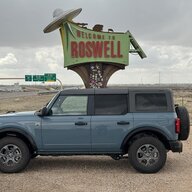


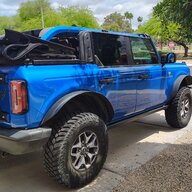
It's the American way.A poll? Like winning the poll establishes truth?
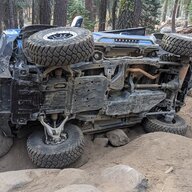
My hunch is it would be fine for that reason. I filled up in a high elevation town a while back and considered the 85 but because I was going to be back to lower elevation before I burned it off I paid the extra for 87.I used 85 octane all the time when living in Colorado no issues. My understanding was at higher altitudes, the lower air density meant less likely to pre-detonate (knock), hence 85 octane at higher altitude was like 87. (But I didn't own turbo engines.)