

Sponsored

I need help validating my power distribution idea

OP
OP
evgenyvasenev

evgenyvasenev

Badlands
Well-Known Member
First Name
Evgeny
Joined
Oct 23, 2020
Threads
25
Messages
962
Reaction score
773
Location
Gig Harbor, WA
Website
www.instagram.com
Vehicle(s)
Ford Bronco Badlands
Your Bronco Model
Badlands
Clubs
 
Yeah I agree with @cr117 again (we're on a roll tonight :wink:). There really is no harm in double-fusing.

But to more broadly answer your question... the fuse should be as close to the power source as possible, because fuses can only protect "downstream". (This is one of the reasons why the fuse box in the Bronco is right next to the battery.)

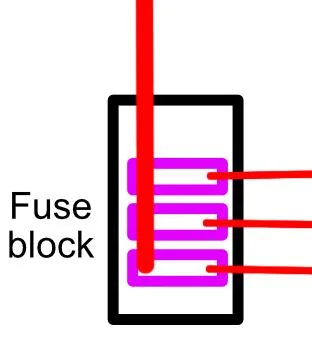
So something like this is (probably) okay. It's not ideal, but the chances of having an issue are slim.

1720844923689-wc.jpg


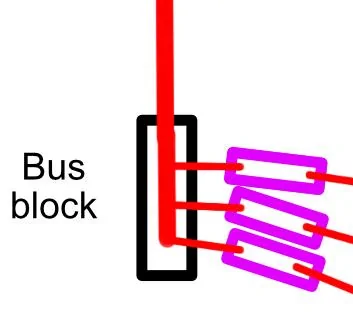
Something like this is NOT okay, because it's only really protecting the device itself... it's doing literally nothing to protect the wiring.
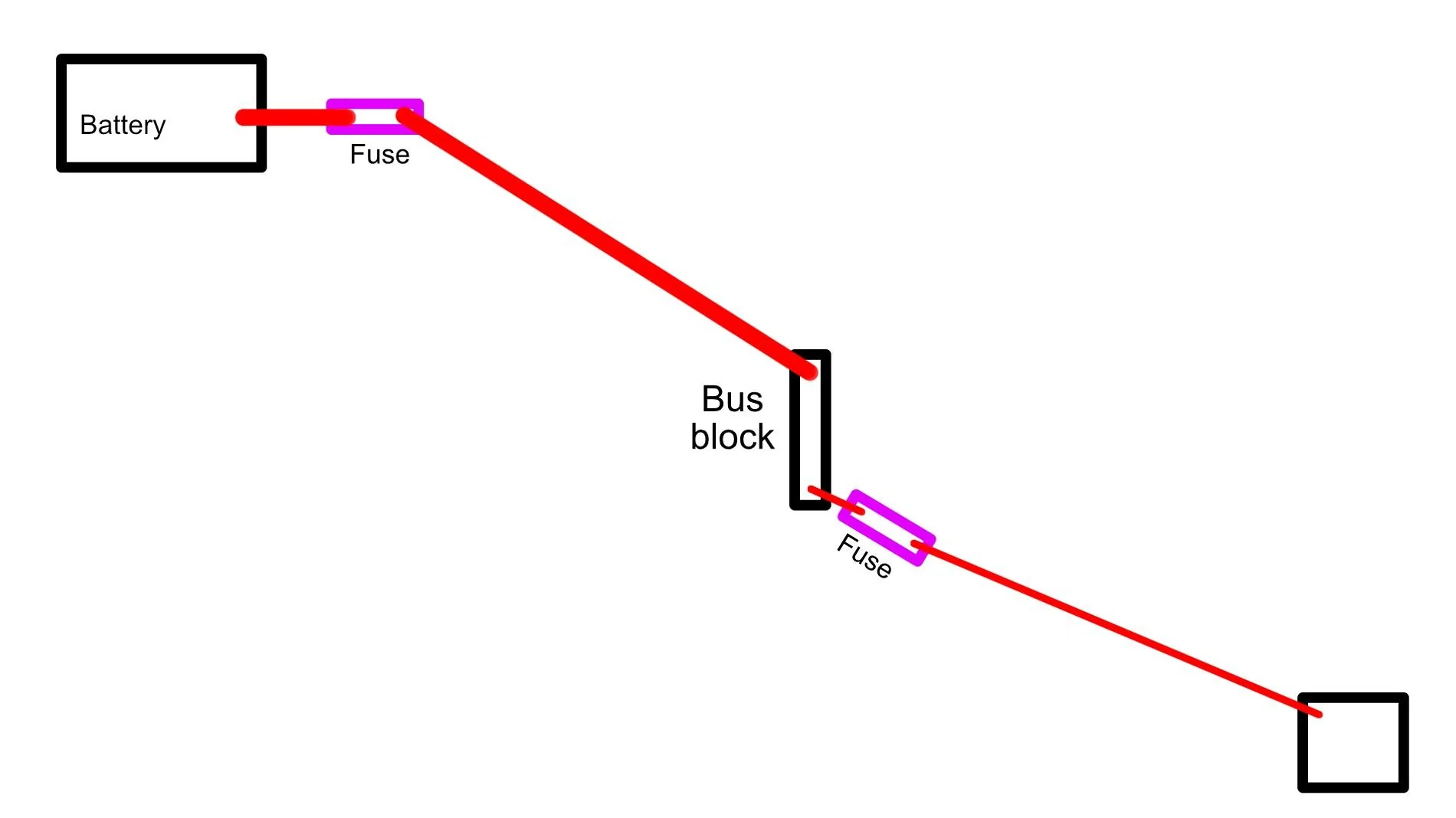
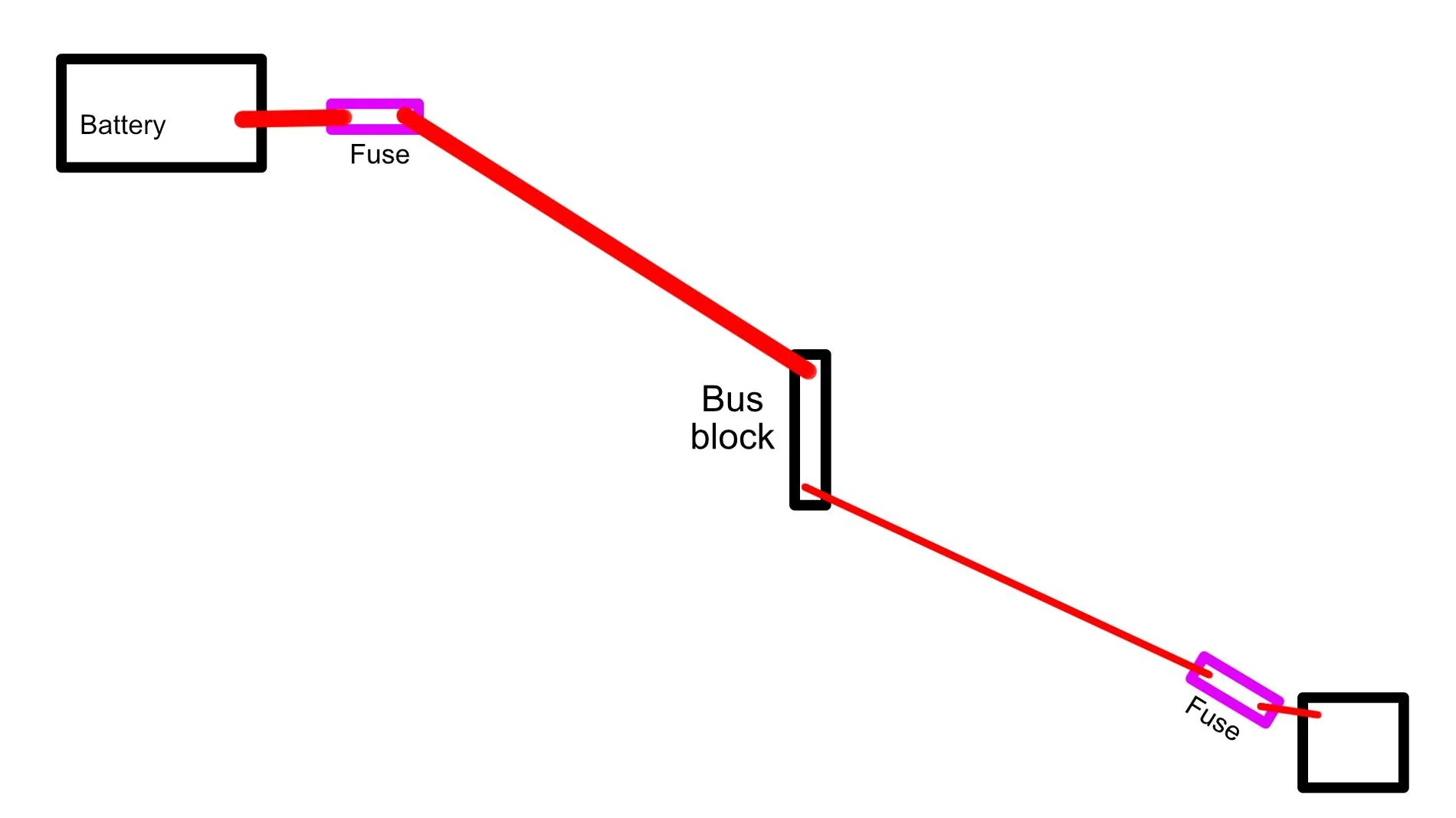
1720844955656-x0.jpg
I this case the bus block will be full of fuses, which is great, right?
Sponsored


RagnarKon

Badlands
Well-Known Member
First Name
Bryan
Joined
Aug 5, 2021
Threads
41
Messages
5,452
Reaction score
14,494
Location
New England
Vehicle(s)
Ford Bronco, Escape, Focus
Your Bronco Model
Badlands
Clubs
 
I this case the bus block will be full of fuses, which is great, right?
Yeah basically just creating an extremely messy version of a fuse box. Technically the fuse box is still the slightly safer option, but again... the chances of something happening as slim as long as the in-line fuses are within a few inches of the bus block. And electrically they're more or less identical.

But I still personally would MUCH rather do this:

Ford Bronco I need help validating my power distribution idea 1720845749556-i9


Than this:

Ford Bronco I need help validating my power distribution idea 1720845796427-ca
 

RagnarKon

Badlands
Well-Known Member
First Name
Bryan
Joined
Aug 5, 2021
Threads
41
Messages
5,452
Reaction score
14,494
Location
New England
Vehicle(s)
Ford Bronco, Escape, Focus
Your Bronco Model
Badlands
Clubs
 
Also... here is an example of a fuse block that supports both high-amperage circuits (like what you need for your inverter), and low amperage circuits like what you need for your USB charger.

Those higher amperage lines are using MIDI fuses which is what @cr117 was referring to earlier.

There are probably MANY more better options online, I just spent 20 seconds searching and found that to use as an example.
 

cr117

Badlands
Well-Known Member
Joined
May 18, 2023
Threads
11
Messages
717
Reaction score
1,923
Location
PNW
Vehicle(s)
Bronco, EV6
Your Bronco Model
Badlands
Clubs
 
I second the Blue Sea products, plus they’re local (Bellingham).
 

Doc TOC

Badlands
Well-Known Member
First Name
John
Joined
Apr 4, 2023
Threads
1
Messages
301
Reaction score
750
Location
Los Angeles
Vehicle(s)
Expedition Max, Fusion Hybrid, BMW 5 Series, HD Road King
Your Bronco Model
Badlands
I think you may be ahead of yourself on this. I am not dis'ing you on your idea. I feel there are many issues you are not aware of and currently don't have the knowledge to work through it before you spend a lot of money. I would not want you to destroy your electrical system based on inadequate design.

You are asking design questions about a power circuit and only providing about a third of the information. You may as well said "I am designing a cargo plane to carry big stuff and I have these engines, these tires, and this fuselage. Should I use aluminum or steel ramps?"

You haven't disclosed what devices your are running, what their peak/continuous ratings are, their wire size and lengths, how many devices will piggyback the circuit to the battery, what battery's you are using, etc. to name a few.

Electrical design is not like plumbing. Electrons do not flow through a wire like water in a pipe. The electrons are pushed across the metal lattice surface by a magnetic current. A magnetic motive goes from the negative side of the power source through the wire back to the positive side of the power source. That is why the calculator said a round trip. No circle (aka circuit) -no movement - no voltage difference to make work (electron losses).

There are different types of 2 AWG wire. You should look for solid copper (not CCA) stranded wire rated for the total wattage you will draw (the inverter plus the 12V outlets). Most automotive battery 2AWG is 19 strand unilay. It is more flexible and a thinner diameter due to how the wires are wound. Home Depot stuff is concentric - designed for mechanical strength and crush resistance - thicker and harder to bend. And your 15 feet is probably longer due to bends and humps when routing. Remember low # AWG has bend radius limits (no sharp 90's).

An inverter has a peak draw and a continuous draw. It's name plate wattage is the continuous draw. Your wiring has to be designed for the peak draw. Keep in mind a pure sine AC inverter will have slightly more draw and resistance than a square wave AC inverter for a given delivered amperage. 700W implies multiple devices running simultaneously. How sensitive are those devices to voltage fluctuation. Not all DC-to-AC inverters are designed the same. RV market inverters tend to provide better internal circuit monitoring than single purpose inverters (the ones in auto stores/on-line).

An inverter is NOT designed to be branched post-outlet with a bus and further lengths of wire. They have a limit on how long specific wire gauges can be run from the inverter outlet to the device draw point. You would have to derate the output wattage at the very least. Added wire increases resistance, which increases draw, which blows inverters/fuses/battery plates/jumpers/ etc. The extension cord - No bueno.

And remember, your circuit is from the power source (battery) to the usage point (device motor/LEDs/chips/coils), and everything in between, and back to the battery. You have to take into consideration the different gauges, amperage, fusing, peaks, transients and swells, PBC board ratings, etc. that exist in that circuit to determine how to control the voltages. Plus you have DC-to-AC-to-DC flow with the inverter.

When the guys say "ground to the frame", they mean the chassis frame, not a body panel bolt. The bolts in the aluminum parts of the body are electrically isolated from the frame. The aluminum is glued onto the steel. Not bolted. Not welded. In a few places, riveted. It has to be electrically isolated to prevent corrosion at the juncture points.

Adding amperage above the circuit rating makes the circuit LESS SAFE. You also need to consider what the safety ratings for the batteries/ charging system are. You are sharing the vehicle loads with your other plug-in devices. Your dual battery management system will set limits on safe operating amperages over a given time period.

Again, just some food for thought. Hardly an adequate examination of what your true intentions are.

I suggest you consult an electrical engineer with automotive experience. Cars are not houses. They are not wired the same way or get power the same way. Ask the automakers how all their recalls are going on their battery management systems (EV and ICE alike).

Have you evaluated buying a separate inverter gas generator? This may be your better option, and probably less expensive and less work. Most of what you are trying to do is already designed into a quality AC inverter generator. Use a single use AC inverter plugged into the car power point while you drive. Use the generator while you are parked. Your limits will be more obvious and easier to manage.
 

Sponsored
OP
OP
evgenyvasenev

evgenyvasenev

Badlands
Well-Known Member
First Name
Evgeny
Joined
Oct 23, 2020
Threads
25
Messages
962
Reaction score
773
Location
Gig Harbor, WA
Website
www.instagram.com
Vehicle(s)
Ford Bronco Badlands
Your Bronco Model
Badlands
Clubs
 
I think you may be ahead of yourself on this. I am not dis'ing you on your idea. I feel there are many issues you are not aware of and currently don't have the knowledge to work through it before you spend a lot of money. I would not want you to destroy your electrical system based on inadequate design.

You are asking design questions about a power circuit and only providing about a third of the information. You may as well said "I am designing a cargo plane to carry big stuff and I have these engines, these tires, and this fuselage. Should I use aluminum or steel ramps?"

You haven't disclosed what devices your are running, what their peak/continuous ratings are, their wire size and lengths, how many devices will piggyback the circuit to the battery, what battery's you are using, etc. to name a few.

Electrical design is not like plumbing. Electrons do not flow through a wire like water in a pipe. The electrons are pushed across the metal lattice surface by a magnetic current. A magnetic motive goes from the negative side of the power source through the wire back to the positive side of the power source. That is why the calculator said a round trip. No circle (aka circuit) -no movement - no voltage difference to make work (electron losses).

There are different types of 2 AWG wire. You should look for solid copper (not CCA) stranded wire rated for the total wattage you will draw (the inverter plus the 12V outlets). Most automotive battery 2AWG is 19 strand unilay. It is more flexible and a thinner diameter due to how the wires are wound. Home Depot stuff is concentric - designed for mechanical strength and crush resistance - thicker and harder to bend. And your 15 feet is probably longer due to bends and humps when routing. Remember low # AWG has bend radius limits (no sharp 90's).

An inverter has a peak draw and a continuous draw. It's name plate wattage is the continuous draw. Your wiring has to be designed for the peak draw. Keep in mind a pure sine AC inverter will have slightly more draw and resistance than a square wave AC inverter for a given delivered amperage. 700W implies multiple devices running simultaneously. How sensitive are those devices to voltage fluctuation. Not all DC-to-AC inverters are designed the same. RV market inverters tend to provide better internal circuit monitoring than single purpose inverters (the ones in auto stores/on-line).

An inverter is NOT designed to be branched post-outlet with a bus and further lengths of wire. They have a limit on how long specific wire gauges can be run from the inverter outlet to the device draw point. You would have to derate the output wattage at the very least. Added wire increases resistance, which increases draw, which blows inverters/fuses/battery plates/jumpers/ etc. The extension cord - No bueno.

And remember, your circuit is from the power source (battery) to the usage point (device motor/LEDs/chips/coils), and everything in between, and back to the battery. You have to take into consideration the different gauges, amperage, fusing, peaks, transients and swells, PBC board ratings, etc. that exist in that circuit to determine how to control the voltages. Plus you have DC-to-AC-to-DC flow with the inverter.

When the guys say "ground to the frame", they mean the chassis frame, not a body panel bolt. The bolts in the aluminum parts of the body are electrically isolated from the frame. The aluminum is glued onto the steel. Not bolted. Not welded. In a few places, riveted. It has to be electrically isolated to prevent corrosion at the juncture points.

Adding amperage above the circuit rating makes the circuit LESS SAFE. You also need to consider what the safety ratings for the batteries/ charging system are. You are sharing the vehicle loads with your other plug-in devices. Your dual battery management system will set limits on safe operating amperages over a given time period.

Again, just some food for thought. Hardly an adequate examination of what your true intentions are.

I suggest you consult an electrical engineer with automotive experience. Cars are not houses. They are not wired the same way or get power the same way. Ask the automakers how all their recalls are going on their battery management systems (EV and ICE alike).

Have you evaluated buying a separate inverter gas generator? This may be your better option, and probably less expensive and less work. Most of what you are trying to do is already designed into a quality AC inverter generator. Use a single use AC inverter plugged into the car power point while you drive. Use the generator while you are parked. Your limits will be more obvious and easier to manage.
Basically that I need is to have 110V outlet in my trunk and a few 12 V. Plus a hardwired lamp and a powerline for Starlink mini (up to 40w). I want to have an inverter to be able to plug in chargers (batteries, Jackery, etc). Maybe sometimes something else (not a kettle for sure). What would be your suggestion here?
 
Last edited:

TerryB

Badlands
Well-Known Member
First Name
Terry
Joined
Feb 25, 2024
Threads
3
Messages
107
Reaction score
78
Location
Banning, CA
Vehicle(s)
24 Badlands Sasquatch, 2019 Jeep Wrangler Rubicon
Your Bronco Model
Badlands
I agree with Doc TOC regarding the gas generator. While I like your willingness to tackle a project like this, it is well beyond a beginner project.
 
OP
OP
evgenyvasenev

evgenyvasenev

Badlands
Well-Known Member
First Name
Evgeny
Joined
Oct 23, 2020
Threads
25
Messages
962
Reaction score
773
Location
Gig Harbor, WA
Website
www.instagram.com
Vehicle(s)
Ford Bronco Badlands
Your Bronco Model
Badlands
Clubs
 
@cr117
@RagnarKon
@Doc TOC

I think it would be better if I describe my needs clearly and see if this setup makes sense or I need to simplify it somehow. Could you please take a look?

I have 3 major areas:

Hardwired devices:
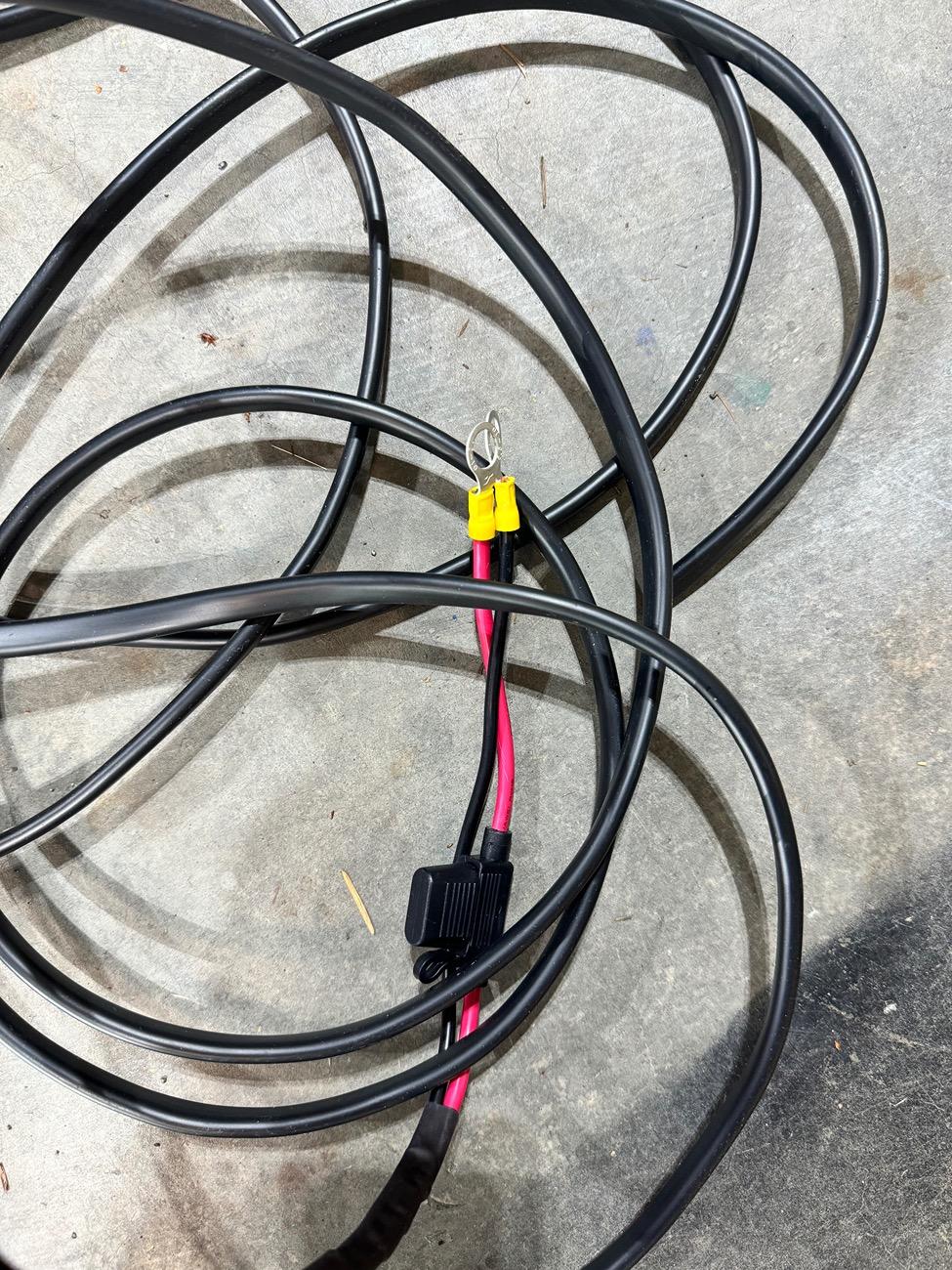
  • 2 12V outlets for a cooler. The cooler takes 60W I guess and it has own power line to the battery, but I wanted to connect it to the hub and reduce cable management. But I can run it independently if it's needed. https://www.dometic.com/en-us/outdoor/coolers/accessories/dometic-hardwiring-kit-dc-222471 If I run it independently, it has 15Amp fuse.
  • Starlink Mini dish 40W. Want to hard wire for a case when it's on my roof.
  • An internal light bar. The low 1.4A power draw on the 40" (~.5A on the 12"
  • 12V USB outlet to charge/power phones, Garmin and other small USB devices.
  • 12V connected devices (will be plugged to the second DC outlet (see #1 from above). Do I need to have a bigger fuse or 15 amp is fine for each application (cooler + something from the list)?

General 12V devices:

120V devices (it's where I need an inverter and an outlet). I don't think I will run all of them at the same time, but want to understand If I do, what would happen.
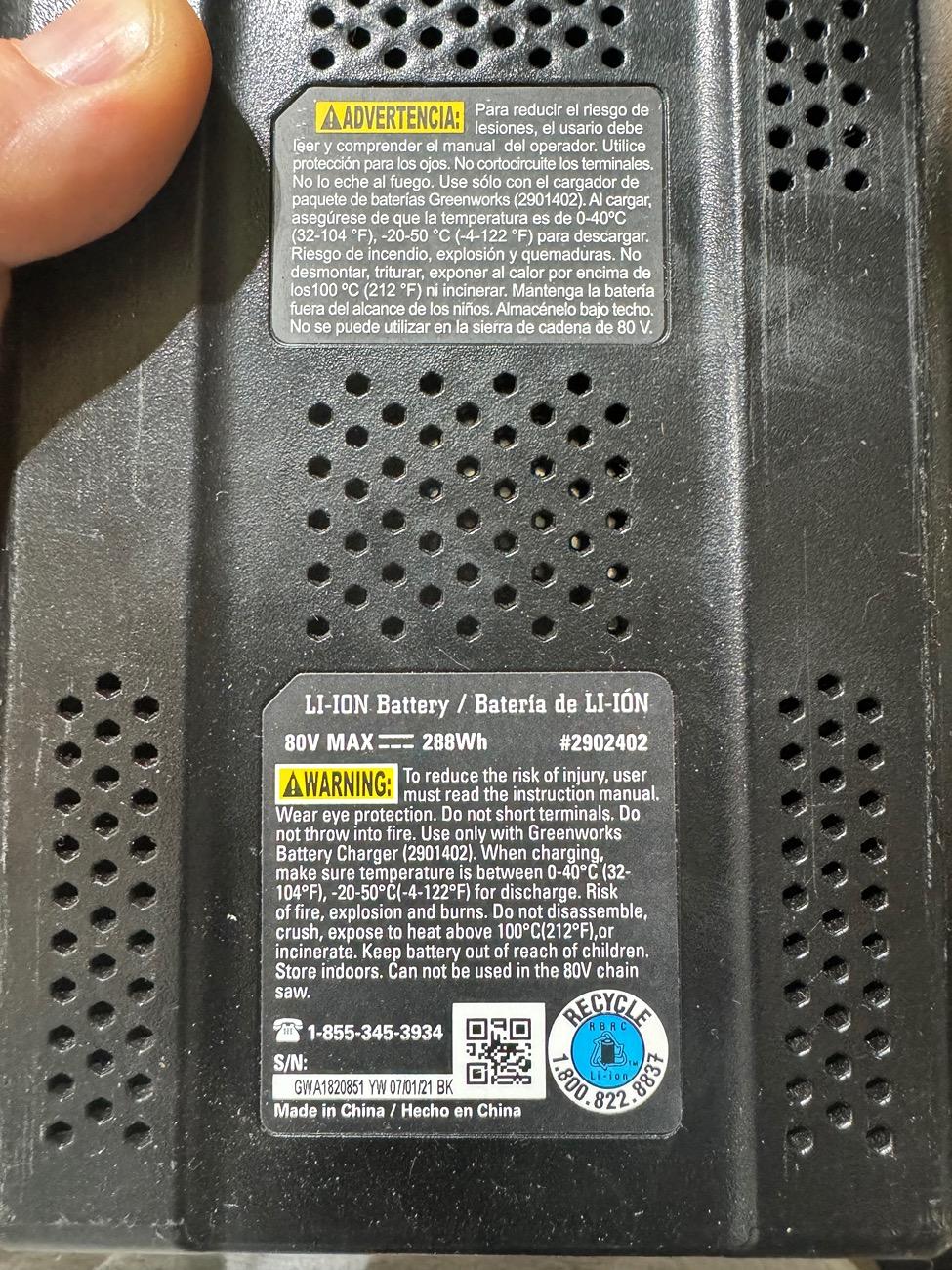
  • Chain saw charger 80V battery
  • Drone battery charger
  • Camera battery charger
  • Heater 200W
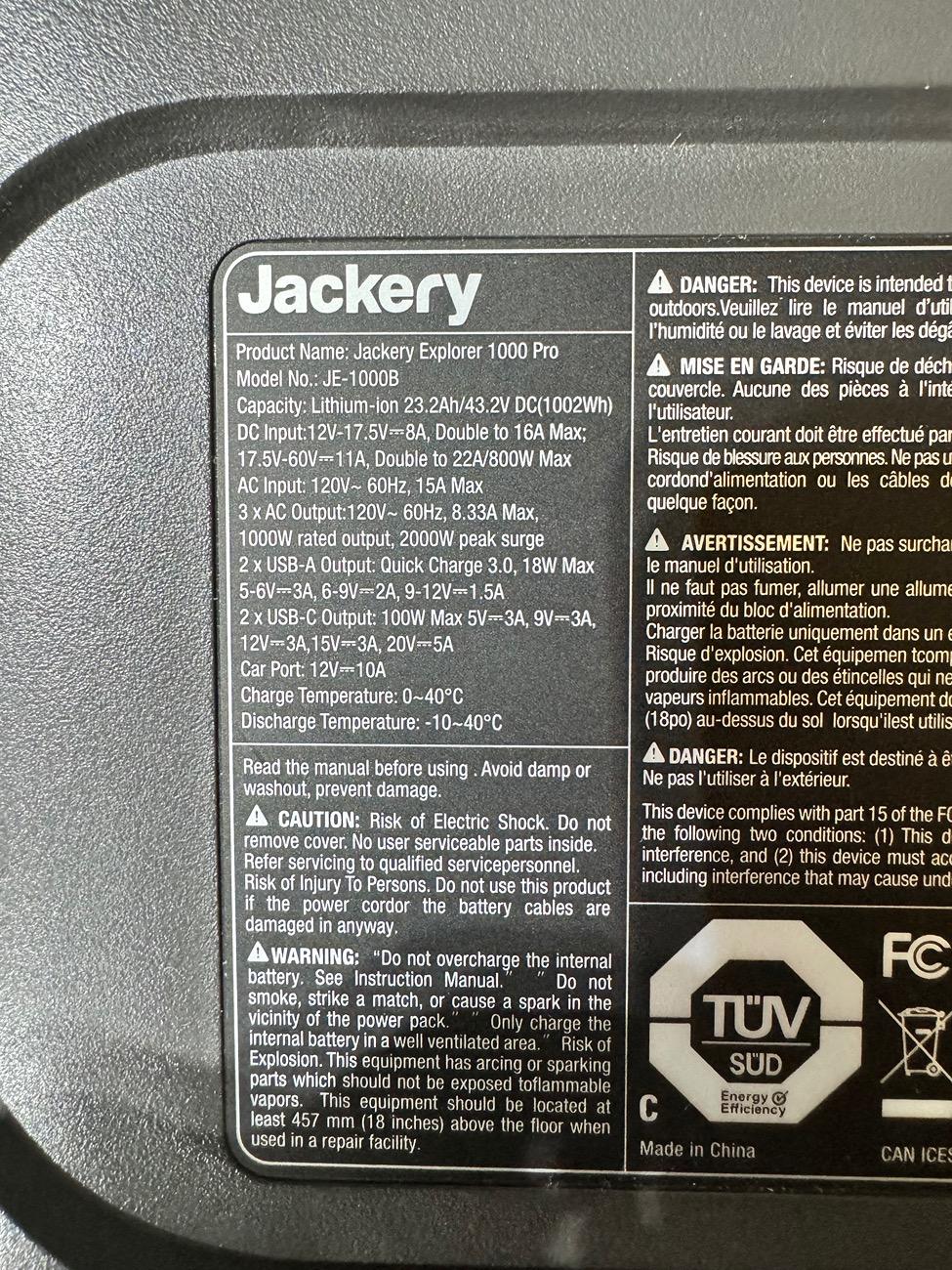
  • Jackery 1000 for faster charging (90% it's gonna be while I am driving)
  • Jackery 300 for faster charging (90% it's gonna be while I am driving)
  • Laptop charger 140W

Ford Bronco I need help validating my power distribution idea IMG_9583


Ford Bronco I need help validating my power distribution idea IMG_9582


Ford Bronco I need help validating my power distribution idea IMG_9581


Ford Bronco I need help validating my power distribution idea IMG_9584


Ford Bronco I need help validating my power distribution idea IMG_9585
 

RimrockPaul

Base
Well-Known Member
First Name
Paul
Joined
Apr 19, 2021
Threads
6
Messages
394
Reaction score
427
Location
Rimrock AZ
Vehicle(s)
2021 Ford F250
Your Bronco Model
Base
I'm kind of new to electrical work and would appreciate some help validating my setup.

I'm planning to install the @genesisoffroad dual battery kit soon and want to add outlets in my trunk. Specifically, I'm installing a 700W inverter and connecting 2 12V outlets (this kit), 1 USB outlet with a voltmeter, and 1 110V outlet. Additionally, I'm considering running an extension cord from the inverter outside and hiding it under the bumper, just in case I need an outlet outside. Here are my questions:

  1. For the 15-foot run to the inverter, it seems I'll need 2 AWG wire according to this calculator. I'm unsure whether the negative wire should be connected to the battery or if connecting it to the body is sufficient. Also, the calculator mentions the distance should be a roundtrip, implying around 30 feet total. Using 2 AWG seems quite substantial...
  2. I plan to install a bus near the inverter (rear passenger quarter) for connecting outlets and other electronics. Is it correct that I need to run these thicker wires to this bus, with everything else (outlets, inverter, etc.) connected to the bus? Is it ok to use this one?
  3. It seems I need to install a fuse; I'm considering a 70 amp fuse. Would this be adequate? Though I don't anticipate exceeding it, would it be safer to opt for a 100 amp fuse (70 for the inverter and 30 for the rest)? Something like that.
  4. Many components come with their own fuses. If I have a main fuse, what should I do with these additional fuses? Should they be installed closer to the battery, or is it acceptable to connect everything to the bus? I'm a bit confused on this point...
  5. The voltmeter, as I am connecting the wires to the second battery, will it show the charge of this battery only? Right?
  6. For one of the outlets (USB) I need to extend wires from 2 feet to probably 8. Should I take bigger wires or the same size?
I'd hook both to battery. 2awg is good for 100a so I'd use a 100a fuse. Fuses are to protect wiring!. You have a nominal 70a load to inverter. This way you would have a cushion for inrush current. Use the bolt on fuse not a plug in. I do police car stuff. Be careful also with the ac distribution. I'd also put a shunt on positive so you can measure current .
Paul
 

Sponsored

Brian_B

Big Bend
Well-Known Member
First Name
Brian
Joined
Sep 14, 2023
Threads
60
Messages
8,254
Reaction score
14,605
Location
Central CA
Vehicle(s)
'23 BB 4dr 7MT, '22 BSport OBX, '87 B-II XL
Your Bronco Model
Big Bend
Clubs
 
I don't think this is terribly complicated.

First off - not sure you need the dual battery kit - but that's a preference thing. It has little else to do with this power distribution project though - a bit more on that below.

Run your #2 down to a 100A fuse block. Make sure anything you use here, on this side of the fuse, is rated for at least 100A, so your 100A fuse goes before anything else - that would be distribution blocks, quick connects, etc.

It looks like you have a few loads there:

Note - these fuses on the block need to be larger than the load they serve - they don't protect the load though, they protect the wire. So you need to run wire sized to handle the fuse rating - and that is larger than your load, so you have enough power for your load.
Lights (5A fuse)
Shower (20A fuse - web site shows 3A for pump and 10A for heater)
USB outlets (10A fuses - general standard 12V USB charger stuff - can install as many of these as you want really)
And your inverter -- I don't see that, other than you say it's a 700W model. I'll assume 70A since that's been bantered around a bit

All that stuff comes off the DC fuse block. It's all run from one single #2 AWG going to the battery, and you have a 100A fuse located as close to the battery for that run as you can. You may want a relay or something to protect this from running when the engine is off, it could drain your battery - maybe the dual battery kit you selected has something built in that does that already, I didn't read too far into it since it wasn't exactly pertinent to the "distribution" portion of this.

That makes you good on the DC side.

Now, I don't know what inverter you have. It'll have a couple of outlets. I imagine for most of your AC stuff it will be fine, except possibly trying to fast charge those Jackerys. When battery generators are plugged into an AC source, they assume it's a standard 15A household outlet - which is good for up around 1700W.

The worst thing that will happen if you overload a good, quality inverter is they trip out on overload, beep and yell at you, and then they soft reset when you unplug stuff and hit the reset button. Maybe you blow a fuse. If you have some really cheap chinesium stuff, they could fry. So trying to understand the AC side, we need to know what inverter you are planning on.

I will say as a side note, those Jackerys are inverters in their own right. The Jackery 1000 is a 1000W continuous model, and that's bigger than the 700W inverter you were talking about - I don't see any way you could fast charge that from a 700W inverter. If it were me, I'd just plan on using that as my inverter and throw a nice 15A fused DC charge from your DC distribution block to trickle charge it while you are driving around, and consider the portable solar panel option if you are out camped somewhere.
 
OP
OP
evgenyvasenev

evgenyvasenev

Badlands
Well-Known Member
First Name
Evgeny
Joined
Oct 23, 2020
Threads
25
Messages
962
Reaction score
773
Location
Gig Harbor, WA
Website
www.instagram.com
Vehicle(s)
Ford Bronco Badlands
Your Bronco Model
Badlands
Clubs
 
I'd hook both to battery. 2awg is good for 100a so I'd use a 100a fuse. Fuses are to protect wiring!. You have a nominal 70a load to inverter. This way you would have a cushion for inrush current. Use the bolt on fuse not a plug in. I do police car stuff. Be careful also with the ac distribution. I'd also put a shunt on positive so you can measure current .
Paul
I wonder if running the inverter independently from everything else just for an 120v outlet would simplify everything.
One line is for 2 12v outlets ( cooler plus 12 v outlet)

one line 2 awg is for the inverter

and one line (similar to the first one) is for a lamp, usb outlet and the Starlink power. With a fuse box, but without any heavy ac load.
 

KT_bronco

Badlands
Well-Known Member
First Name
Jon
Joined
Aug 8, 2021
Threads
24
Messages
600
Reaction score
2,400
Location
So-CAL
Vehicle(s)
Transit Connect Cargo
Your Bronco Model
Badlands
Clubs
 
@evgenyvasenev this is why I went with the ecoflow battery setup with their alternator charger. I really didn't want to deal with this calculus and potential pitfalls. Might be an option for you to consider. There are other brands doing similar things, where you get a rapid alternator charger to the Jackery and then run all devices off of the Jackery including 12v. In my case I use 2 ecoflow batteries and 1 alternator charger. This provides enough outlets for my needs and probably will yours too. Something to consider if you haven't already.
 
OP
OP
evgenyvasenev

evgenyvasenev

Badlands
Well-Known Member
First Name
Evgeny
Joined
Oct 23, 2020
Threads
25
Messages
962
Reaction score
773
Location
Gig Harbor, WA
Website
www.instagram.com
Vehicle(s)
Ford Bronco Badlands
Your Bronco Model
Badlands
Clubs
 
I don't think this is terribly complicated.

First off - not sure you need the dual battery kit - but that's a preference thing. It has little else to do with this power distribution project though - a bit more on that below.

Run your #2 down to a 100A fuse block. Make sure anything you use here, on this side of the fuse, is rated for at least 100A, so your 100A fuse goes before anything else - that would be distribution blocks, quick connects, etc.

It looks like you have a few loads there:

Note - these fuses on the block need to be larger than the load they serve - they don't protect the load though, they protect the wire. So you need to run wire sized to handle the fuse rating - and that is larger than your load, so you have enough power for your load.
Lights (5A fuse)
Shower (20A fuse - web site shows 3A for pump and 10A for heater)
USB outlets (10A fuses - general standard 12V USB charger stuff - can install as many of these as you want really)
And your inverter -- I don't see that, other than you say it's a 700W model. I'll assume 70A since that's been bantered around a bit

All that stuff comes off the DC fuse block. It's all run from one single #2 AWG going to the battery, and you have a 100A fuse located as close to the battery for that run as you can. You may want a relay or something to protect this from running when the engine is off, it could drain your battery - maybe the dual battery kit you selected has something built in that does that already, I didn't read too far into it since it wasn't exactly pertinent to the "distribution" portion of this.

That makes you good on the DC side.

Now, I don't know what inverter you have. It'll have a couple of outlets. I imagine for most of your AC stuff it will be fine, except possibly trying to fast charge those Jackerys. When battery generators are plugged into an AC source, they assume it's a standard 15A household outlet - which is good for up around 1700W.

The worst thing that will happen if you overload a good, quality inverter is they trip out on overload, beep and yell at you, and then they soft reset when you unplug stuff and hit the reset button. Maybe you blow a fuse. If you have some really cheap chinesium stuff, they could fry. So trying to understand the AC side, we need to know what inverter you are planning on.

I will say as a side note, those Jackerys are inverters in their own right. The Jackery 1000 is a 1000W continuous model, and that's bigger than the 700W inverter you were talking about - I don't see any way you could fast charge that from a 700W inverter. If it were me, I'd just plan on using that as my inverter and throw a nice 15A fused DC charge from your DC distribution block to trickle charge it while you are driving around, and consider the portable solar panel option if you are out camped somewhere.
Thanks! It's clear. Yeah, for AC the most of my cases are just charging batteries, and for that case 700W is overkill, I guess, except the Jackery. But if I can't charge it anyway, what the point? IO wonder if it would charge slower from 700W or it would't at all? From 12V it charges 7 hours. From a wall outlet it's about 2 hours. But what would be from the inverter?

Speaking of the inverter I want this: https://www.amazon.com/gp/product/B07JMW8MMR/ref=ox_sc_act_title_3?smid=ATVPDKIKX0DER&psc=1

I do have solar, but I want to optimize space and make it more available on the go. So far the only Jackery is most unclear for me
 
OP
OP
evgenyvasenev

evgenyvasenev

Badlands
Well-Known Member
First Name
Evgeny
Joined
Oct 23, 2020
Threads
25
Messages
962
Reaction score
773
Location
Gig Harbor, WA
Website
www.instagram.com
Vehicle(s)
Ford Bronco Badlands
Your Bronco Model
Badlands
Clubs
 
@evgenyvasenev this is why I went with the ecoflow battery setup with their alternator charger. I really didn't want to deal with this calculus and potential pitfalls. Might be an option for you to consider. There are other brands doing similar things, where you get a rapid alternator charger to the Jackery and then run all devices off of the Jackery including 12v. In my case I use 2 ecoflow batteries and 1 alternator charger. This provides enough outlets for my needs and probably will yours too. Something to consider if you haven't already.
I am not familiar with that setup, can you please explain how it works?
Sponsored


Top