
- First Name
- Caleb
- Joined
- Nov 14, 2021
- Threads
- 60
- Messages
- 1,529
- Reaction score
- 5,108
- Location
- Sacramento
- Vehicle(s)
- 2021 Bronco/1996 Jeep XJ/1957 FC-150
- Your Bronco Model
- Big Bend
- Thread starter
- #1
A few months ago, a good friend of mine and fellow Gold Country Bronco's member approached me asking if I wanted to review his Bilstein 8112 coil-overs that he had on order. Of course, I couldn't pass up the opportunity! So once he had a couple thousand miles on the setup to break it in, we took it out to the desert to put it through its paces.
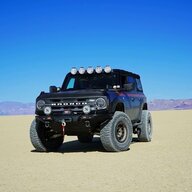
For this review, I also brought in a friend with a stock Hoss 3.0 (Factory Fox) Bronco. Both broncos were stock and on 35" tires for this test to make it as fair as possible.
Obviously, the biggest thing that stands out about the shocks at first glance is the knobs. Each coil-over had 3 knobs. Hi-speed and low-speed compression as well as an adjustable bump-stop.
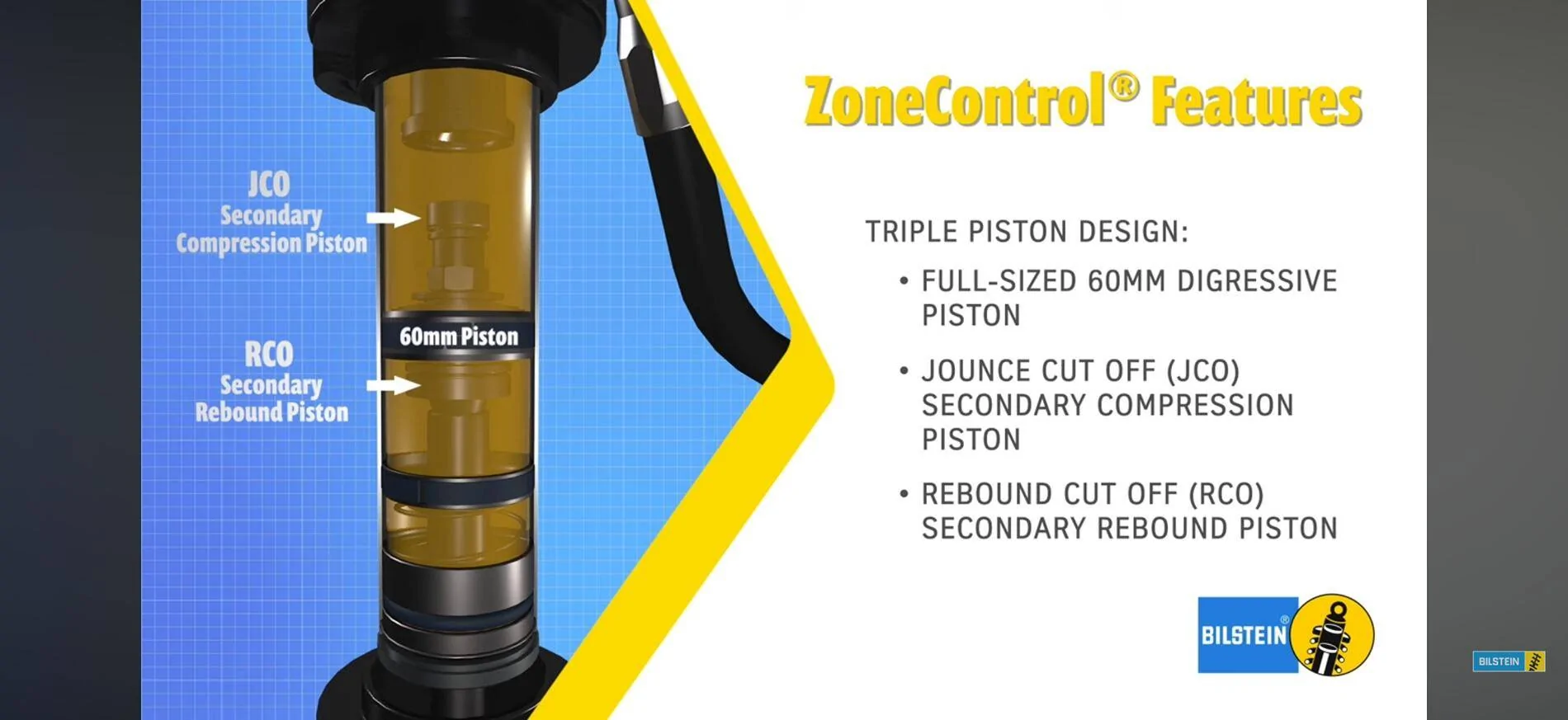
I'm going to try and keep it brief but you get a TON of adjustment out of these coil-overs... The telescoping bump-stop can be adjusted to slow down the stroke of the shock as it extends to give it a more bottomless feel. They also include fancy terms like RCO and JCO. Here is a snapshot of what that all means with some of the fancy science behind these beauties.

These shocks also have 3 compression zones and 2 rebound zones making for a different "tune" or "valving" so to speak depending on where you're at in the stroke cycle.
The first zone is where you'll be riding at just driving around normally and is softer. As you compress the shock further from road chatter, washboards, etc you get into the second zone. This zone stiffens up a bit to keep you planted and minimize shock bounce.
As you really start to push the suspension by flying through the whoops, you're now in the 3rd compression zone which really stiffens it up. This zone plus the telescoping bump-stop really let you fly like butter through the whoops while the rebound keeps it all controlled and stable on the rebound.
In the tests, we did 15-25 mph, 25-35 mph, and then honestly as fast as we felt comfortable going. The Hoss 3.0 honestly did really, really well for a factory offering. It was stable at the first two speed sections and felt nice, smooth, and controlled. The Bilsteins also felt really good and on the lowest speed section, was about on par with the Hoss 3.0.
Once we got into the mid-range speed section, however, the Bilstein's began to set themselves apart from the Hoss 3.0. The rebound control was noticeably better, it felt more controlled and the in-cab feel was much smoother.
After that, we hit the hi-speed sections. There were two lines to take and the harder line was very bouncy in the Hoss 3.0 and it was hard hitting it faster than 45 mph without the back end beginning to pop out we were bouncing quite a bit. I will say though, it did really well and we did hit it once at about 52 mph though it felt sketch.
The Bilstein though was now way ahead and we were hitting it at 68 MPH with ease and felt like we had even more in the tank to give. I felt like the biggest difference was the rebound control and the adjustable bump-stop. We bottomed out many times on the Hoss 3.0 but never felt like we did with the Bilstein 8112's.
Now for some things to note:
The Bilstein's are expensive... very. But they do offer what I believe to be my new favorite go-fast suspension. It felt insanely good! I was giggling while hitting the whoops and couldn't keep the smile off my face.
There are a lot of adjustments to learn so know that it may take some time before you dial in where you like.
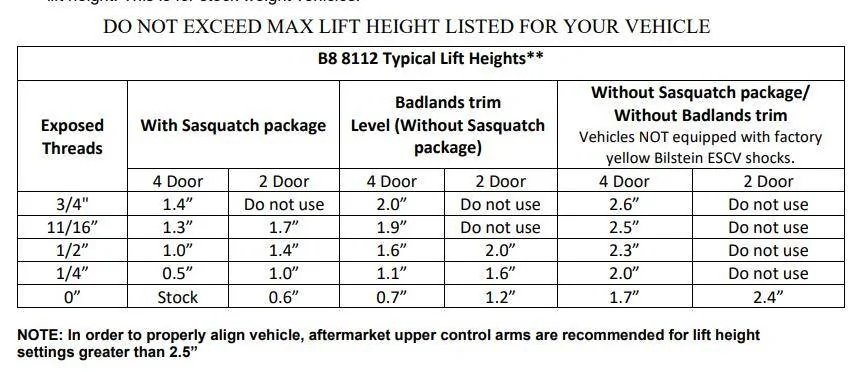
These do not lift much at all over Sasquatch and more so level it then lift.
These do not offer a ton of extra travel over stock and are designed to stay right in the limits of your factory geometry. The travel actually favors compression a bit more than extension, as a result, 37's may go into your fender wells without some clearance work. Honestly this is fine because even the shocks that really push the travel limits are only giving you 1-1.5 inches of extra travel over stock. But this can come at the cost of over-extending cv's.
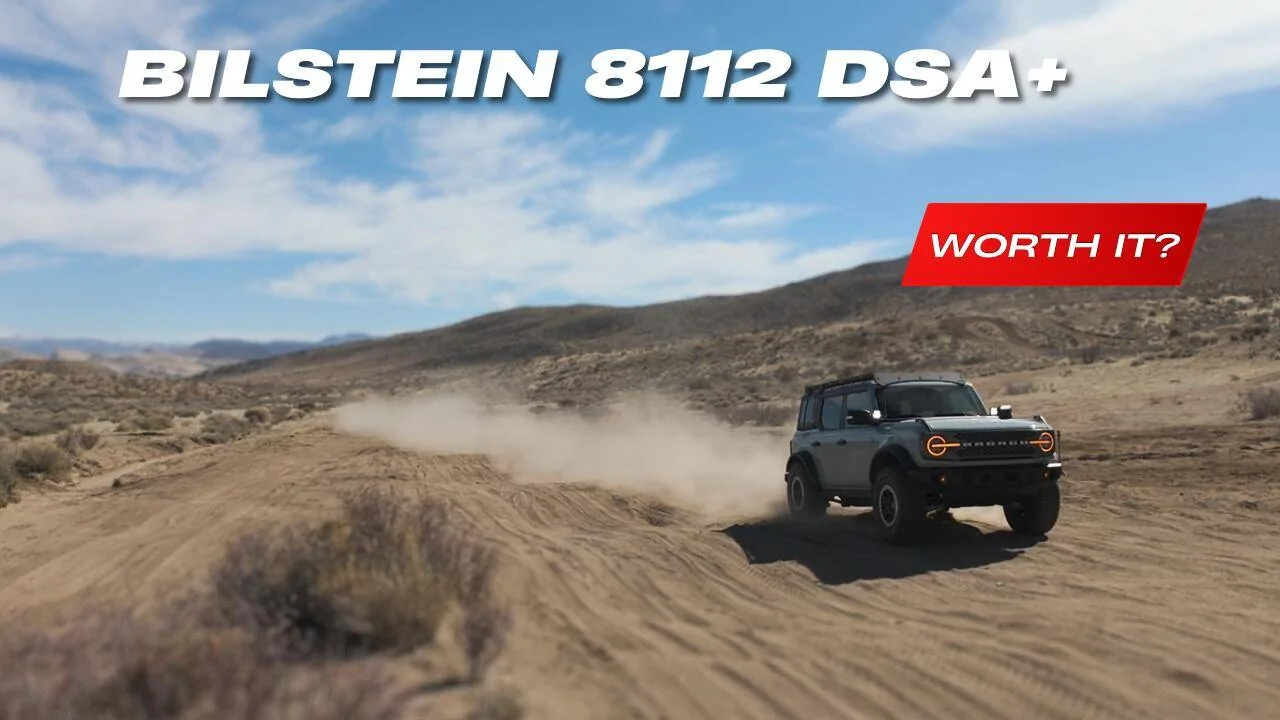
I made a video here if you wanna watch to see some action shots and watch me talk... or not... IDK:


For this review, I also brought in a friend with a stock Hoss 3.0 (Factory Fox) Bronco. Both broncos were stock and on 35" tires for this test to make it as fair as possible.
Obviously, the biggest thing that stands out about the shocks at first glance is the knobs. Each coil-over had 3 knobs. Hi-speed and low-speed compression as well as an adjustable bump-stop.
I'm going to try and keep it brief but you get a TON of adjustment out of these coil-overs... The telescoping bump-stop can be adjusted to slow down the stroke of the shock as it extends to give it a more bottomless feel. They also include fancy terms like RCO and JCO. Here is a snapshot of what that all means with some of the fancy science behind these beauties.
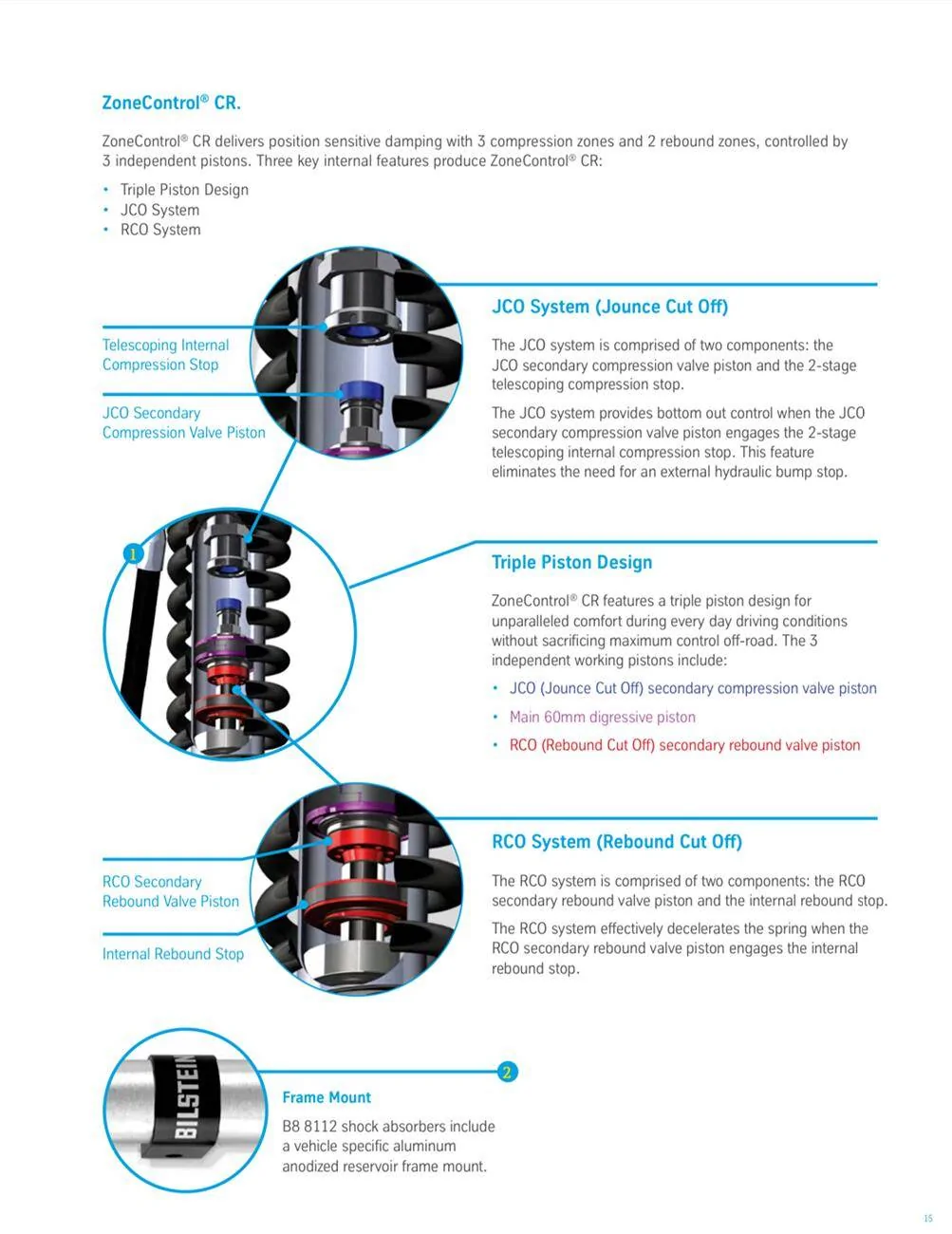
These shocks also have 3 compression zones and 2 rebound zones making for a different "tune" or "valving" so to speak depending on where you're at in the stroke cycle.
The first zone is where you'll be riding at just driving around normally and is softer. As you compress the shock further from road chatter, washboards, etc you get into the second zone. This zone stiffens up a bit to keep you planted and minimize shock bounce.
As you really start to push the suspension by flying through the whoops, you're now in the 3rd compression zone which really stiffens it up. This zone plus the telescoping bump-stop really let you fly like butter through the whoops while the rebound keeps it all controlled and stable on the rebound.
In the tests, we did 15-25 mph, 25-35 mph, and then honestly as fast as we felt comfortable going. The Hoss 3.0 honestly did really, really well for a factory offering. It was stable at the first two speed sections and felt nice, smooth, and controlled. The Bilsteins also felt really good and on the lowest speed section, was about on par with the Hoss 3.0.
Once we got into the mid-range speed section, however, the Bilstein's began to set themselves apart from the Hoss 3.0. The rebound control was noticeably better, it felt more controlled and the in-cab feel was much smoother.
After that, we hit the hi-speed sections. There were two lines to take and the harder line was very bouncy in the Hoss 3.0 and it was hard hitting it faster than 45 mph without the back end beginning to pop out we were bouncing quite a bit. I will say though, it did really well and we did hit it once at about 52 mph though it felt sketch.
The Bilstein though was now way ahead and we were hitting it at 68 MPH with ease and felt like we had even more in the tank to give. I felt like the biggest difference was the rebound control and the adjustable bump-stop. We bottomed out many times on the Hoss 3.0 but never felt like we did with the Bilstein 8112's.
Now for some things to note:
The Bilstein's are expensive... very. But they do offer what I believe to be my new favorite go-fast suspension. It felt insanely good! I was giggling while hitting the whoops and couldn't keep the smile off my face.
There are a lot of adjustments to learn so know that it may take some time before you dial in where you like.
These do not lift much at all over Sasquatch and more so level it then lift.
These do not offer a ton of extra travel over stock and are designed to stay right in the limits of your factory geometry. The travel actually favors compression a bit more than extension, as a result, 37's may go into your fender wells without some clearance work. Honestly this is fine because even the shocks that really push the travel limits are only giving you 1-1.5 inches of extra travel over stock. But this can come at the cost of over-extending cv's.
I made a video here if you wanna watch to see some action shots and watch me talk... or not... IDK:
Sponsored