
Sponsored

CalvinT

Badlands
Well-Known Member
First Name
Calvin
Joined
Mar 15, 2022
Threads
16
Messages
2,557
Reaction score
3,196
Location
Phoenix, AZ
Vehicle(s)
2002 Subaru WRX Wagon, 2023 Badlands (nonSAS)
Your Bronco Model
Badlands
Clubs
 
This makes me think the breaker is wired to protect the winch.
Fuses and breakers are to protect wiring. If a device needs protection it will have an internal fuse or breaker.
Sponsored


nolimits

Badlands
Well-Known Member
Joined
Sep 25, 2023
Threads
23
Messages
893
Reaction score
1,288
Location
USA
Vehicle(s)
23 Badlands
Your Bronco Model
Badlands
Clubs
 
Couple things, if I may:

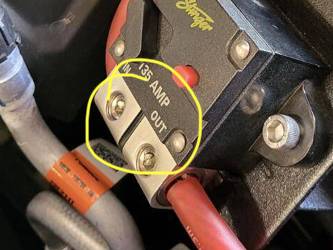
Those set screws on the circuit breaker are the same style of connection that loosened on mine and caused the fire. (Again-zero evidence of a short to ground) Apparently this loosening is a common occurrence due to the expansion and contraction from heat cycling, and is further exacerbated when used under the hood.

I’m sure BAMF did plenty of testing, but it’s alleged that circuit breakers under the hood can also be problematic. Remember that they simply work based on heat. That extra heat from being in the engine bay can make them trip early and often when in use. The class T fuse takes care of both issues by using ring terminals and the sand helps to dissipate heat for more consistent and reliable protection.
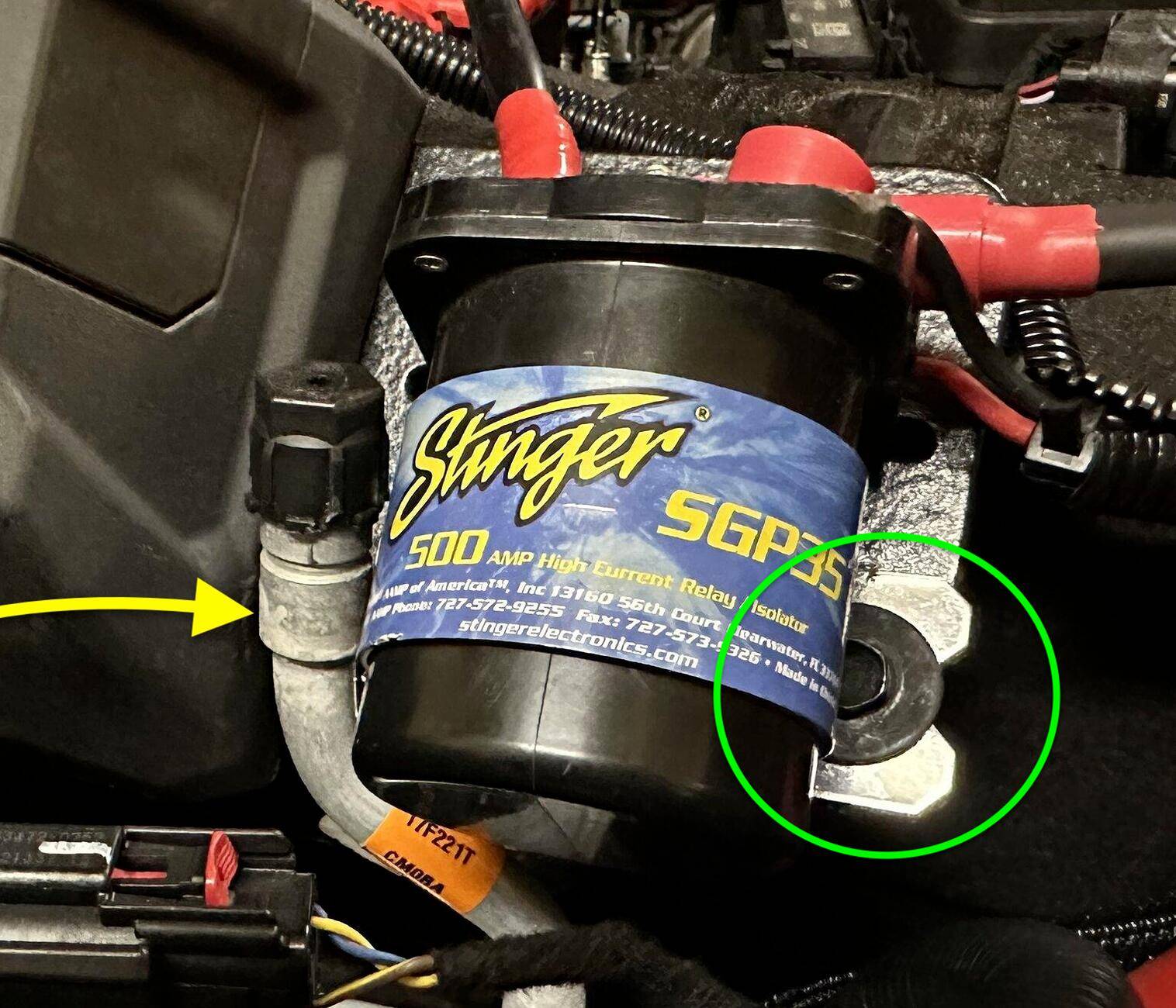
In regards to the set screws, the Warn solenoid attaches to the relocation bracket in the same manner -- using the 4 torx screws that it used to originally attach to the winch housing. Looks near identical to the screws used in BAMF's photo that attaches the 135a breaker. Just the screws are located on the bottom. Photo attached showing what I mean, although it's not the best photo.

While I plan on using a Stinger 500a relay, I am not sure the space I will have to make a connection and may need to do a nutsert or clip nut. Aside from blue locktite, any other ideas on keeping those screws secure?

Ford Bronco Fire Extinguisher & Tested / Approved Electrical Parts Compilation Thread IMG_1462
Ford Bronco Fire Extinguisher & Tested / Approved Electrical Parts Compilation Thread Untitled
 

nolimits

Badlands
Well-Known Member
Joined
Sep 25, 2023
Threads
23
Messages
893
Reaction score
1,288
Location
USA
Vehicle(s)
23 Badlands
Your Bronco Model
Badlands
Clubs
 
Fuses and breakers are to protect wiring. If a device needs protection it will have an internal fuse or breaker.
I worded poorly but meant that it seemed to be protecting the winch wiring, not the winch itself.
 
OP
OP
SierraBronco

SierraBronco

Wildtrak
Well-Known Member
Joined
Mar 27, 2024
Threads
41
Messages
5,211
Reaction score
14,070
Location
USA
Vehicle(s)
2022 Wildtrak, 2024 Wildtrak, 2024 Wildtrak
Your Bronco Model
Wildtrak
In regards to the set screws, the Warn solenoid attaches to the relocation bracket in the same manner -- using the 4 torx screws that it used to originally attach to the winch housing. Looks near identical to the screws used in BAMF's photo that attaches the 135a breaker. Just the screws are located on the bottom. Photo attached showing what I mean, although it's not the best photo.

While I plan on using a Stinger 500a relay, I am not sure the space I will have to make a connection and may need to do a nutsert or clip nut. Aside from blue locktite, any other ideas on keeping those screws secure?

IMG_1462.jpg
Untitled.jpg
I’m talking about what holds the wire itself.

Ford Bronco Fire Extinguisher & Tested / Approved Electrical Parts Compilation Thread IMG_3800
 

Sponsored

nolimits

Badlands
Well-Known Member
Joined
Sep 25, 2023
Threads
23
Messages
893
Reaction score
1,288
Location
USA
Vehicle(s)
23 Badlands
Your Bronco Model
Badlands
Clubs
 
Ran across this when looking at wiring.

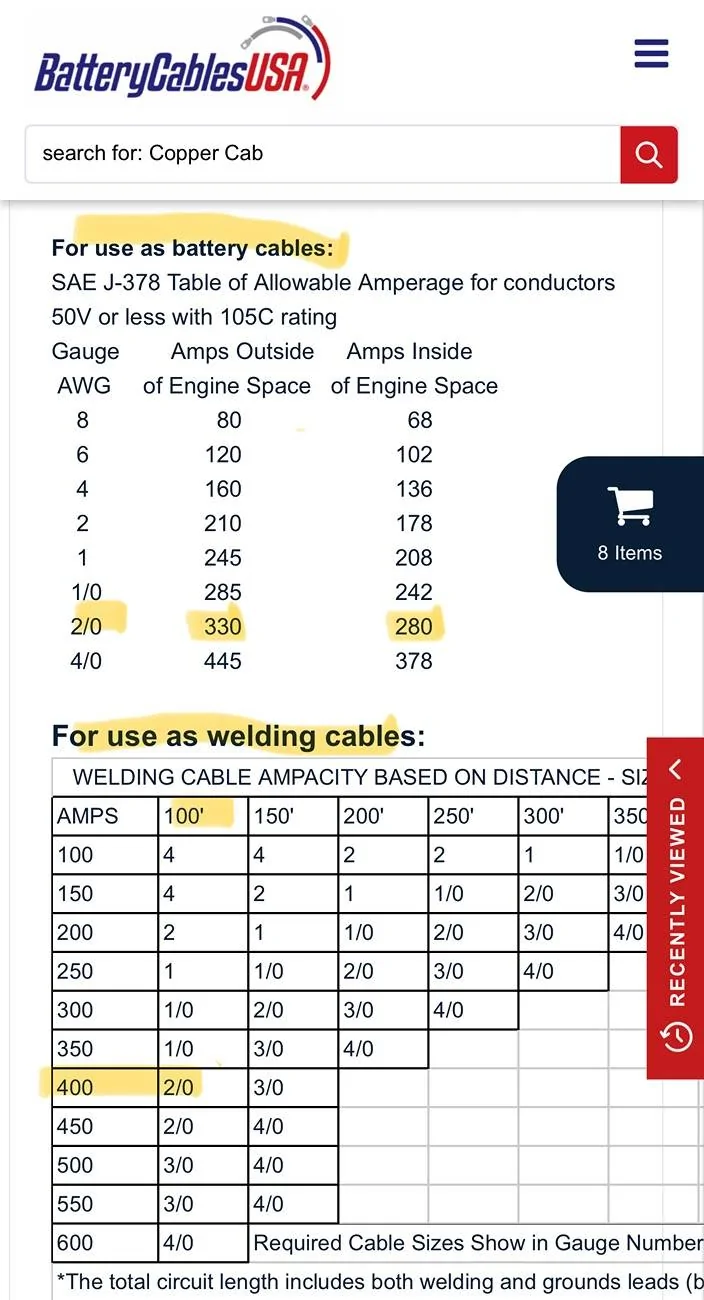
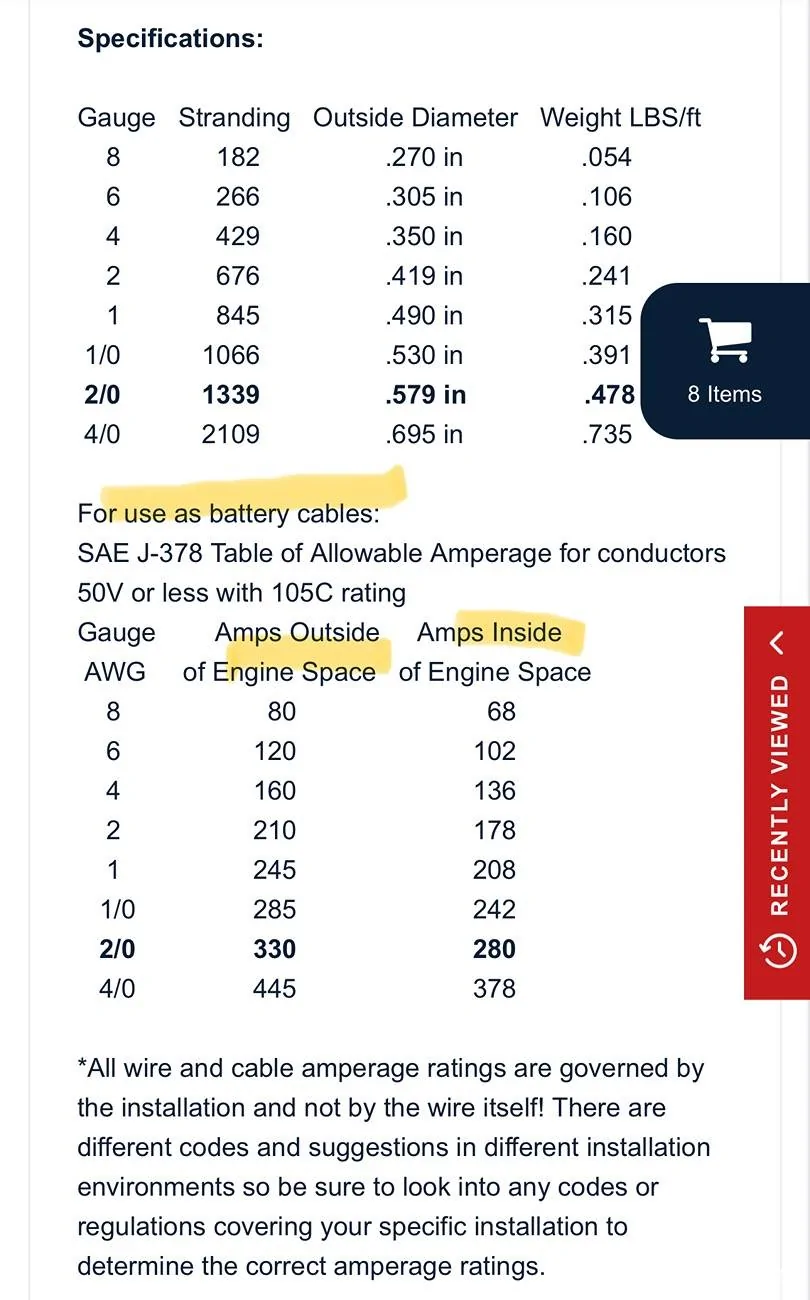
I noticed the BatteryCablesUSA consistently provides a separate amperage rating when used as a battery cable. They offer a few types. Their welding cable option provides more data and shows 400a when used as a welding cable.

Yet it’s derated to 330a and 280a depending if you’re in or out of the engine space and using as a battery cable. I *think* those ratings are driven by SAE ratings.

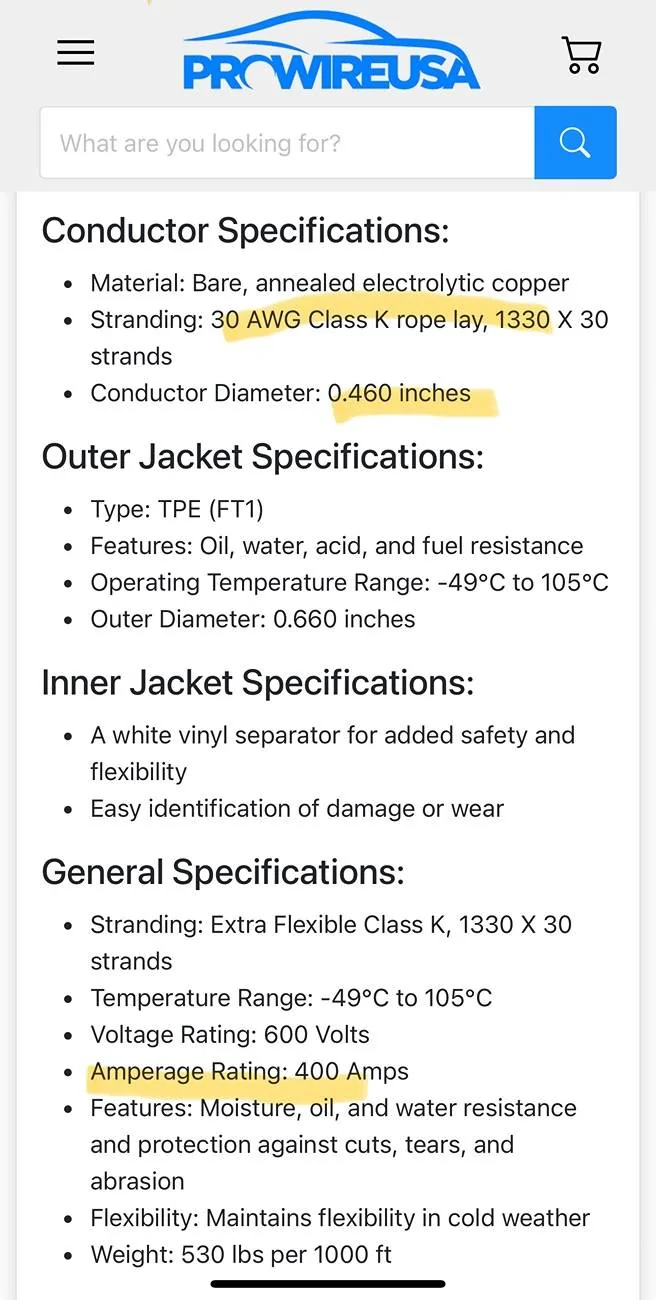
The ProWire cable looks near identical but only has the 400a rating with no clarifications about usage type or SAE ratings for inside or outside engine space.

My first thought is BCU is providing extra information as opposed to a lesser cable but wanted to see if anyone here understood this better than me and could confirm. Both places are closed today as I already tried calling them.

Edited to add:
https://www.batterycablesusa.com/00-gauge-awg-ul-battery-cable-with-ends

https://www.batterycablesusa.com/00-gauge-2-0-awg-extreme-battery-cable-with-ends

https://www.batterycablesusa.com/00-gauge-2-0-copper-flexible-rubber-with-ends

https://www.prowireusa.com/p-3653-2-0-motorsport-battery-cable-black.html

Ford Bronco Fire Extinguisher & Tested / Approved Electrical Parts Compilation Thread IMG_1467

Ford Bronco Fire Extinguisher & Tested / Approved Electrical Parts Compilation Thread IMG_1468

Ford Bronco Fire Extinguisher & Tested / Approved Electrical Parts Compilation Thread IMG_1469
 
Last edited:

nolimits

Badlands
Well-Known Member
Joined
Sep 25, 2023
Threads
23
Messages
893
Reaction score
1,288
Location
USA
Vehicle(s)
23 Badlands
Your Bronco Model
Badlands
Clubs
 
Continuing down the rabbit hole, I think I found my answer to the above question/post.

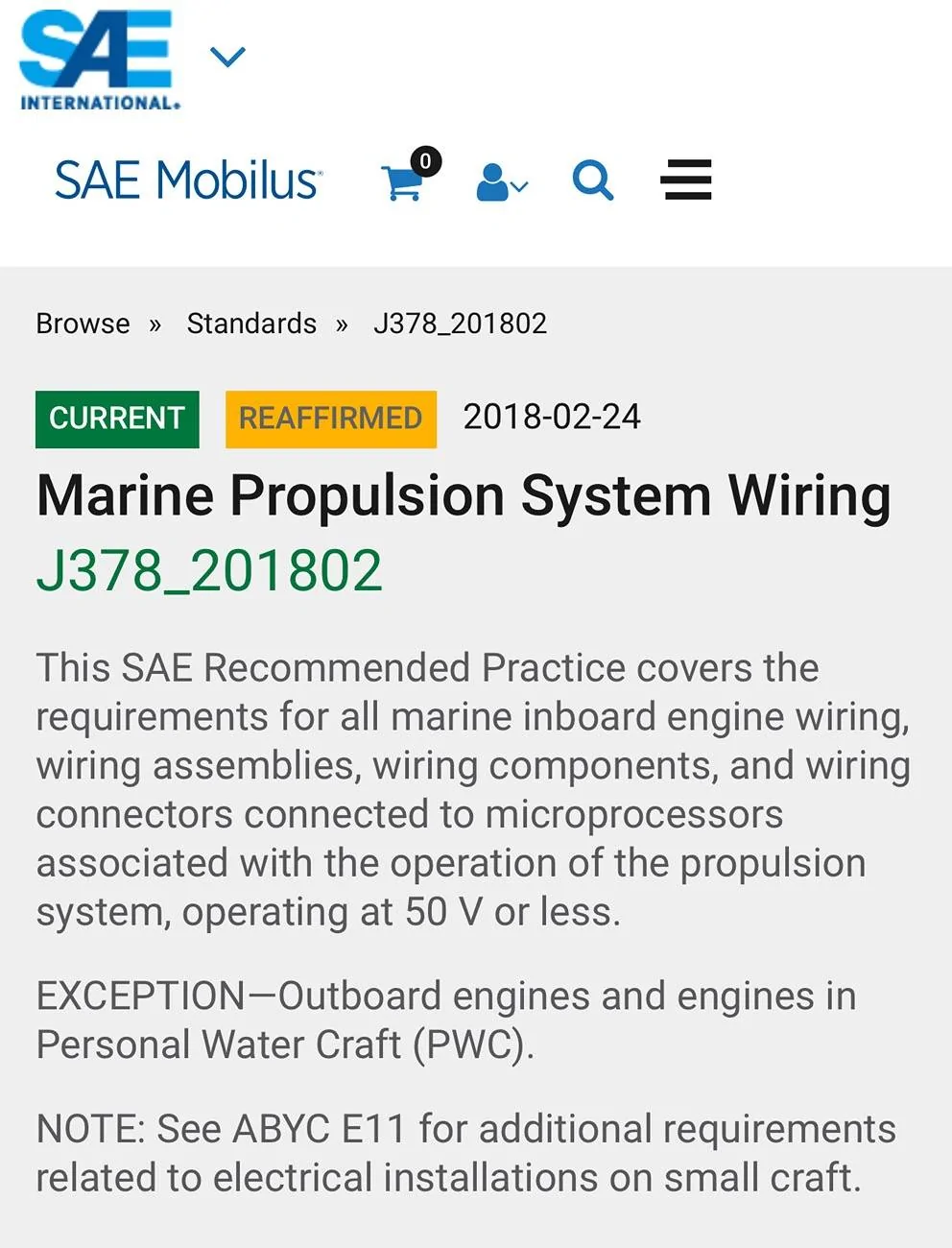
The short version is I believe the lower amp ratings shown are for marine standards and consideration of inboard engine temps.

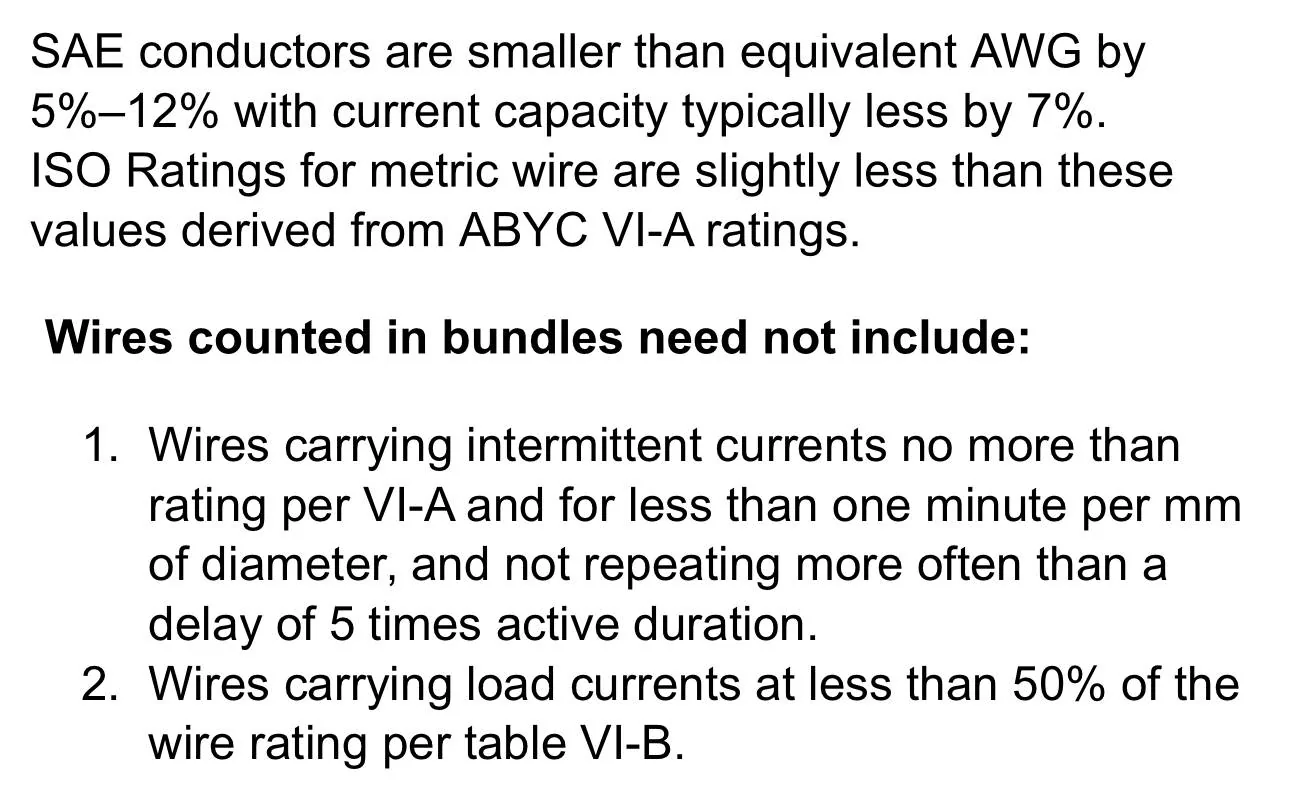
Also interesting is wire certified only to SAE standards (metric) typically have about 7% less amp capacity than full AWG (American; ABYC) due to being about 5-12% smaller than AWG. This resonated with me because the BCU website lists that as an advantage over their welding cable option.

The longer version….

First, SAE J-378 is the standard used for marine inboard engines. I don’t have access to the full standard but an overview blurb is screen capped and linked for reference.

Second, the American Boat & Yacht Council (ABYC) helps set safety standards for small watercraft. In short the only entity with more or equal stroke is the European ISO group and ABYC is actually the US representative for that particular group. More details about ABYC in the link below, if you’re interested.

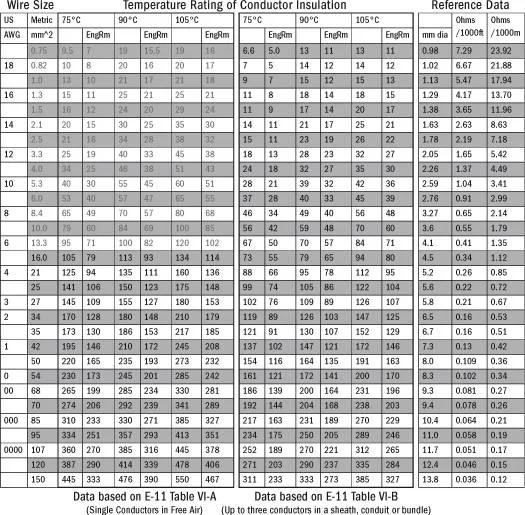
With a little understanding of the above, the ABYC chart listed on BlueSeas website (see below) makes a little more sense. Looking specifically at 2/0 wiring we can see amp ratings of 285 for 90* C and 330 for 105* C. The chart is based on the jacket insulation.

I would like to read the entire SAE spec but unwilling to pay $100 for it. I suspect it provides additional information/ratings about amp capacity inside and outside of marine inbound engine space which further explains why BCU lists the data the way they do on their site; however, I believe their 330 rating was in accordance with the ABYC chart.

Obviously, others with more depth or experience feel free to correct as needed.

https://www.sae.org/standards/content/j378_201802/

https://www.bluesea.com/support/reference/112/ABYC_Explained

https://www.bluesea.com/resources/529/Allowable_Amperage_in_Conductors_-_Wire_Sizing_Chart

Ford Bronco Fire Extinguisher & Tested / Approved Electrical Parts Compilation Thread IMG_1474

Ford Bronco Fire Extinguisher & Tested / Approved Electrical Parts Compilation Thread IMG_1472

Ford Bronco Fire Extinguisher & Tested / Approved Electrical Parts Compilation Thread IMG_1473
 
OP
OP
SierraBronco

SierraBronco

Wildtrak
Well-Known Member
Joined
Mar 27, 2024
Threads
41
Messages
5,211
Reaction score
14,070
Location
USA
Vehicle(s)
2022 Wildtrak, 2024 Wildtrak, 2024 Wildtrak
Your Bronco Model
Wildtrak
Continuing down the rabbit hole, I think I found my answer to the above question/post.

The short version is I believe the lower amp ratings shown are for marine standards and consideration of inboard engine temps.

Also interesting is wire certified only to SAE standards (metric) typically have about 7% less amp capacity than full AWG (American; ABYC) due to being about 5-12% smaller than AWG. This resonated with me because the BCU website lists that as an advantage over their welding cable option.

The longer version….

First, SAE J-378 is the standard used for marine inboard engines. I don’t have access to the full standard but an overview blurb is screen capped and linked for reference.

Second, the American Boat & Yacht Council (ABYC) helps set safety standards for small watercraft. In short the only entity with more or equal stroke is the European ISO group and ABYC is actually the US representative for that particular group. More details about ABYC in the link below, if you’re interested.

With a little understanding of the above, the ABYC chart listed on BlueSeas website (see below) makes a little more sense. Looking specifically at 2/0 wiring we can see amp ratings of 285 for 90* C and 330 for 105* C. The chart is based on the jacket insulation.

I would like to read the entire SAE spec but unwilling to pay $100 for it. I suspect it provides additional information/ratings about amp capacity inside and outside of marine inbound engine space which further explains why BCU lists the data the way they do on their site.

Obviously, others with more depth or experience feel free to correct as needed.

https://www.sae.org/standards/content/j378_201802/

https://www.bluesea.com/support/reference/112/ABYC_Explained

https://www.bluesea.com/resources/529/Allowable_Amperage_in_Conductors_-_Wire_Sizing_Chart

IMG_1474.jpeg

IMG_1472.jpeg

IMG_1473.jpeg
I missed that last post. This is fun information man. Thank you and very interesting. Thinking about it, the derating makes sense for automotive use as the wires will typically be tucked and in close proximity to all kinds of things that produce heat or don’t like excessive heat. Whereas welding your cables will likely just be laying on the ground, out in the open, and easier to extinguish should things go awry. Also interesting to see the lower limits inside the engine compartment. Again-makes sense. And it does provide some confirmation behind the notion that using breakers under the hood can be problematic.

Is “fun” the right word? 🤔
 

nolimits

Badlands
Well-Known Member
Joined
Sep 25, 2023
Threads
23
Messages
893
Reaction score
1,288
Location
USA
Vehicle(s)
23 Badlands
Your Bronco Model
Badlands
Clubs
 
I missed that last post. This is fun information man. Thank you and very interesting. Thinking about it, the derating makes sense for automotive use as the wires will typically be tucked and in close proximity to all kinds of things that produce heat or don’t like excessive heat. Whereas welding your cables will likely just be laying on the ground, out in the open, and easier to extinguish should things go awry. Also interesting to see the lower limits inside the engine compartment. Again-makes sense. And it does provide some confirmation behind the notion that using breakers under the hood can be problematic.

Is “fun” the right word? 🤔
I enjoy learning so it’s fun for me. But I’m sure most the crowd finds it about as bloody exciting as watching paint dry.

I’m with you that marine or not, it makes sense amp capacity is decreased when put in an engine bay. The insulation jacket is not only having to combat heat generated by amps passing through the wire, but also heat soak being generated by external environment conditions. Essentially it’s getting flanked on all sides.

Here’s the part that seems wonky. Look at the smaller gauge wire on the 2 charts I posted above (post #96). On 1, 2 & 4 gauges you don’t see the same loss ratio as you do with the higher gauges. In fact, outside the engine bay ratings are almost identical to the welding cable ratings.

Using 2 gauge as an example, it’s rated at 200a for welding cable, 210a outside engine bay and 178a inside engine bay. No drop outside the engine bay and 15% drop inside the bay.

Comparing to 2/0 which is rated at 400a for welding cable, 330a for outside engine bay and 280 inside the bay. That’s a 17.5% loss outside the bay but still about 15% drop between inside and outside the bay.

Doing a quick math check on all the gauges it seems a very consistent 15% loss from outside to inside engine bay.
 
Last edited:

nolimits

Badlands
Well-Known Member
Joined
Sep 25, 2023
Threads
23
Messages
893
Reaction score
1,288
Location
USA
Vehicle(s)
23 Badlands
Your Bronco Model
Badlands
Clubs
 
Oh yeah, came across this earlier today as well. For those wanting an easy button solution for relocating their winch solenoid, Warn offers an extended controller wiring kit.

78” leads, 2 gauge, new boots and also includes the ground wire.

$105, but there are some 20% discount codes. Decent deal if someone is okay running what came stock.

https://www.warn.com/control-pack-relocation-kit-for-vr-evo-78-106011
 

Sponsored

nolimits

Badlands
Well-Known Member
Joined
Sep 25, 2023
Threads
23
Messages
893
Reaction score
1,288
Location
USA
Vehicle(s)
23 Badlands
Your Bronco Model
Badlands
Clubs
 
Thought I would share a spreadsheet I threw together comparing price impact when upgrading wire size. A few things to note:

1. This is based on my specific scenario of relocating my winch solenoid under the hood.

2. If sticking with 2 AWG, I showed some credit for using the included Warn 2 AWG wires. FYI, it's about the same cost as the Warn relocation wiring kit I posted in #100 above, with the 20% off coupon. The Warn kit also includes an extended small ground lead from the controller to the winch motor that would be a (small) cost you need to add to the spreadsheet values.

3. Pricing is based on assembled cables from BatteryCableUSA. This includes ends, heat shrink and wire cut to the foot specified.

4. If you have longer runs, already own the tools (or can borrow them) or have future big wire needs using completed assemblies may not make sense for you. I considered DIY, but for me, it was about a wash cost-wise.

5. Feel free to download a copy and tweak for your specific needs.

 
Last edited:
OP
OP
SierraBronco

SierraBronco

Wildtrak
Well-Known Member
Joined
Mar 27, 2024
Threads
41
Messages
5,211
Reaction score
14,070
Location
USA
Vehicle(s)
2022 Wildtrak, 2024 Wildtrak, 2024 Wildtrak
Your Bronco Model
Wildtrak
Thought I would share a spreadsheet I threw together comparing price impact when upgrading wire size. A few things to note:

1. This is based on my specific scenario of relocating my winch solenoid under the hood.

2. If sticking with 2 AWG, I showed some credit for using the included Warn 2 AWG wires.

3. Pricing is based on assembled cables from BatteryCableUSA. This includes ends, heat shrink and wire cut to the foot specified.

4. If you have longer runs, already own the tools (or can borrow them) or have future big wire needs using completed assemblies may not make sense for you. I considered DIY, but for me, it was about a wash cost-wise.

5. Feel free to download a copy and tweak for your specific needs.

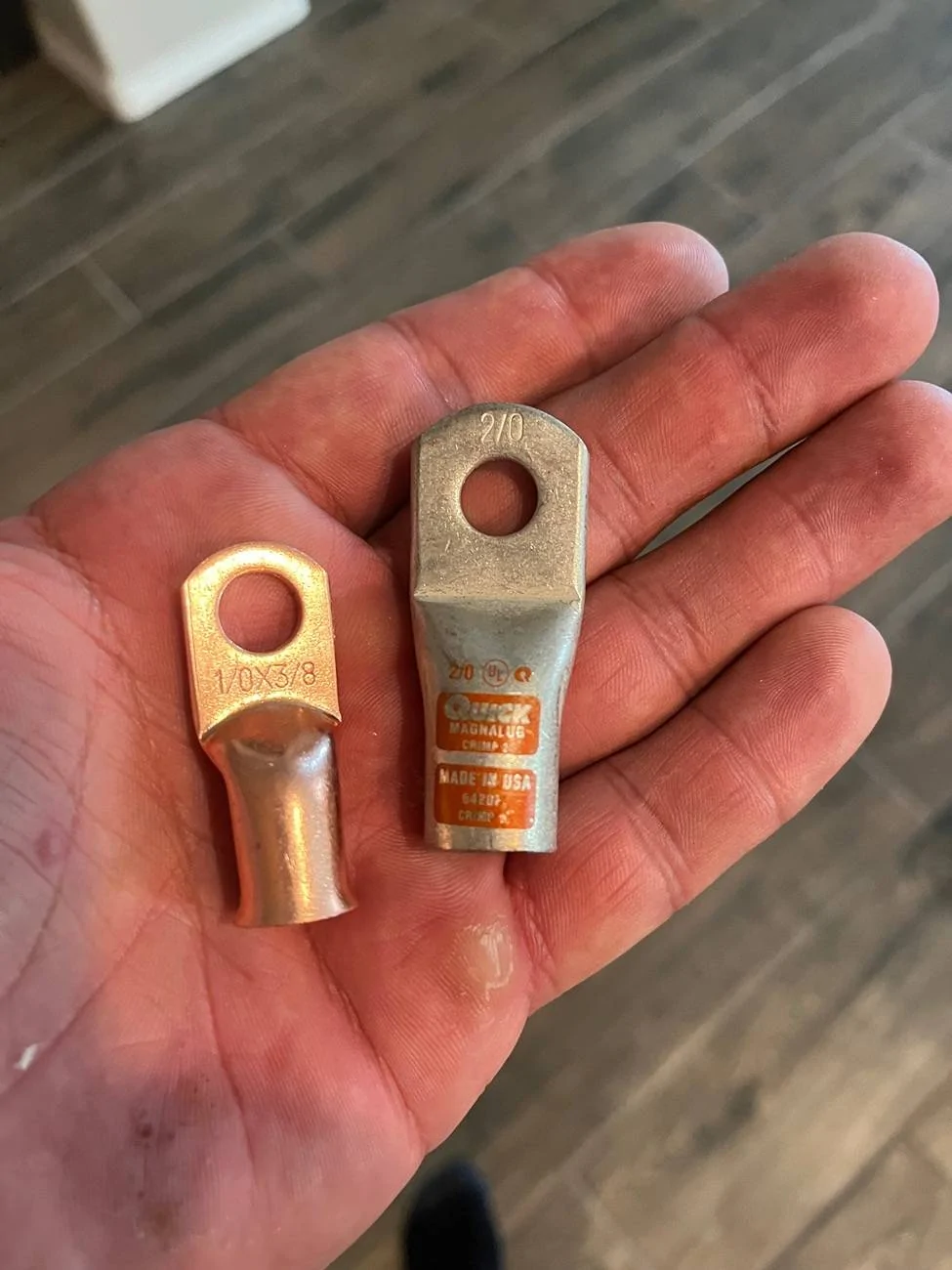
badass man! Speaking of tools-I found some heaaaaavvyy duty ring terminals from Grote. “Extra heavy wall lug.” They are ridiculous 😂😂 Can’t even use the big ass hexagonal crimper-gotta buy a hydraulic unit. Accidentally ordered 2/0 or was sent 2/0 instead of 1/0 but you get the idea.

Ford Bronco Fire Extinguisher & Tested / Approved Electrical Parts Compilation Thread IMG_3881
 

nolimits

Badlands
Well-Known Member
Joined
Sep 25, 2023
Threads
23
Messages
893
Reaction score
1,288
Location
USA
Vehicle(s)
23 Badlands
Your Bronco Model
Badlands
Clubs
 
badass man! Speaking of tools-I found some heaaaaavvyy duty ring terminals from Grote. “Extra heavy wall lug.” They are ridiculous 😂😂 Can’t even use the big ass hexagonal crimper-gotta buy a hydraulic unit. Accidentally ordered 2/0 or was sent 2/0 instead of 1/0 but you get the idea.

IMG_3881.jpeg
Holy crap....say hello to my lil' friend, lol.

When looking for terminals I ran across a few listings for the heavy duty ones but didn't see an actual picture.

I was discussing cutting & crimping 2/0 wires with an older co-worker. He mentioned he used a few old school ways back in his prime. One was a guillotine style cutter. I think the device was sold by Caterpillar as he used it for his old cable scraper. But essentially you sit the wire in a die, give it a whack with a sledge hammer and apparently it would sever the wire cleanly.

For crimping, he used his vice along with a die set he had.

When I searched this out further I saw some videos of guys using their vices in a variety of ways to crimp wires. However, if someone already had a die set that may be a very easy solution over having to buy a hydraulic unit.

I also stumbled onto the Temco TH007 manual crimper. Works simple, you adjust for wire size and whack with a sledge hammer. Very cheap, less than $20.

https://temcoindustrial.com/TH0007-Hammer-Crimper/


Just for fun....video of old cable scraper.


Rumbloki

Badlands
Well-Known Member
First Name
Alton
Joined
May 18, 2023
Threads
9
Messages
625
Reaction score
1,167
Location
ATX/PCB
Vehicle(s)
ZR2, 1973 Mach 1
Your Bronco Model
Badlands
Clubs
 

nolimits

Badlands
Well-Known Member
Joined
Sep 25, 2023
Threads
23
Messages
893
Reaction score
1,288
Location
USA
Vehicle(s)
23 Badlands
Your Bronco Model
Badlands
Clubs
 
Updated spreadsheet from post 101 to include some additional data about factory Warn wiring and also Bronco battery terminals.
Sponsored


Top