
Sponsored

Alternator stopped working (5,000 miles)

sic5pointslow

Black Diamond
Well-Known Member
First Name
Jose
Joined
Jul 20, 2020
Threads
3
Messages
105
Reaction score
231
Location
Bay Area CA
Vehicle(s)
2014 F250, 3 Mustangs, 2018 Audi, annnnd a Buick
Your Bronco Model
Black Diamond
Significant issue lol
Sponsored
 

edgeflyer

Banned
Wildtrak
Banned
Banned
First Name
Brian
Joined
Jul 17, 2020
Threads
45
Messages
1,359
Reaction score
3,402
Location
Texas
Vehicle(s)
2013 FX4
Your Bronco Model
Wildtrak
Speculation and blame aside:

Alternators do have problems when running in water and dirty, muddy water makes it even worse as you are introducing grit into a spinning, electrical assembly.

Electricity and water do not mix, not matter how you look at it.

I used to do a lot of mud runs, deep mud holes, etc. The alternator was the number one part that failed. Usually had to replace them once a year in my old Toyota pick-up, where the alternator was the lower accessory drive item.
As have I and never had one fail just from being run through water or mud. Bearings are sealed and there is enough clearance in the unit for debris to move through. The electrical side is insulated, so the electricity and water is only an issue if the insulation is missing for some reason. I just ran my new Bronco through a large muddy water hole and its still running strong.
Alternator issues aren't uncommon with toyotas, so not surprising. Been at this game a long time and if an alternator went bad from a dip in the lake, there was an underlying issue already or poor design/build quality.

A little side story: I have been into remote control airplanes and cars my whole life. Back before brushless motors came out, we used to break the brushes in by dropping the motor into a jar of water and running it for several minutes. Never had one of those fail either. A drop of sewing oil on the bushings and you were good to go. Alternator bearings are fully sealed, so what's the difference? If your argument is sand in the water, the only place that could remotely be an issue is between the rotor and stator, but it is highly unlikely that even long-term dirt abrasion could actually cause issues here. Have you ever had a lawnmower's flywheel rust on you and fail to start? Just sand the thing down and your good to go. Rust isn't typically an issue as you usually drive the truck long enough after the bath for the spinning components and heat to dry it out fairly quickly. A minute is all it takes. You would actually have to disassemble the failed component to get an actual cause of failure to be able to speculate that a mud hole caused any reported alternator failure. As a mechanic, I don't even rebuild them anymore, I just replace with new part, so I find it hard to believe anyone else took the time to or knew how to isolate the point of failure. Therefore it is all speculation.
 

Razorbak86

Badlands
Well-Known Member
Joined
Jul 19, 2020
Threads
41
Messages
3,260
Reaction score
12,332
Location
Northwest Arkansas
Vehicle(s)
Ford Bronco, BMW R1150 GS
Your Bronco Model
Badlands
Clubs
 
I have never had a truck type vehicle with an alternator as low as the one on my bronco. The whole can ford 33.5”s is bullshit. U can’t ford less than 8 inches.
Sorry, man. Don’t mind me. I’m just passing through.


da_jokker

Wildtrak
Well-Known Member
Joined
Jul 14, 2020
Threads
125
Messages
6,173
Reaction score
7,132
Location
California
Vehicle(s)
Jeep Wrangler JKUR
Your Bronco Model
Wildtrak
Clubs
 
Alternators do not have an inherent problem of going bad when under water. There is way too much speculation going on here to blame engineers of putting the alternator in the wrong spot.

I don't think anybody has claimed that water hurts the alternator... It's the debris and dirt that's in the water.

We have 40+ 2.7 that have blown just from members on this forum and people claim it's no big deal.

Yet the internet is full of posts of people that have had their alternators go out after going through dirty water/mud.... Stories like ^^^^ said where people go as far as taking spare alternators with them on outings because they've had ones go bad...and yet, again, it is dismissed.

I've owned more cars than I can count, and I've never had a lemon... Guess that means everybody else is wrong because my experience proves that there's no such thing.
 

lapazleo

Badlands
Well-Known Member
Joined
Jan 15, 2022
Threads
6
Messages
807
Reaction score
1,943
Location
Indiana
Vehicle(s)
2022 bronco badlands
Your Bronco Model
Badlands
Clubs
 
So long Everglades edition!!
LOL.
Snorkels are just for looks anyway. Doubtful anyone gets a Bronco dashboard deep in the water.

Actually snorkels are for dry conditions such as Australia's outback to get up into fresh air for the engine. Nothing to due with water.
 

Sponsored

Hossamus Prime

Badlands
Well-Known Member
First Name
Brian
Joined
Aug 21, 2020
Threads
11
Messages
755
Reaction score
2,857
Location
Arkansas
Website
www.instagram.com
Vehicle(s)
21 BadSquatch,‘21 ExplorerST , RIP 84 & 90 Broncos
Your Bronco Model
Badlands
Clubs
 
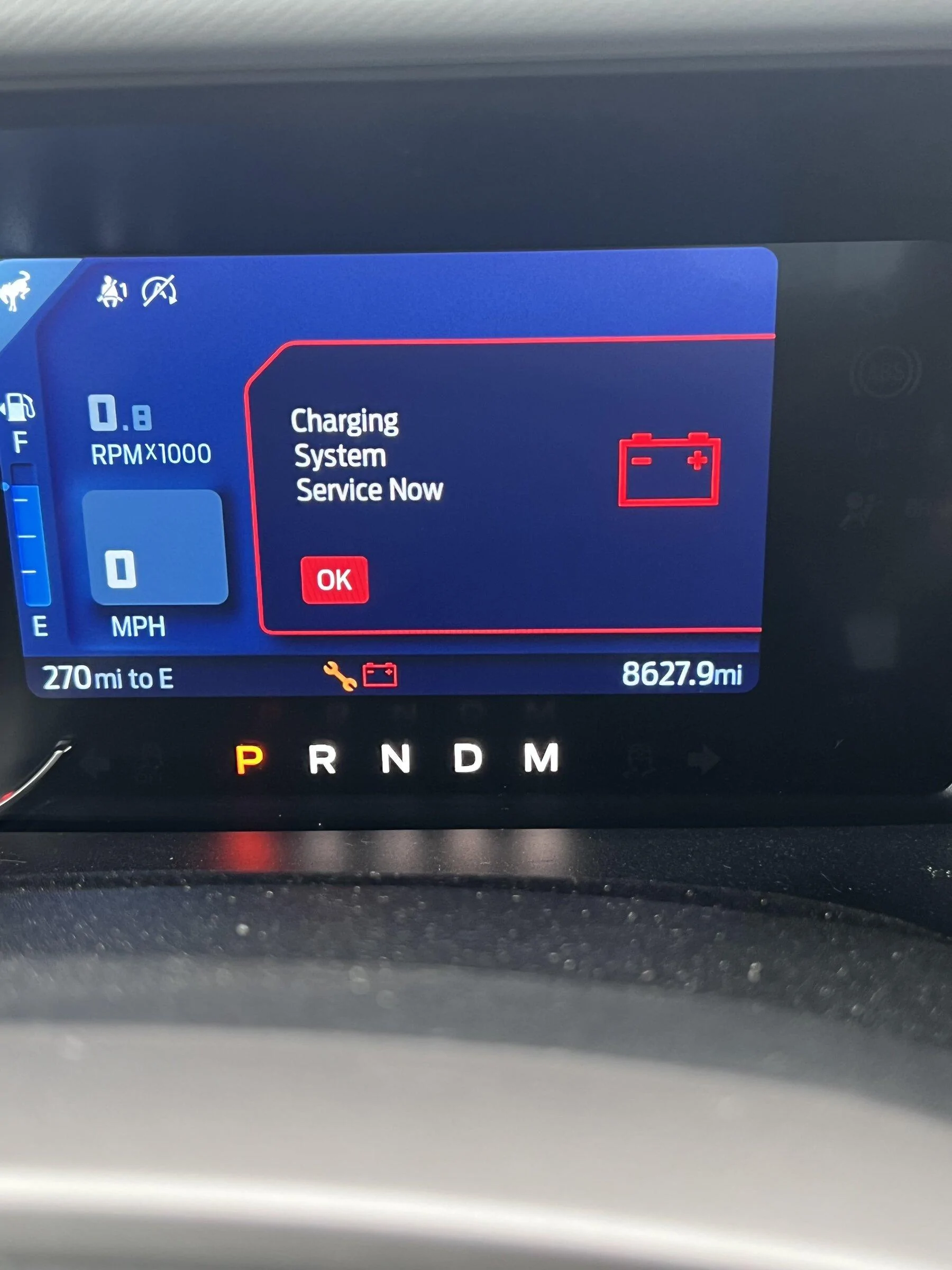
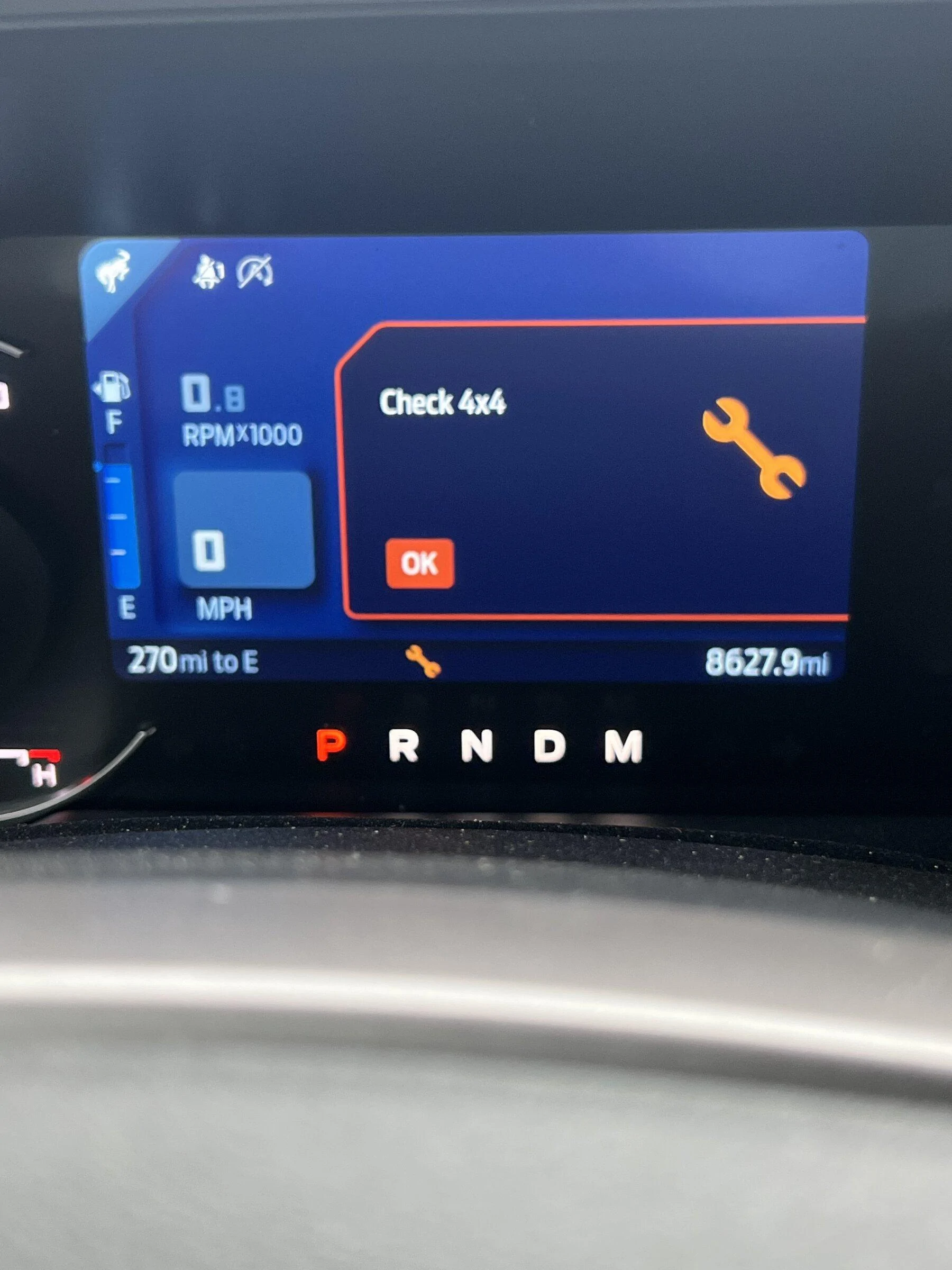
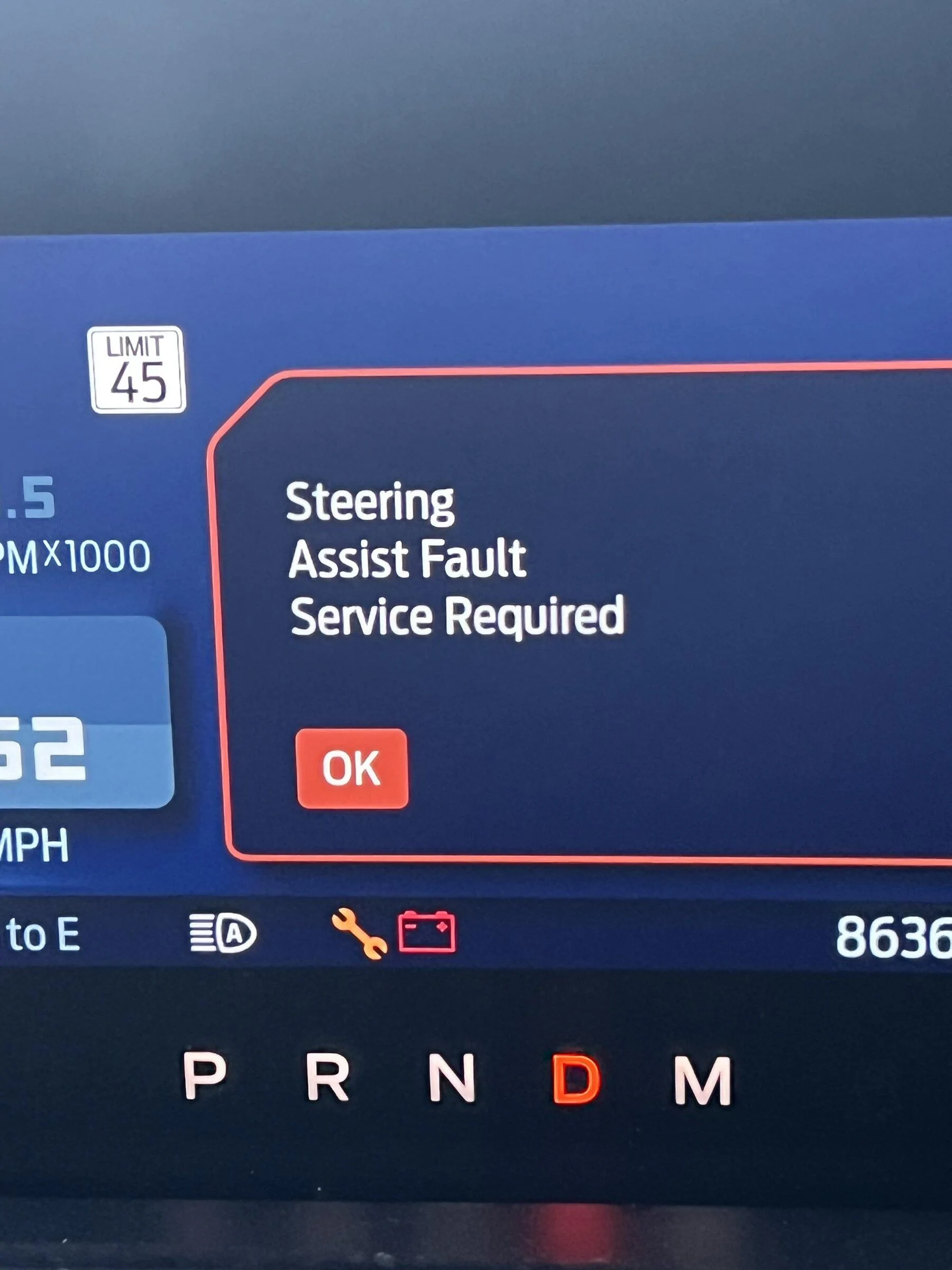
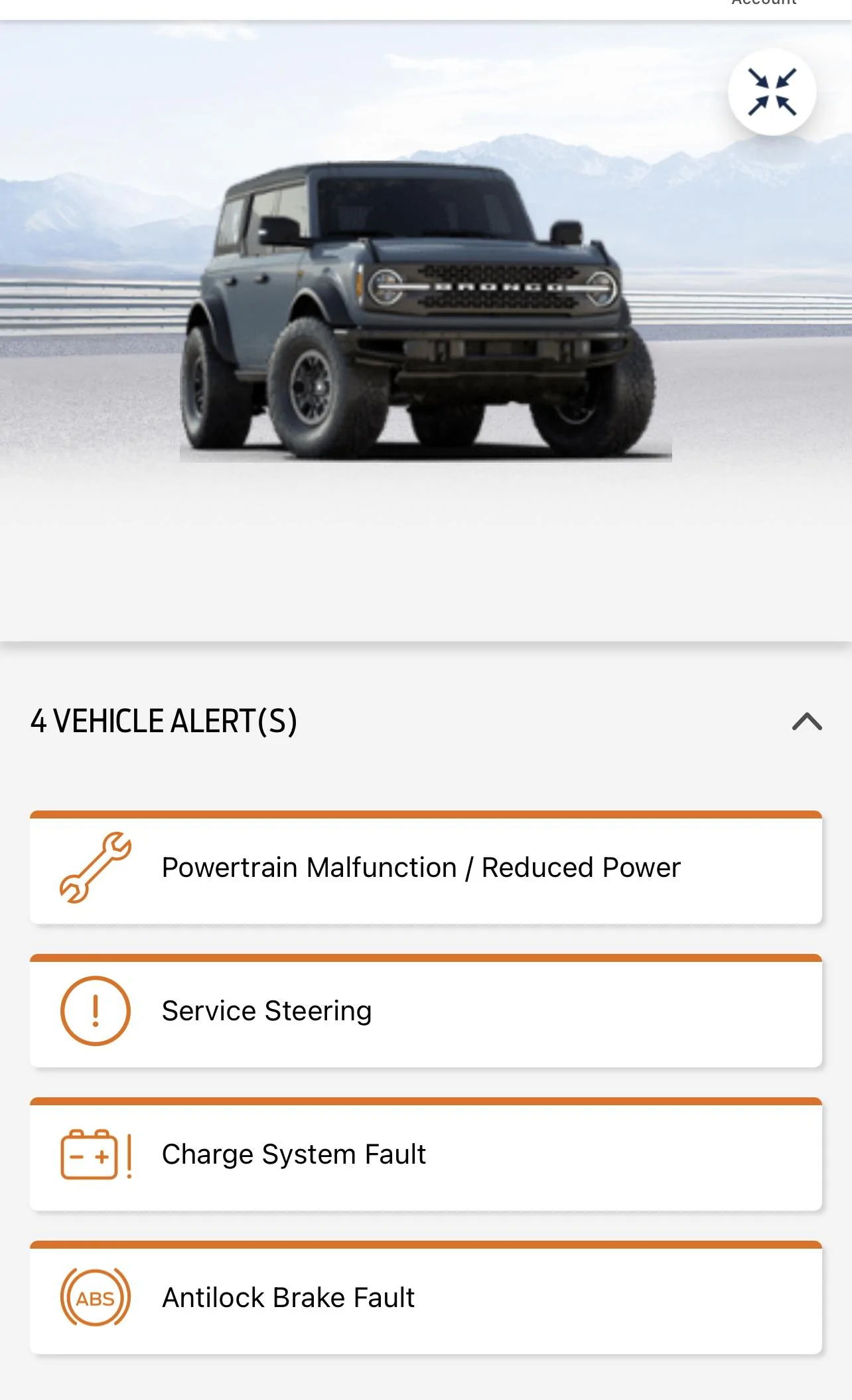
Welp mine went out Wednesday. 8627 miles.
As the voltage went down on the way to the dealer, more and more things shut off, then it died in an intersection and parking brake came on. Couldn’t open my tailgate to get inside my rear enclosure where my jumper cables were. Great time at 7:30am in the middle of one of the busiest intersections in town.

had been through many of mud puddles. But guess one from the Saturday before killed it, or washing the Bronco did? Hope to have the part in Monday.

Ford Bronco Alternator stopped working (5,000 miles) D3F2F4B2-A33A-4323-AD54-BC02382F8EA2
Ford Bronco Alternator stopped working (5,000 miles) C6E8C9DC-D620-4156-956F-A4D67DC3E0A6


Ford Bronco Alternator stopped working (5,000 miles) 62435FDB-7932-423D-80CD-64C8D8870977
Ford Bronco Alternator stopped working (5,000 miles) 78C7BEB3-B57C-4DF8-BE7F-4988460DEE23
 

jcgcbns22

Outer Banks
Well-Known Member
First Name
Caleb
Joined
Jan 8, 2022
Threads
3
Messages
280
Reaction score
717
Location
Nova Scotia, Canada
Vehicle(s)
2021 Ford Bronco
Your Bronco Model
Outer Banks
Clubs
 
I don't see a bunch of issues, honestly. Most problems with water are due to intrusion in connectors. That would put the front diff locker connector, abs sensors, starter, front sensing system, shutters, winch, fog lights in harms way too. Submerged for long periods vs. submerged during water crossings are different situations. Send it!
Valid points! My Terlume ICON driving lights are rated for 3 metres (9 feet). Some other things might fail well before that depth is reached!
 

lapazleo

Badlands
Well-Known Member
Joined
Jan 15, 2022
Threads
6
Messages
807
Reaction score
1,943
Location
Indiana
Vehicle(s)
2022 bronco badlands
Your Bronco Model
Badlands
Clubs
 
As have I and never had one fail just from being run through water or mud. Bearings are sealed and there is enough clearance in the unit for debris to move through. The electrical side is insulated, so the electricity and water is only an issue if the insulation is missing for some reason. I just ran my new Bronco through a large muddy water hole and its still running strong.
Alternator issues aren't uncommon with toyotas, so not surprising. Been at this game a long time and if an alternator went bad from a dip in the lake, there was an underlying issue already or poor design/build quality.

A little side story: I have been into remote control airplanes and cars my whole life. Back before brushless motors came out, we used to break the brushes in by dropping the motor into a jar of water and running it for several minutes. Never had one of those fail either. A drop of sewing oil on the bushings and you were good to go. Alternator bearings are fully sealed, so what's the difference? If your argument is sand in the water, the only place that could remotely be an issue is between the rotor and stator, but it is highly unlikely that even long-term dirt abrasion could actually cause issues here. Have you ever had a lawnmower's flywheel rust on you and fail to start? Just sand the thing down and your good to go. Rust isn't typically an issue as you usually drive the truck long enough after the bath for the spinning components and heat to dry it out fairly quickly. A minute is all it takes. You would actually have to disassemble the failed component to get an actual cause of failure to be able to speculate that a mud hole caused any reported alternator failure. As a mechanic, I don't even rebuild them anymore, I just replace with new part, so I find it hard to believe anyone else took the time to or knew how to isolate the point of failure. Therefore it is all speculation.

And anybody who doesn't think their alternator doesn't get drenched when driving in rain or snow regardless of location is kidding themselves. Anytime your exhaust is under water you're chancing bigger problems than alternator failure. Remember water proof and water resistant are two different things. Most likely the op's alternator was headed for premature failure regardless the bath just hurried it along.
 

mike8675309

Base
Well-Known Member
First Name
Mike
Joined
Nov 24, 2021
Threads
35
Messages
1,175
Reaction score
1,732
Location
Minnesota
Vehicle(s)
2022 Ford Bronco ManSquatch, 2023 Chevy Silverado
Your Bronco Model
Base
First of all, in all cases, I'm talking about freshwater. If you get in saltwater, all bets are off.
  • alternators generally have sealed bearings.
  • The stator and rotor don't care about water though I doubt they'll be making power in the water.
  • They cool with fans affixed to their shaft, so underwater, I would expect the belt to slip because it would be much harder to drive the alternator.
  • Mud is not Water. Mud will have minerals in it that will get carried into the rotor and stator damaging the lining of the stator or rotor, exposing field windings which could lead to an internal short circuit.

    If I go wheeling with my Bronco in the mud or dirty water, I will flush the alternator with any available freshwater once heading back to the road. That should get most of the gunk out and reduce the risk of a short circuit. I may even carry a jug of non-potable water along with me if I expect to run into any areas where I might submerge.


mike8675309

Base
Well-Known Member
First Name
Mike
Joined
Nov 24, 2021
Threads
35
Messages
1,175
Reaction score
1,732
Location
Minnesota
Vehicle(s)
2022 Ford Bronco ManSquatch, 2023 Chevy Silverado
Your Bronco Model
Base
Electricity and water do not mix, not matter how you look at it.
I just want to call this one out, because it's an oversimplistic look at electricity. There are high voltage lines bringing electricity to your home that survive blizzards, and driving rain. There are substations you drive by that have equipment out in the open, transformers out in the open getting rained on, snowed on.

Electricity and water don't really care that much about each other other than that water is a good conductor of electricity which can be bad for humans if you are standing in water that is electrified.

There isn't enough voltage in an alternator to even worry about human safety when submerging one. The biggest issue is corrosion, a real problem in saltwater. Not as big a problem in freshwater. Sealed bearings and self-cleaning rotating assemblies will do just fine.
People forget about the power steering pump, water pump, idler pullies, tensioner pullies, all have bearings in them that are sealed as well. And power steering pumps for as long as I know have always been low on the motor.

I feel the biggest risk is dirt and minerals getting between the rotor and the stator, getting ground up, and possibly damaging the covering on the windings creating internal shorts.
 

Sponsored

edgeflyer

Banned
Wildtrak
Banned
Banned
First Name
Brian
Joined
Jul 17, 2020
Threads
45
Messages
1,359
Reaction score
3,402
Location
Texas
Vehicle(s)
2013 FX4
Your Bronco Model
Wildtrak
I don't think anybody has claimed that water hurts the alternator... It's the debris and dirt that's in the water.

We have 40+ 2.7 that have blown just from members on this forum and people claim it's no big deal.

Yet the internet is full of posts of people that have had their alternators go out after going through dirty water/mud.... Stories like ^^^^ said where people go as far as taking spare alternators with them on outings because they've had ones go bad...and yet, again, it is dismissed.

I've owned more cars than I can count, and I've never had a lemon... Guess that means everybody else is wrong because my experience proves that there's no such thing.
I've been an ASE master certified mechanic since 1997 and been in the off road game since then. I'd like to think I've seen more than the average car owner...
 

edgeflyer

Banned
Wildtrak
Banned
Banned
First Name
Brian
Joined
Jul 17, 2020
Threads
45
Messages
1,359
Reaction score
3,402
Location
Texas
Vehicle(s)
2013 FX4
Your Bronco Model
Wildtrak
Also, to piggyback on the water/electricity issue, the mineral content in water is the problem. This is why distilled water is used for electrical motor breakin and in cooling systems where electrolysis is an issue. A fun experiment is to take an ohm meter and ohm a glass of tap water, then get a sample out of your favorite mud hole and compare readings. I think there is a bad batch of Bronco alternators that are going to rear their heads, but unless poorly built/ sealed, the liquids are likely not the root cause.
 

da_jokker

Wildtrak
Well-Known Member
Joined
Jul 14, 2020
Threads
125
Messages
6,173
Reaction score
7,132
Location
California
Vehicle(s)
Jeep Wrangler JKUR
Your Bronco Model
Wildtrak
Clubs
 
Actually snorkels are for dry conditions such as Australia's outback to get up into fresh air for the engine. Nothing to due with water.
Silly question, But I've always wondered why a snorkel isn't pointed backwards instead. Seems like it would do a better job at keeping dust and rainwater out if it was not pointed towards the junk.
 

da_jokker

Wildtrak
Well-Known Member
Joined
Jul 14, 2020
Threads
125
Messages
6,173
Reaction score
7,132
Location
California
Vehicle(s)
Jeep Wrangler JKUR
Your Bronco Model
Wildtrak
Clubs
 
And anybody who doesn't think their alternator doesn't get drenched when driving in rain or snow regardless of location is kidding themselves. Anytime your exhaust is under water you're chancing bigger problems than alternator failure. Remember water proof and water resistant are two different things. Most likely the op's alternator was headed for premature failure regardless the bath just hurried it along.
True, but compared, rain and snow water is fairly clean. Also most vehicles have some sort of air dam underneath the front part which shields most of the underside from direct contact from road grime and conditions.

I still feel like Ford should have relocated the alternator up high knowing this could be an issue. Ironically when I was searching on the 2.7, I swear I saw images or the alternator was on top.

What alot of pics show is the alternator basically being "solid" as if it has a shield/casing around it. Is that the case with the Bronco?
 

mike8675309

Base
Well-Known Member
First Name
Mike
Joined
Nov 24, 2021
Threads
35
Messages
1,175
Reaction score
1,732
Location
Minnesota
Vehicle(s)
2022 Ford Bronco ManSquatch, 2023 Chevy Silverado
Your Bronco Model
Base
Silly question, But I've always wondered why a snorkel isn't pointed backwards instead. Seems like it would do a better job at keeping dust and rainwater out if it was not pointed towards the junk.

Everglades snorkel can be pointed forward or rearward. It has a removable panel you can take off and relocate to change the air inlet location.
Sponsored


Top