
I suspect that some of the LRE converts were a kneejerk reaction to sidewall damage on stock Goodyears. My last set of Load Range C Goodyears was many years ago when I had a sidewall failure while driving on pavement.
Sponsored
I love his YT channel, so much tire information. I haven't seen this video until now but dang I wish I knew about that BFG discount before I bought my Coopers lol. Oh well.Thought I'd drop this in here...
I beat my factory Goodyears up, I should've taken a pic of them before the tire shop took them but they were scratched up, missing lugs, chunks taken out, lacerations; I was actually surprised despite all the abuse and their weak sidewall reputation that I didn't have any sidewall punctures and AZ knows how to take out sidewalls. They did only last me 25k miles though and I had them down to 4/32nd's already in addition to the forementioned damage. Lowest I took them was to 15psi.I won't buy a GY tire. We used to have them at work and got sidewall punctures all the time. Never could wear out a set 'cause they kept being replaced one at a time.
TThought I'd drop this in here...
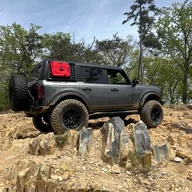
That can vary.For rock crawling C is the way to go. I use BFG tires and have never had a problem, even on sharp rocks. Just air down and they will conform over the rocks. I usually air down to 12 or so for rock crawling. Been wheeling for only 20 years, so what do I know?
Those tires pretty much never have to last more than one season of racing. Many are replaced after each race.I have said this before, but if you look at all large 39" and up tires, they are all C range. All competition rock crawlers use C range and air down to 8 psi or lower. Think of a balloon. A thick aired up balloon would be really easy to prick with a needle, but a flexible soft balloon will allow the needle to push in and deflect the balloon and not puncture it. My 2 cents.
So what's your opinion on load range for a Bronco?That can vary.
Not all rock crawling is the same.
Crawling in Moab on smooth sand stone is a totally different thing than crawling over water smoothed boulders in an old river bed and both are different from crawling in Johnson Valley on jagged volcanic rock and sharp basalt.
Also the weather can have a big impact as wet tires slice MUCH easier than dry ones do.
I have 40 years of wheeling under my belt.
I agree that terrain can vary and some tires are better for certain areas. I would point out that not all trails in Moab are on smooth sand stone, there are a lot of sharp rocks. Also I have done quite a bit of wheeling in Colorado, and they don't call the Rocky Mountains that because they are smooth.That can vary.
Not all rock crawling is the same.
Crawling in Moab on smooth sand stone is a totally different thing than crawling over water smoothed boulders in an old river bed and both are different from crawling in Johnson Valley on jagged volcanic rock and sharp basalt.
Also the weather can have a big impact as wet tires slice MUCH easier than dry ones do.
I have 40 years of wheeling under my belt.
Please explain that? I don't understand how that works. Rubber does not act like sponge cake.Also the weather can have a big impact as wet tires slice MUCH easier than dry ones do.
You ever put lube on your dinger? Slides in a little easier, from what I understand.Please explain that? I don't understand how that works. Rubber does not act like sponge cake.
The tire doesn't soak up the water. The water just acts as a lubricant for the sharp pointy object.Please explain that? I don't understand how that works. Rubber does not act like sponge cake.
It varies and a big part of the selection can be the exact tire you want. As the video pointed out in the case of the KO3s the manufacturer used stronger sidewall plies in the C to make up for losing a ply compared to the E rated oneSo what's your opinion on load range for a Bronco?