
Sponsored

Spring preload to lift?

OP
OP
gbub

gbub

Badlands
Well-Known Member
First Name
Gary
Joined
Aug 18, 2024
Threads
33
Messages
521
Reaction score
410
Location
Costa Mesa CA
Vehicle(s)
2002 Ford Ranger FX4, 1969 Fairlane Cobra, 1970 2800CS BMW, 1961 Austin Healey S
Your Bronco Model
Badlands
Hi -engineer here too, go UAB Blazers.

You're looking to understand how the eibachs or other perch collar adjustables result in lift. KISS here i think. They change the position, at load, within the coilover's stroke, but do that via that adjustment to the spring's compression. the rate of the spring doesnt change, but you've decreased it's free length, which in turn, pushes "up", as your tires aren't able to be pushed down while on solid ground.

And by the way, hurry up and put those protruck 2.0s on. I've had mine on for a couple weeks including a trail ride and I love them.
I am pretty sure I follow what you are saying but unless I am missing something, I don't fully agree. I do agree adjusting the perch changes the position of the spring at load. Yes, adding preload changes the 'free length' of the spring unloaded, but it does not change the length of the spring when loaded with the vehicle. That preload goes away once you pass the weight of that preload by going to the weight of the vehicle.

Since the height/length of the spring is the same whether it is preloaded or not, the position of the bottom of the spring as dictated by the location of the perch is what gives lift.

I do want to get those Eibachs on my Bronco. I am so busy modifying the rear interior for long term wilderness adventures that I have not had time to get to the shocks. It will happen though.
Sponsored

 
OP
OP
gbub

gbub

Badlands
Well-Known Member
First Name
Gary
Joined
Aug 18, 2024
Threads
33
Messages
521
Reaction score
410
Location
Costa Mesa CA
Vehicle(s)
2002 Ford Ranger FX4, 1969 Fairlane Cobra, 1970 2800CS BMW, 1961 Austin Healey S
Your Bronco Model
Badlands
Okay... I am odd so I kind of think about things differently..... I think the explanations above were excellent but I do think in more simple terms...

So... and adjustable perch, or top hat moves the entire assembly downward giving you more space between the axle and the frame........ Simple enough The dampener and the spring still have the exact same relationship. For every inch that the spring is compressed the dampener is compressed one inch. So lets say ride at neutral is at 15 inches (random number).... you articulate the axle 1 inch upward and both the dampener and the spring are in the 14 inch position.

So with preloading the spring we actually move the spring one inch but the rest of the assembly does not move. This means the the spring has moved downward relative to the assembly and the dampener actually has to extend one inch to match. The spring is still at the 15 inch position but the dampener is at the 16 inch position.

When we articulate (compress in this hypothetical) the spring is at the 14 inch position but the dampener is at the 15 inch position.... It is as if the spring has additional load on it that the dampener cannot "see". It is like the dampener thinks it has less load than the spring thinks it has. Hence the spring is "preloaded".

At least that is how I think of it... I don't know if that helps at all.
That may be true if you are compressing from the top. I would need to think about that to fully understand. I started this thread to discuss the Eibach Pro 2.0 coil over and equivalent which has an adjustable perch at the bottom of the spring. I don't think preload from the top has the same outcome as preloading from the bottom. Did I misunderstand your explanation?
 
Last edited:
OP
OP
gbub

gbub

Badlands
Well-Known Member
First Name
Gary
Joined
Aug 18, 2024
Threads
33
Messages
521
Reaction score
410
Location
Costa Mesa CA
Vehicle(s)
2002 Ford Ranger FX4, 1969 Fairlane Cobra, 1970 2800CS BMW, 1961 Austin Healey S
Your Bronco Model
Badlands
Hi -engineer here too, go UAB Blazers.

You're looking to understand how the eibachs or other perch collar adjustables result in lift. KISS here i think. They change the position, at load, within the coilover's stroke, but do that via that adjustment to the spring's compression. the rate of the spring doesnt change, but you've decreased it's free length, which in turn, pushes "up", as your tires aren't able to be pushed down while on solid ground.

And by the way, hurry up and put those protruck 2.0s on. I've had mine on for a couple weeks including a trail ride and I love them.
I forgot to mention another an effect I learned with coil overs on my racecar. If just one coil over is adjusted, it will change the load on that spring. By lifting only one coil over, it takes on more of the vehicle weight causing more compression of the spring. It takes a lot of adjusting to get a racecar's corner weights balanced.

Since we are talking about lifting all four corners or just the front or rear, this phenomenon does not apply unless the front or rear is adjusted a lot.
 

5GENIDN

Heritage
Well-Known Member
First Name
Joe
Joined
Jul 1, 2023
Threads
12
Messages
3,568
Reaction score
10,315
Location
Idaho
Vehicle(s)
23 Ford Bronco Heritage Limited 2dr
Your Bronco Model
Heritage
Clubs
 
That may be true if you are compressing from the top. I would need to think about that to fully understand. I started this thread to discuss the Eibach Pro 2.0 coil over and equivalent which has an adjustable perch at the bottom of the spring. I don't think preload from the top has the same outcome as preloading from the top. Did I misunderstand your explanation?
I am not familiar with the Eibach Pros.... I assume that by calling it "pre load" then they are moving the spring relative to the dampener. Therefore the at any given position, the dampener is extended further than the spring when compared to no "pre load" positions. Should not matter if you move the spring by preloading it from the top or the bottom relative to the dampener. All you have done is moved the spring.

I do assume there is some aesthetics and potential hazards that would be different with each approach.
 

Rumbloki

Badlands
Well-Known Member
First Name
Alton
Joined
May 18, 2023
Threads
9
Messages
624
Reaction score
1,167
Location
ATX/PCB
Vehicle(s)
ZR2, 1973 Mach 1
Your Bronco Model
Badlands
Clubs
 
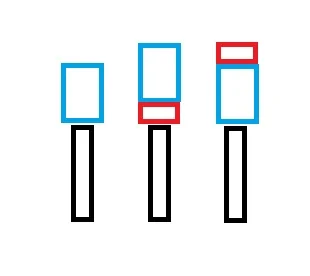
The length of the spring under load remains the same no matter where the spacer goes.
Placing a spacer under the spring extends the shock, moving the control arm further from the body.
Placing a spacer above the spring extends the shock, moving the control arm further from the body.
If the spring/spacer pack length is the same you get the same amount of lift.
If you place a spacer above the hat, the assembly length remains stock, but assembly is moved down from the body.
The spacer is the lift. Preload is not giving lift unless it compresses the spring more than the weight of the vehicle.
Adjusting the spring perch on an Eibach has the same effect as adding a perch spacer.
 

Sponsored
OP
OP
gbub

gbub

Badlands
Well-Known Member
First Name
Gary
Joined
Aug 18, 2024
Threads
33
Messages
521
Reaction score
410
Location
Costa Mesa CA
Vehicle(s)
2002 Ford Ranger FX4, 1969 Fairlane Cobra, 1970 2800CS BMW, 1961 Austin Healey S
Your Bronco Model
Badlands
I am not familiar with the Eibach Pros.... I assume that by calling it "pre load" then they are moving the spring relative to the dampener. Therefore the at any given position, the dampener is extended further than the spring when compared to no "pre load" positions. Should not matter if you move the spring by preloading it from the top or the bottom relative to the dampener. All you have done is moved the spring.

I do assume there is some aesthetics and potential hazards that would be different with each approach.
As I indicated, I would need to study it a little more to understand. I know one thing though, compressing from the top does not change the position of the spring. It just compresses the spring. Compressing the spring from the bottom moves the spring up while it is compressing. The bottom position of the spring should dictate ride height of the vehicle unless a longer, spacer or higher spring rate spring is being installed.

The Eibach Pro 2.0 coil overs come preloaded in that the shock is fully extended with the coils somewhat compressed. If more lift is desired the perch is moved up compressing the spring more creating more preload. The shock does not extend anymore because it is already fully extended. Once the coil over is installed and the weight of the vehicle is on it, the spring compresses more and the shock piston is pushed down too, closer its mid-travel.
 

Rumbloki

Badlands
Well-Known Member
First Name
Alton
Joined
May 18, 2023
Threads
9
Messages
624
Reaction score
1,167
Location
ATX/PCB
Vehicle(s)
ZR2, 1973 Mach 1
Your Bronco Model
Badlands
Clubs
 
As I indicated, I would need to study it a little more to understand. I know one thing though, compressing from the top does not change the position of the spring. It just compresses the spring.
When the spacer is on top of the spring, the entire spring is move down away from the body. Either way, the distance from the control arm to the mounting surface of the frame is the same.

The illustration is shown under vehicle weight. Before installing, they would all be the same length.


Ford Bronco Spring preload to lift? spacer position
 
Last edited:

87-Z28

Outer Banks
Well-Known Member
First Name
Andy
Joined
Sep 1, 2022
Threads
3
Messages
1,180
Reaction score
2,782
Location
Texas
Vehicle(s)
BMW
Your Bronco Model
Outer Banks
Clubs
 
For the engineers.

Static equilibrium (ride height) is dictated by spring force. NO other mechanism exists in our suspension. A simple force balance at each corner. Nothing more.

preload induces a static force into the spring based on a given displacement. Nothing more than this. New static equilibrium or ride height occurs from force balance at corner that must include preloaded spring force.

A proper force balance is required to understand where the lift (increased ride height) is coming from. @5GENIDN provided a nice example of how this works for a basic coilover.
 

Jdyount

Badlands
Well-Known Member
First Name
Jason
Joined
Jul 13, 2020
Threads
31
Messages
1,065
Reaction score
3,017
Location
Kansas
Vehicle(s)
2021 Badlands
Your Bronco Model
Badlands
Clubs
 
Ok, another engineer, let me take a crack at it.

First, spring rate is progressive and measured in lbs/in. If your spring rate is 500, it takes 500 lbs to move the spring 1 inch and you need 500 lbs x2 or 1000 lbs to move it 2 inches. (if it wasn't progressive, putting 500 lbs of force on the spring would fully collapse it).

Now, when you tighten your bottom perch by 1 inch (and pre-load your spring) you are putting 500 lbs of force on the perch (that can't go anywhere if the shock is fully extended). When you put the weight of the vehicle on the coilover assembly, it will only compress if you exceed the 500 lbs of force that the compressed (or loaded) spring is exerting to extend. Before preloading the spring, 500 lbs would compress the coilover 1 inch because the spring wasn't already compressed and pushing back, after preload, you need 1000 lbs to compress coilover 1 inch (again, because the spring is already compressed 1 inch against the shock that can't extend any more).

So preloading the spring both raises the ride height, because the spring is pushing to extend the assembly with a preloaded amount of force, but it also makes it require more force to compress the coilover assembly (thus making it feel stiffer).
 
Last edited:

Snacktime

Black Diamond
Well-Known Member
First Name
Nate
Joined
Jul 14, 2020
Threads
71
Messages
3,882
Reaction score
9,728
Location
Sac-a-tomatoes
Vehicle(s)
Bronco, F150
Your Bronco Model
Black Diamond
Clubs
 
As a Senior Safety Engineer, every coil over has preload otherwise we wouldn't have coil spring compressor accidents. These "coilover" devices store potential energy in order to keep the spring in place. As you lift you are adding more preload effectively changing the spring rate. Even linear springs are progressive by nature. On a progressive spring/stock spring the preload slowly loads up the lower spring rate causing the suspension to become stiffer.
 

Sponsored
OP
OP
gbub

gbub

Badlands
Well-Known Member
First Name
Gary
Joined
Aug 18, 2024
Threads
33
Messages
521
Reaction score
410
Location
Costa Mesa CA
Vehicle(s)
2002 Ford Ranger FX4, 1969 Fairlane Cobra, 1970 2800CS BMW, 1961 Austin Healey S
Your Bronco Model
Badlands
When the spacer is on top of the spring, the entire spring is move down away from the body. Either way, the distance from the control arm to the mounting surface of the frame is the same.

The illustration is shown under vehicle weight. Before installing, they would all be the same length.


spacer position.jpg
When the spacer is on top of the spring, the entire spring is move down away from the body. Either way, the distance from the control arm to the mounting surface of the frame is the same.

The illustration is shown under vehicle weight. Before installing, they would all be the same length.


spacer position.jpg
I understand that. You essentially using the spacer on top as the preload. I am not sure how that is done uninstalled but your installed (with vehicle load) diagram shows the affect. In any case, as I see it, there would be no change in stiffness because the loaded spring height stays the same.
 

Jdyount

Badlands
Well-Known Member
First Name
Jason
Joined
Jul 13, 2020
Threads
31
Messages
1,065
Reaction score
3,017
Location
Kansas
Vehicle(s)
2021 Badlands
Your Bronco Model
Badlands
Clubs
 
Think of the coilover as a black box, forget about it looks like, just understand that you have two points (the top and bottom mounts) and imagine trying to push those two points together. If I push with a force of 500 lbs and it those points move 3 inches, think of that as the default ride height, now if I change how hard it is to press those two points together, now the 500 lbs of force only moves them 2 inches closer, THAT is all preloading is doing. You're just making it harder to push the 2 points together.

Now, putting a spacer ABOVE the top mounting point of the coilover also does change your ride height, because the point at where that top mounting point attaches has moved down. This has nothing to do with preloading, or the force required to compress the suspension, just changes the mounting location. Unlike changing the preload of the spring, that DOES change the geometry of your suspension thus changes the path the suspension takes moving up and down.
 

Jdyount

Badlands
Well-Known Member
First Name
Jason
Joined
Jul 13, 2020
Threads
31
Messages
1,065
Reaction score
3,017
Location
Kansas
Vehicle(s)
2021 Badlands
Your Bronco Model
Badlands
Clubs
 
I understand that. You essentially using the spacer on top as the preload. I am not sure how that is done uninstalled but your installed (with vehicle load) diagram shows the affect. In any case, as I see it, there would be no change in stiffness because the loaded spring height stays the same.
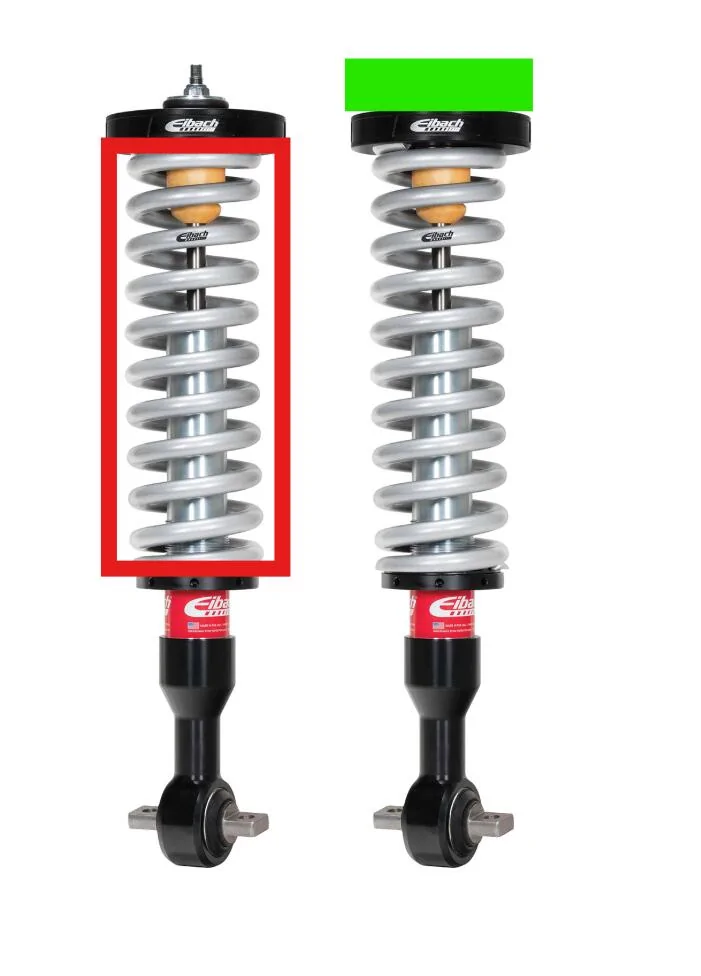
Compressing the spring in any way between the top and bottom spring perch (red area) increases preload and thus ride height because you're compressing the spring and making it harder to compress further. This can be done with a spacer (below or above the spring but still between the spring perches) or by moving the bottom spring perch up in this case.

Putting a spacer in the green position does nothing to preload, but it increases the ride height because it is effectively making the coilover physically longer.

Ford Bronco Spring preload to lift? 1751489326792-sy
 
Last edited:

Rumbloki

Badlands
Well-Known Member
First Name
Alton
Joined
May 18, 2023
Threads
9
Messages
624
Reaction score
1,167
Location
ATX/PCB
Vehicle(s)
ZR2, 1973 Mach 1
Your Bronco Model
Badlands
Clubs
 
Putting a spacer in the red position (is the same thing as adjusting the spring perch at the bottom up) will increase ride height because it is preloading the spring.

Putting a spacer in the green position does nothing to preload, but it increases the ride height because it is effectively making the coilover physically longer.

View attachment 737875

The spacer on the left is adding preload by reducing the space available for the spring, not by adding weight. Because of this, the weight of the vehicle will compress the spring to the same length with or without the spacer. The preload is cancelled out because the spacer doesn't add any weight of it's own. The lift is achieved because there is more distance between the vehicle mount and the top of the spring.

I have spring perch spacers. The ride is not stiffer. The shocks will top-out more easily, due to the fact that the shock is already more extended. Preload may kick in here as the weight of the Bronco is unloaded hitting a steep driveway.
 
Last edited:
OP
OP
gbub

gbub

Badlands
Well-Known Member
First Name
Gary
Joined
Aug 18, 2024
Threads
33
Messages
521
Reaction score
410
Location
Costa Mesa CA
Vehicle(s)
2002 Ford Ranger FX4, 1969 Fairlane Cobra, 1970 2800CS BMW, 1961 Austin Healey S
Your Bronco Model
Badlands
For the engineers.

Static equilibrium (ride height) is dictated by spring force. NO other mechanism exists in our suspension. A simple force balance at each corner. Nothing more.

preload induces a static force into the spring based on a given displacement. Nothing more than this. New static equilibrium or ride height occurs from force balance at corner that must include preloaded spring force.

A proper force balance is required to understand where the lift (increased ride height) is coming from. @5GENIDN provided a nice example of how this works for a basic coilover.
I was following what you said and agreed. Then came the statement, " New static equilibrium or ride height occurs from force balance at corner that must include preloaded spring force". I am not sure what you mean by "must include preloaded spring force". If you mean the preload must be added to the spring force, I cannot agree. If you are saying the preload is part of the total spring force when loaded at the weight of the vehicle, I agree.

The spring does not know if it was preloaded or not once it is loaded beyond the preload. It only knows what load is being applied to it and the preload cannot be added to it.
Sponsored


Top