
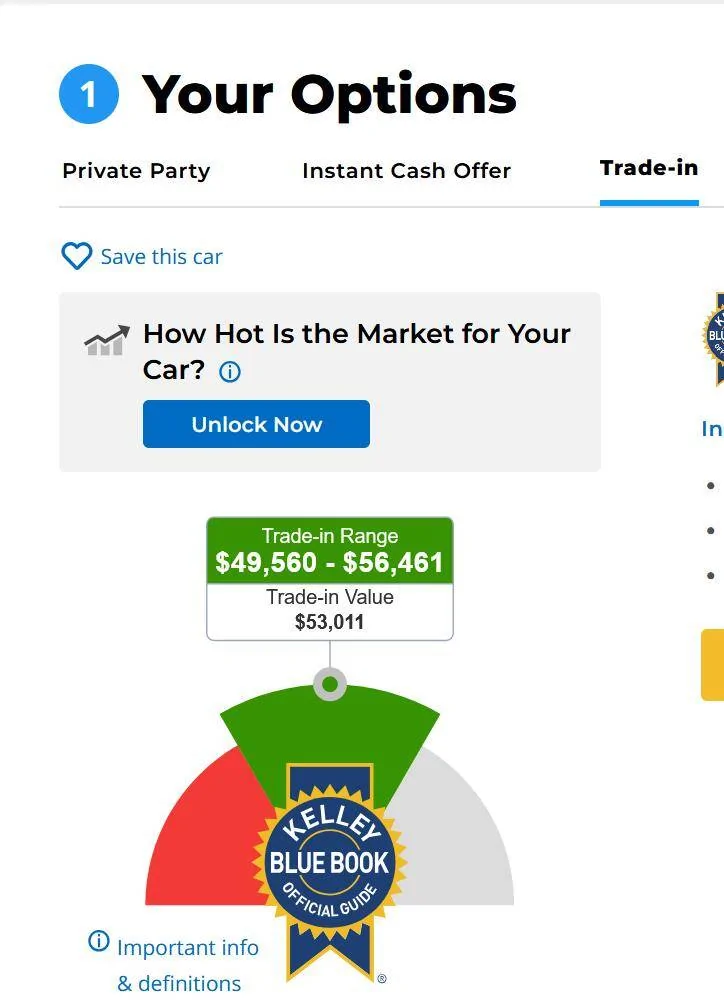
This is usually because they don't go off KBB values, they're likely going off NADA (National Auto Dealer's Association) values. Whichever number lowers the value is what they'll go with.Interesting, but why is Blue Book so far off?

Sponsored
This is usually because they don't go off KBB values, they're likely going off NADA (National Auto Dealer's Association) values. Whichever number lowers the value is what they'll go with.Interesting, but why is Blue Book so far off?


Of course you listed it as excellent, everyone does even though KBB says it rarely applies. Your lift kit that you were trying to troubleshoot surely knocks you out of Excellent condition.It's a fully loaded Wildtrak. Yes, it is in Excellent condition and I marked it that way. Also can see that in the photos I provided.
It does not make sense - prices are too damn high! I keep waiting for the other shoe to drop...but perhaps current prices will be sustained a lot longer, even indefinably?I'm also surprised that Ford is only offering $2,500 off on '24 Broncos. You would think that they'd want to clear stock ahead of next year.
In my local and regional area, Wildtracks and heavily $up-optioned$ Badlands are plentiful on dealer lots, so the OP's trade-in would have a disadvantageIf they have plenty of a vehicle in-stock... trade-in values are based on the local auction values and not KBB values. That way if they hit a worst-case scenario and they cannot sell a vehicle, they can be sure to break-even at auction (or come close to it). The target they shoot for is 3 months—any used vehicle on the lot today should be sold in 3 months time.
Interesting take, I guess I didn't consider that since I was only fixing an issue from the factory, the '23 Wildtrak was lower than the other Sas trims. That seems to have been corrected in '24.Of course you listed it as excellent, everyone does even though KBB says it rarely applies. Your lift kit that you were trying to troubleshoot surely knocks you out of Excellent condition.
^^^^ This is the answer you are looking for.Talked to the sales manager about this several years ago. At the time it was regards to F-150, but same would apply to the Bronco.
Two things I learned:
The exception to rule 2 is if it is a nationally recognized aftermarket kit, like those sold by Roush or Rocky Ridge. But on DIY upgrades they almost never get the returns on aftermarket gear, so they completely ignore them.
- If they have plenty of a vehicle in-stock... trade-in values are based on the local auction values and not KBB values. That way if they hit a worst-case scenario and they cannot sell a vehicle, they can be sure to break-even at auction (or come close to it). The target they shoot for is 3 months—any used vehicle on the lot today should be sold in 3 months time.
- Aftermarket accessories have no bearing on the value of a vehicle, and in some cases can reduce the value. Anything aftermarket is a very niche and generally cannot be warrantied. They are in the business of selling vehicles to the masses, not the niche market.
Look at the historical record. Ford's stock has been low forever.Don't know how much anyone pays attention to the stock market but Ford's stock has been sucking wind lately. One of the contributing issues to the stock slump is the overburden of excessive inventory. Just a fyi