
Sponsored
Search results
-

Sudden Shutdown?
You say that, but that behavior sounds exactly like a power problem. A poor quality ground or power connection that, as it heats, builds resistance reducing battery voltage causing the vehicle to die. Then that cools off and passes electricity again, so you start it up until it heats again and...- mike8675309
- Post #6
- Forum: Issues, Repairs, Warranty, TSB, Recalls
-
Base Sasquatch w/Manual MSRP
It's only steep if you don't want it that bad. You didn't say if it was a 2 door or not. But for those looking for a manual 2 door sas, there aren't that many for sale, which can lead to higher sale prices. Most people with a 2 door sas manual are not going to be selling them. And that 39K...- mike8675309
- Post #4
- Forum: General Bronco Topics
-
What did you do TO / WITH your Bronco today? 👨🏻🔧🧰🚿🛠
Oh, this was my 2nd time doing it myself and I had it down pretty well, but it still sucked. I think what I'll do next time is just assume I should pull the front wheel and the wheel liner. That should make it super easy. It's just stupid; that's what needs to be done. I mean, if it were a...- mike8675309
- Post #7,394
- Forum: General Bronco Topics
-
What did you do TO / WITH your Bronco today? 👨🏻🔧🧰🚿🛠
I Changed the oil and rotated the tires. I also once again heaped curses onto the Ford engineering team behind the location of the oil filter on the 2.3 and all the extra stuff that they put in the way of changing it. It's just plain stupid.- mike8675309
- Post #7,392
- Forum: General Bronco Topics
-
Blown M190 on Hells Gate <-Video proof
Proof that the M190 will work with 37's at the Mall but not on the rocks. Actual evidence is always better than just guessing.- mike8675309
- Post #59
- Forum: Issues, Repairs, Warranty, TSB, Recalls
-
Bronco
Some lessons. Don't try to start the vehicle if you are already moving backward. Your best bet is to slam both feet on the brake pedal and push as hard as possible, particularly if you don't have assist. Engage the emergency brake. Then steer. Nothing about this list is unique to the...- mike8675309
- Post #133
- Forum: General Bronco Topics
-
Bronco
I have never had to do anything I would call ramping up the torque/rpms. On obstacles, I've had zero issues feathering the clutch as necessary. In low range and on an obstacle you won't be able to "pop the clutch" to get the vehicle to do much. The 2.3 doesn't have enough engine mass but it has...- mike8675309
- Post #132
- Forum: General Bronco Topics
-
Squatch Tests CVF Intercooler for 2.3L 7M Badlands!
With the volume increase, you may have noticed a slight reduction in response. Have you seen that with your installation?- mike8675309
- Post #26
- Forum: 2.3L EcoBoost Engine / Exhaust / Mods
-
Swapped Goodyears for KO2s - noticeably worse ride quality
I get the warning at 32psi I think. That's what I recall from winter. I've found 38psi in the goodyears is about perfect for fuel economy and trade off for comfort on the road. Offroad I air down to about 12.- mike8675309
- Post #68
- Forum: Tires, Wheels, Brakes
-
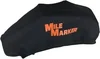
Covering the naked winch
You don't need to take the rope off. It should be a synthetic UHMWPE material, it doesn't absorb moisture like cotton or nylon rope. However if pulling logs, you may want to protect the line from abrasion. UHMWPE lines are used on ships and in high-friction jobs on big winches. It's popular...- mike8675309
- Post #6
- Forum: Photos / Videos
-
Swapped Goodyears for KO2s - noticeably worse ride quality
Drop them to 38 and it'll feel better I bet. Remember the cold temp means once you're on the road it'll actually warm up and increase pressure. Big tires like this do generate heat, so I bet your 40psi are pushing 42 to 43 psi or more when warm.- mike8675309
- Post #66
- Forum: Tires, Wheels, Brakes
-
Covering the naked winch
It looks like you went with steel wire rope for your which? Do you have a use case where that makes more sense for you?- mike8675309
- Post #2
- Forum: Photos / Videos
-
Swapped Goodyears for KO2s - noticeably worse ride quality
Check the air pressure vs what you had on the Goodyears. When they swap the tires they may have put more pressure in the KO2's than the Goodyears and that would explain what you are feeling.- mike8675309
- Post #61
- Forum: Tires, Wheels, Brakes
-
4H/Slippery on Highway
The difference to is that GIF was on snow on a sunny day. There was very little ice on the ground. I'm not sure where you are from but highway bridge decks and ramps can be covered in "black ice" and no 4WD system will help you when you need to stop on that.- mike8675309
- Post #68
- Forum: General Bronco Topics
-
4H/Slippery on Highway
Best car I ever had for driving through the snow during a blizzard was my 90 thunderbird SC. Thew some weight into the back and it went everywhere. Of course I had been driving through snow since I got my license, for 3 years in this corvair, or at least one like it. It was blue and had 14"...- mike8675309
- Post #65
- Forum: General Bronco Topics
-
4H/Slippery on Highway
Drive like that in front of any state patrol officer and you'll get tagged for reckless driving. Sadly my statements are wholly related to proper driving on maintained interstates. Not purpose-built race cars.- mike8675309
- Post #61
- Forum: General Bronco Topics
-
4H/Slippery on Highway
The reality is that tires on the road only have a limited amount of traction to use. Rear wheel drive cars do best in slippery conditions because the front wheels are just having to deal with turning and braking. The rear wheels are just dealing with braking and acceleration. Front wheel...- mike8675309
- Post #54
- Forum: General Bronco Topics
-
4H/Slippery on Highway
If you are on a slippery road and driving at 55 MPH, then you probably should be slowing down anyway. Back then, your 4WD was also part-time, so it required loose or slipper surfaces to be engaged.- mike8675309
- Post #43
- Forum: General Bronco Topics
-
Android Auto cutting out for a second.
Wired or wireless? If wired, get a new cable. If wireless, does it still happen if you go wired? -
Lessons learned from installing the HOSS 3.0/74Weld steering rack
Align your front end just enough to make it drive decent on the way to the alignment shop with your tape measure.- mike8675309
- Post #11
- Forum: Suspension, Chassis, Steering