
- Thread starter
- #1
Two weeks ago on a Saturday, I had planned to take my 2022 Ford Bronco (2.3L engine, 120,000 miles) out to play in the snow with my daughter. However, work called, and I ended up driving to Vegas in the company van to keep a customer happy. I got back late around 11 p.m., dropped off the van, and started warming up the Bronco.
Within a minute, the engine began overheating—there had been zero issues beforehand. I shut it off immediately and called a friend for help. Luckily, we found a gallon of 50/50 coolant at a nearby 7-Eleven (the only place open at that hour), and the Bronco took the entire gallon. Rather than troubleshooting in the middle of the night, I decided to wait until morning.
The next day, I picked up another gallon of coolant. Having grown up around used cars (my dad owned a dealership), I suspected it might be a radiator leak—though I hadn't noticed any the night before—or more likely a stuck-closed thermostat, since I hadn't heard any bearing noise from the water pump.
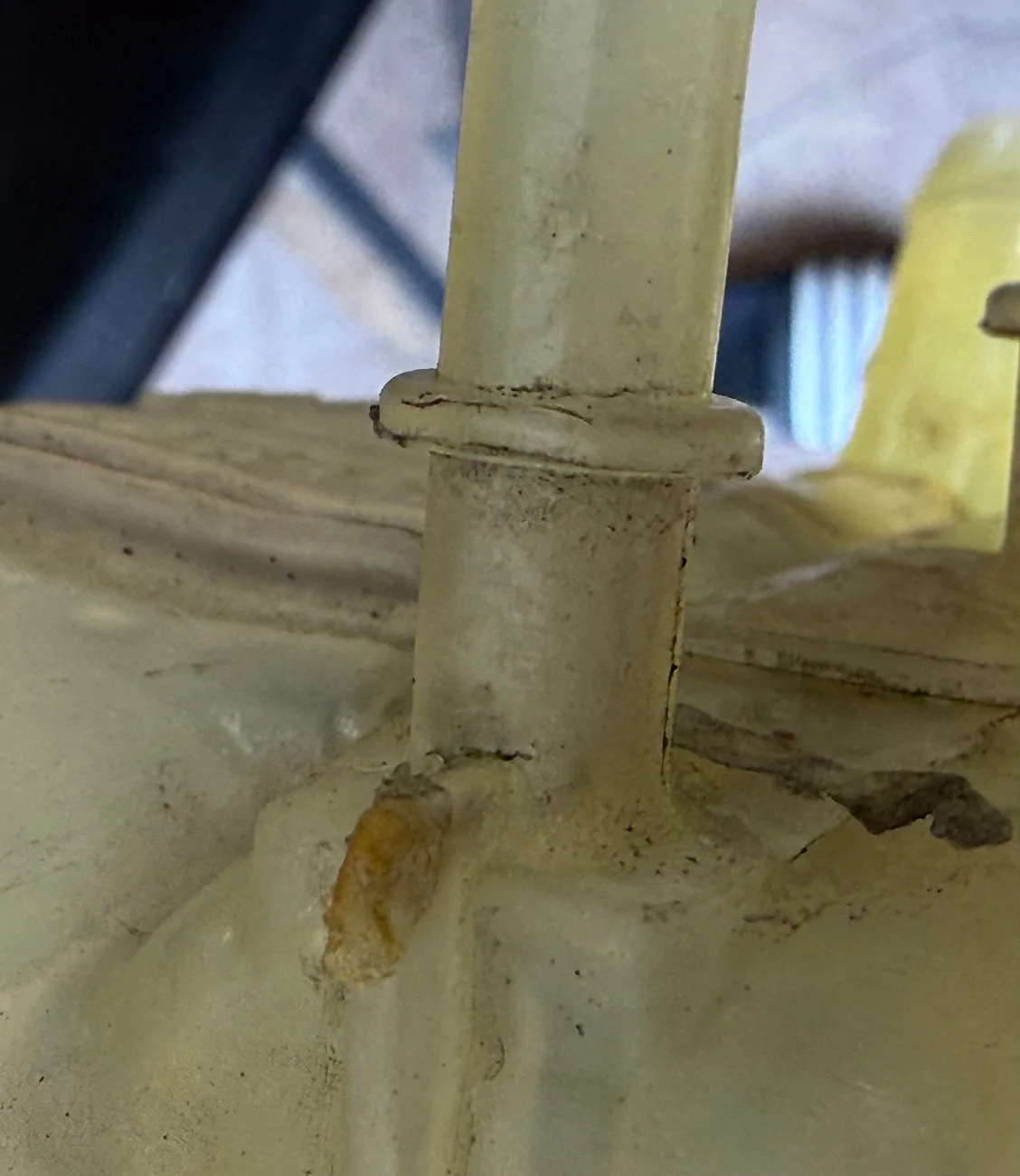
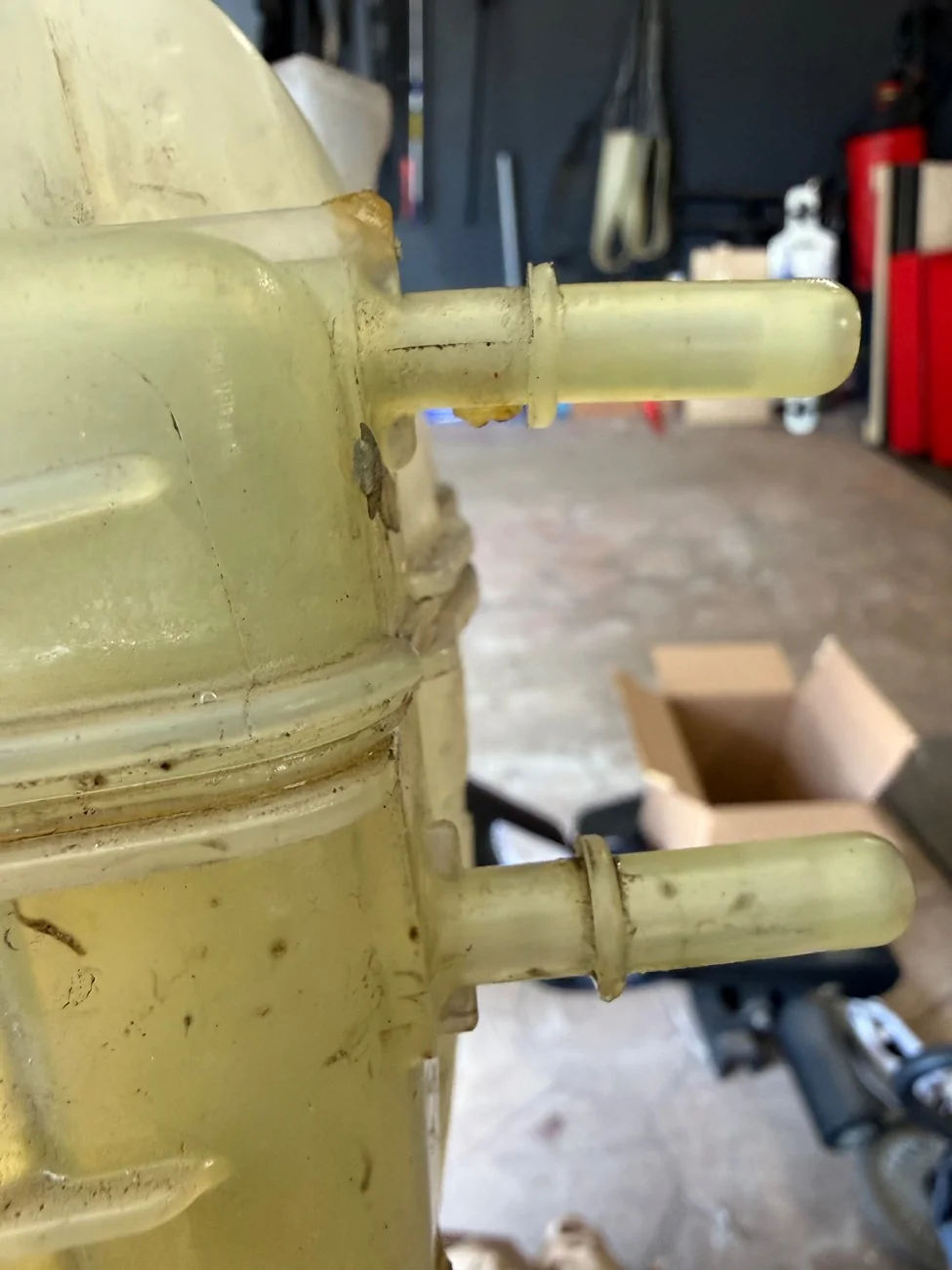
The evening before, my friend had spotted a tiny slit, slightly larger than 1/4 inch, on the coolant reservoir where the top hose connects. We didn't think much of it at the time. In the morning, I turned on the ignition without starting the engine, and the overheat warning was still active. I plugged in my OBD diagnostic reader, cleared the codes, and repositioned the vehicle in the parking lot, figuring I'd need space to replace the thermostat. Just like that, the overheating issue vanished.
I topped off the coolant reservoir, and sure enough, after about 15-20 minutes, a small amount of coolant started seeping out from that tiny crack. I drove it around the block, and the temperature stayed normal. Then I filled up with gas and drove around near home for about an hour with no problems at all.
It turned out that damn coolant reservoir with its little crack had caused the loss of over a gallon of coolant. I ordered a new one from the local dealer for $80, and swapping it out took only about 15 minutes.
According to the parts guy, this issue isn't uncommon, especially for Broncos that see off-road use. Apparently, the weight of the hose causes the reservoir's stem to flex over time, eventually leading to a crack. There was some yellow residue near the leak that came off easily with a pick.


Within a minute, the engine began overheating—there had been zero issues beforehand. I shut it off immediately and called a friend for help. Luckily, we found a gallon of 50/50 coolant at a nearby 7-Eleven (the only place open at that hour), and the Bronco took the entire gallon. Rather than troubleshooting in the middle of the night, I decided to wait until morning.
The next day, I picked up another gallon of coolant. Having grown up around used cars (my dad owned a dealership), I suspected it might be a radiator leak—though I hadn't noticed any the night before—or more likely a stuck-closed thermostat, since I hadn't heard any bearing noise from the water pump.
The evening before, my friend had spotted a tiny slit, slightly larger than 1/4 inch, on the coolant reservoir where the top hose connects. We didn't think much of it at the time. In the morning, I turned on the ignition without starting the engine, and the overheat warning was still active. I plugged in my OBD diagnostic reader, cleared the codes, and repositioned the vehicle in the parking lot, figuring I'd need space to replace the thermostat. Just like that, the overheating issue vanished.
I topped off the coolant reservoir, and sure enough, after about 15-20 minutes, a small amount of coolant started seeping out from that tiny crack. I drove it around the block, and the temperature stayed normal. Then I filled up with gas and drove around near home for about an hour with no problems at all.
It turned out that damn coolant reservoir with its little crack had caused the loss of over a gallon of coolant. I ordered a new one from the local dealer for $80, and swapping it out took only about 15 minutes.
According to the parts guy, this issue isn't uncommon, especially for Broncos that see off-road use. Apparently, the weight of the hose causes the reservoir's stem to flex over time, eventually leading to a crack. There was some yellow residue near the leak that came off easily with a pick.
Sponsored