Sponsored

Frozen Valve Stem - solutions?

OP
OP
MillerAndCheeto

MillerAndCheeto

Wildtrak
Well-Known Member
First Name
Robin
Joined
Nov 24, 2021
Threads
11
Messages
458
Reaction score
711
Location
Calgary, AB
Vehicle(s)
2 Door Cyber Orange Wildtrak Sasquatch
Your Bronco Model
Wildtrak
This is what another member suggested as well. While it would likely work, I personally hesitate to pull the trigger on this option because:

1. The time to melt with the heat gun would likely be longer than with warm liquid, simply due to the heat capacity of warm liquid vs hot air (though this variable highly dependent on the temperature of the liquid, and how much a person has on them...coffee vs warm bladder)

2. Chemically decreasing the freezing point with an isopropyl alcohol with some lock de-icer would be the simplest in terms of size, weight and cost. A few bucks for a small bottle vs $100 for a large heat gun that requires a battery.

That being said, I am looking at your option with a piqued interest because of what I saw this morning. I went out and inspected the rest of the Bronco and HOLY CRAP, I did not appreciate how deep the water crossing truly was, and how much of a water wave can be built up in front of the vehicle during water fording. It was so cold that all the water being flung around by the tires froze nearly instantly to the undercarriage and front of the Bronco. The wheel wells, the entire undercarriage, frame, components etc. are COMPLETELY coated in ice. The front of the bumper where the ACC/pre-collision module is, that whole section is CAKED in a thick layer of ice (so the water thickness and/or wave front created during the water crossing was much deeper than 18". The top of the bumper and top of the winch are caked in ice, and the top of my step sliders (which are only 1" lower than the door) also have a coating of ice. It's unreal seeing it now in the light vs last night in the dark.

The reason your option may actually make sense (outside of just a frozen valve stem) is this - what if I needed to do field-repair of something that was absolutely caked in this thick ice? Or if I needed to unthaw something in an awkward upside down spot for a field repair? That would be a lot of hot coffee or pee and maybe not being able to get the liquid on it, vs being able to sit for a longer period of time with a heat gun. Definitely some food for thought.

I will end with this for anyone still with me - winter wheeling in very cold temperatures is simply terrifying when you think of the consequences of something going wrong and not having the right gear. Sure it's warm in the truck, but if something happens, make sure you pack enough warm clothing that you could (if worse comes to worse) hike out and not freeze to death. Versus when we go wheeling in the summer, all we need to pack is a rain coat.

Edit to add: I pack a ridiculous amount of spare clothing in the winter. But I've chatted with others on the trail who do not, and I question their preparedness for those "what if" conditions.
Sponsored

 
Last edited:
RustysBronco

Badlands
Well-Known Member
First Name
Matt "Rusty" R.
Joined
Dec 17, 2021
Threads
87
Messages
1,582
Reaction score
2,214
Location
Jupiter, FL
Website
www.instagram.com
Vehicle(s)
2022 Ford Bronco Badlands Sasquatch
Your Bronco Model
Badlands
Clubs
 
This is what another member suggested as well. While it would likely work, I personally hesitate to pull the trigger on this option because:

1. The time to melt with the heat gun would likely be longer than with warm liquid, simply due to the heat capacity of warm liquid vs hot air (though this variable highly dependent on the temperature of the liquid, and how much a person has on them...coffee vs warm bladder)

2. Chemically decreasing the freezing point with an isopropyl alcohol with some lock de-icer would be the simplest in terms of size, weight and cost. A few bucks for a small bottle vs $100 for a large heat gun that requires a battery.

That being said, I am looking at your option with a piqued interest because of what I saw this morning. I went out and inspected the rest of the Bronco and HOLY CRAP, I did not appreciate how deep the water crossing truly was, and how much of a water wave can be built up in front of the vehicle during water fording. It was so cold that all the water being flung around by the tires froze nearly instantly to the undercarriage and front of the Bronco. The wheel wells, the entire undercarriage, frame, components etc. are COMPLETELY coated in ice. The front of the bumper where the ACC/pre-collision module is, that whole section is CAKED in a thick layer of ice (so the water thickness and/or wave front created during the water crossing was much deeper than 18". The top of the bumper and top of the winch are caked in ice, and the top of my step sliders (which are only 1" lower than the door) also have a coating of ice. It's unreal seeing it now in the light vs last night in the dark.

The reason your option may actually make sense (outside of just a frozen valve stem) is this - what if I needed to do field-repair of something that was absolutely caked in this thick ice? Or if I needed to unthaw something in an awkward upside down spot for a field repair? That would be a lot of hot coffee or pee and maybe not being able to get the liquid on it, vs being able to sit for a longer period of time with a heat gun. Definitely some food for thought.

I will end with this for anyone still with me - winter wheeling in very cold temperatures is simply terrifying when you think of the consequences of something going wrong and not having the right gear. Sure it's warm in the truck, but if something happens, make sure you pack enough warm clothing that you could (if worse comes to worse) hike out and not freeze to death. Versus when we go wheeling in the summer, all we need to pack is a rain coat.

Edit to add: I pack a ridiculous amount of spare clothing in the winter. But I've chatted with others on the trail who do not, and I question their preparedness for those "what if" conditions.
Makes sense to me. I just had my first experience camping out in freezing weather last month (nothing close to what you're describing). All I gotta say is that's gonna be a "NO" for me on future trips. 😆
 
OP
OP
MillerAndCheeto

MillerAndCheeto

Wildtrak
Well-Known Member
First Name
Robin
Joined
Nov 24, 2021
Threads
11
Messages
458
Reaction score
711
Location
Calgary, AB
Vehicle(s)
2 Door Cyber Orange Wildtrak Sasquatch
Your Bronco Model
Wildtrak
Makes sense to me. I just had my first experience camping out in freezing weather last month (nothing close to what you're describing). All I gotta say is that's gonna be a "NO" for me on future trips. 😆
The wife and I had this spectacular idea to do winter tent camping a few years back. -12C overnight, and when you unpack everything you realize that 95% of what you packed was simply to keep yourself from freezing to death in the middle of the night. That's also a "NO" for us on future winter camping.
 

Emilian

Badlands
Active Member
First Name
Emilian
Joined
Jan 25, 2024
Threads
0
Messages
36
Reaction score
16
Location
Bucks County, PA
Vehicle(s)
Badlands, Mercedes, Mini
Your Bronco Model
Badlands
Hey Forum,

I ran into an interesting problem today, looking for your ideas/solutions if you've had a similar experience.

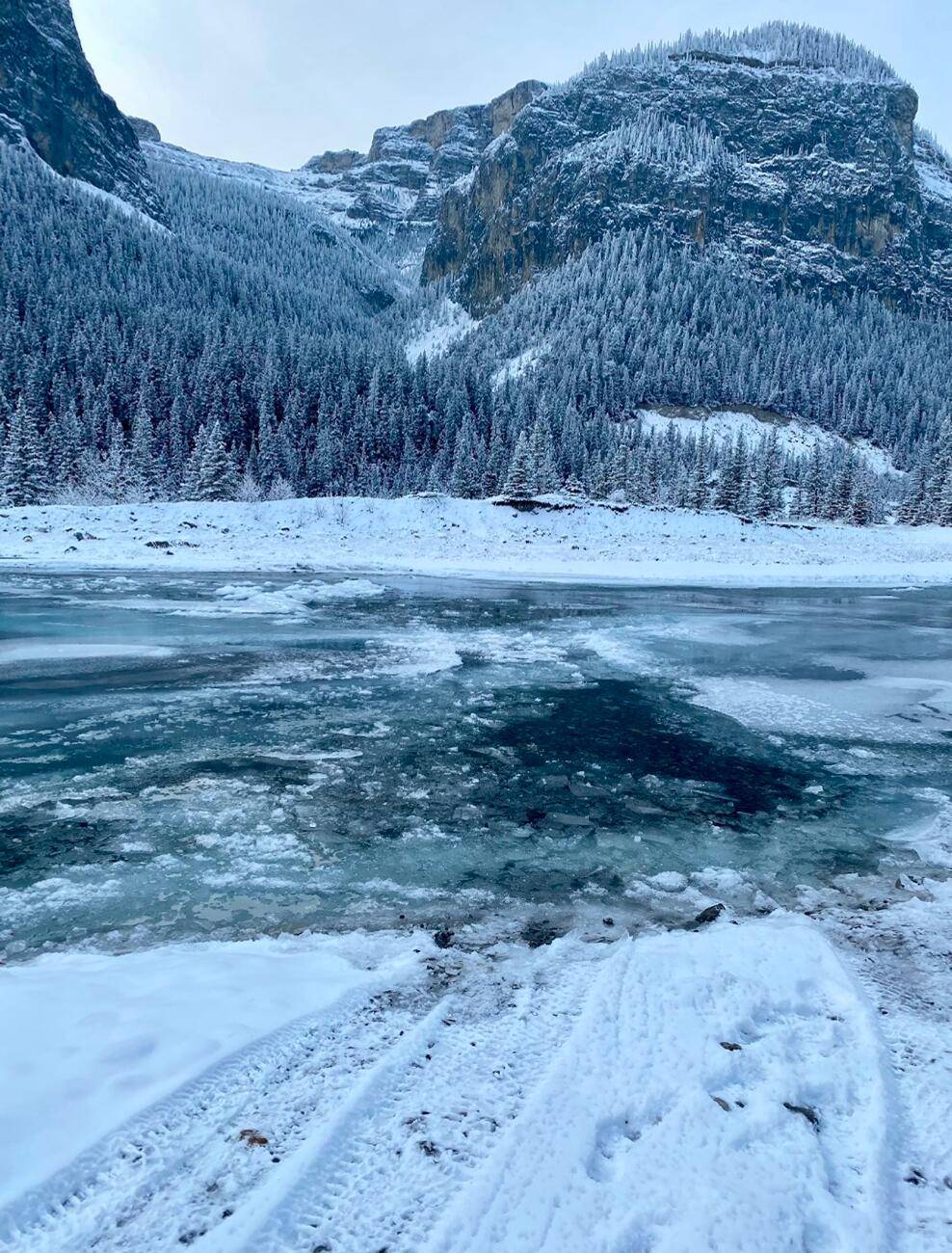
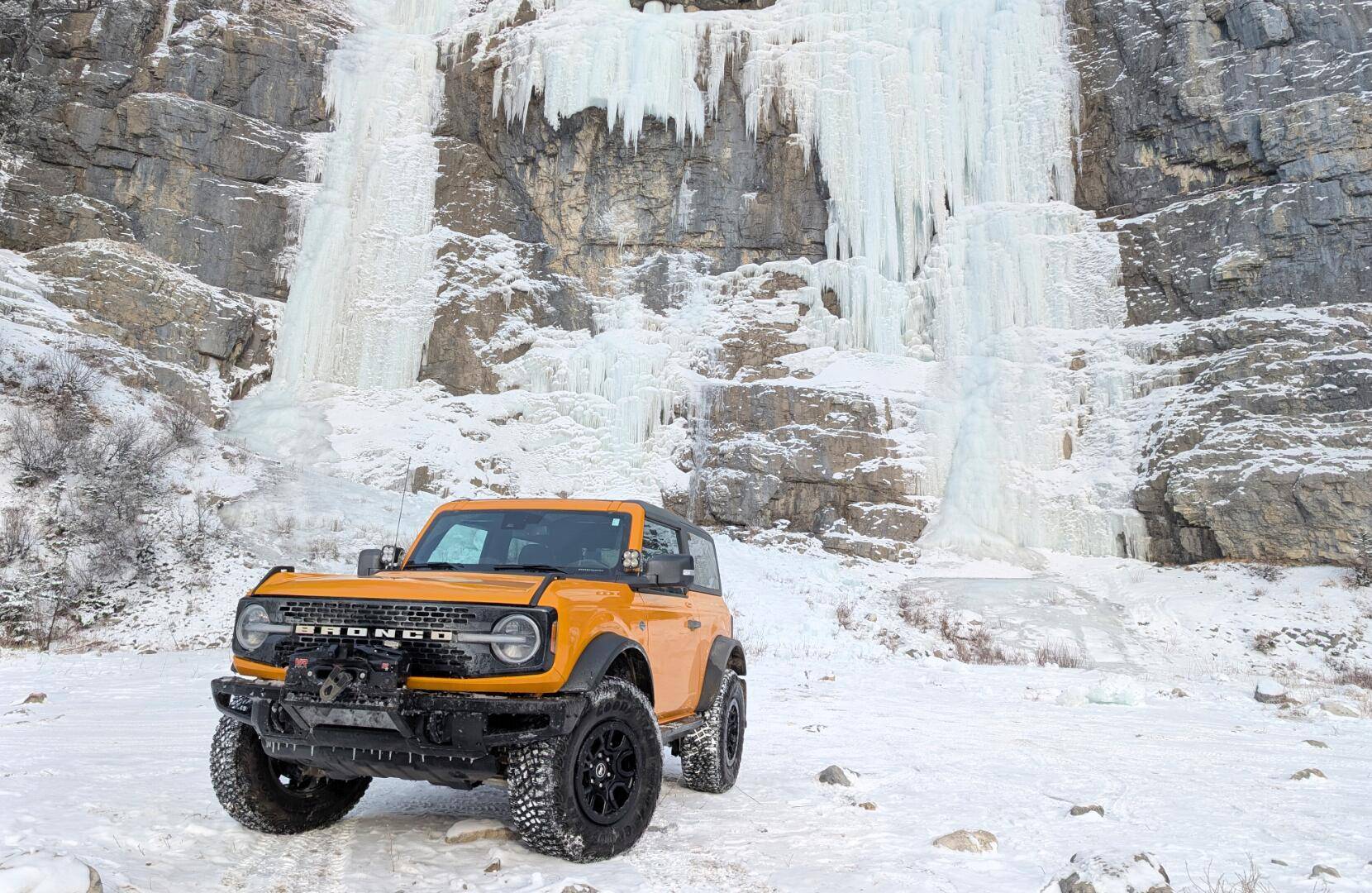
I went winter offroading today, it was COLD, around -18 C (0 F). This particular route has a few river crossings. The deepest one was a good 18" with a frozen top layer, so we busted through a bunch of ice on the way through - absolutely no problem. First picture below. Final destination was the frozen waterfalls, picture #2.

The problem I ran into was after getting back to the staging area to air back up.....it was super cold and now the rims and valve stems were covered in a thick layer of ice from the river crossings. I tried chipping away at them but I was worried I'd hit a stem too hard and "just right" and break a stem. I found a carwash relatively close by to defrost the tires.

So my question - has anyone ran into this issue before or have a solution in mind? Off the top of my head I'm thinking just carry some lock de-icer during winter offroading? A blowtorch seems a little over the top.

Thoughts?

Screenshot_20250103-193507.jpg


Screenshot_20250103-190843~2.jpg
I keep my small torch
Hey Forum,

I ran into an interesting problem today, looking for your ideas/solutions if you've had a similar experience.

I went winter offroading today, it was COLD, around -18 C (0 F). This particular route has a few river crossings. The deepest one was a good 18" with a frozen top layer, so we busted through a bunch of ice on the way through - absolutely no problem. First picture below. Final destination was the frozen waterfalls, picture #2.

The problem I ran into was after getting back to the staging area to air back up.....it was super cold and now the rims and valve stems were covered in a thick layer of ice from the river crossings. I tried chipping away at them but I was worried I'd hit a stem too hard and "just right" and break a stem. I found a carwash relatively close by to defrost the tires.

So my question - has anyone ran into this issue before or have a solution in mind? Off the top of my head I'm thinking just carry some lock de-icer during winter offroading? A blowtorch seems a little over the top.

Thoughts?

Screenshot_20250103-193507.jpg


Screenshot_20250103-190843~2.jpg
I keep small 6 inch butane torch in the back all season long. May work for you too 👍 Let me know. Happy Holidays 😀
 

KABQ

Base
Well-Known Member
First Name
Aaron
Joined
Aug 16, 2021
Threads
17
Messages
2,389
Reaction score
7,433
Location
Albuquerque, NM
Vehicle(s)
'93 4Runner, '84 Vanagon, '93 Miata, '14 LittleGuy
Your Bronco Model
Base
Clubs
 
I'm all for the pee solution...

... for the other guy's rig.
But then wouldn't that make it your rig? We play by dog rules here!
 

Sponsored

crenca

Big Bend
Well-Known Member
First Name
Chris
Joined
Nov 4, 2024
Threads
24
Messages
1,382
Reaction score
2,234
Location
Southern New Mexico
Vehicle(s)
2016 Sequoia, 2012 Tundra, 2024 Sasquatched 2.3L 7M 4Door Bronco
Your Bronco Model
Big Bend
the entire undercarriage, frame, components etc. are COMPLETELY coated in ice. The front of the bumper where the ACC/pre-collision module is, that whole section is CAKED in a thick layer of ice (so the water thickness and/or wave front created during the water crossing was much deeper than 18". The top of the bumper and top of the winch are caked in ice, and the top of my step sliders.....The reason your option may actually make sense (outside of just a frozen valve stem) is this - what if I needed to do field-repair of something that was absolutely caked in this thick ice? Or if I needed to unthaw something in an awkward upside down spot for a field repair? T
I could be wrong, but I don't think that little heat gun would be fit for purpose on that much ice, particularly if temps are closer to 0 then 32...particularly if you have water worked in somewhere (maybe a torn cv boot) and your depending on that gun to work in enough heat to effect a repair.
 

Emilian

Badlands
Active Member
First Name
Emilian
Joined
Jan 25, 2024
Threads
0
Messages
36
Reaction score
16
Location
Bucks County, PA
Vehicle(s)
Badlands, Mercedes, Mini
Your Bronco Model
Badlands
I could be wrong, but I don't think that little heat gun would be fit for purpose on that much ice, particularly if temps are closer to 0 then 32...particularly if you have water worked in somewhere (maybe a torn cv boot) and your depending on that gun to work in enough heat to effect a repair.
Small torch would solve frozen valve issue. For undercarriage, frame, bumper, winch, CVS (maybe) i recommend portable forced air propane heater next time one can anticipate such a situation. Let me know what you think 👍
 
OP
OP
MillerAndCheeto

MillerAndCheeto

Wildtrak
Well-Known Member
First Name
Robin
Joined
Nov 24, 2021
Threads
11
Messages
458
Reaction score
711
Location
Calgary, AB
Vehicle(s)
2 Door Cyber Orange Wildtrak Sasquatch
Your Bronco Model
Wildtrak
I could be wrong, but I don't think that little heat gun would be fit for purpose on that much ice, particularly if temps are closer to 0 then 32...particularly if you have water worked in somewhere (maybe a torn cv boot) and your depending on that gun to work in enough heat to effect a repair.
Upon further review you are absolutely right. These battery powered heat guns are great for getting small areas heated, but reviewers complain about both the longevity of a charge and the heat output. Which then leads to a corded one, of which is difficult because of the 400W max output of the Bronco internal inverter - not nearly enough for the 1500W corded heat guns. Buying a beefier inverter just for this task is overkill.

I have decided that lock de-icer for small frozen sections and a small propane torch (as recommended by another member) for larger sections is officially going into the kit.
 

Brian_B

Big Bend
Well-Known Member
First Name
Brian
Joined
Sep 14, 2023
Threads
60
Messages
8,237
Reaction score
14,578
Location
Central CA
Vehicle(s)
'23 BB 4dr 7MT, '22 BSport OBX, '87 B-II XL
Your Bronco Model
Big Bend
Clubs
 
I think using a heat gun or a propane torch, on something really small and plastic like a valve cover cap is probably a bad idea.

Even something like a cigarette lighter is probably going to destroy that cap unless you are very very careful

Much better to use nature's miracle: pee.
 

Emilian

Badlands
Active Member
First Name
Emilian
Joined
Jan 25, 2024
Threads
0
Messages
36
Reaction score
16
Location
Bucks County, PA
Vehicle(s)
Badlands, Mercedes, Mini
Your Bronco Model
Badlands
I think using a heat gun or a propane torch, on something really small and plastic like a valve cover cap is probably a bad idea.

Even something like a cigarette lighter is probably going to destroy that cap unless you are very very careful

Much better to use nature's miracle: pee.
My caps are not plastic for that very reason, though.
 

Brian_B

Big Bend
Well-Known Member
First Name
Brian
Joined
Sep 14, 2023
Threads
60
Messages
8,237
Reaction score
14,578
Location
Central CA
Vehicle(s)
'23 BB 4dr 7MT, '22 BSport OBX, '87 B-II XL
Your Bronco Model
Big Bend
Clubs
 
My caps are not plastic for that very reason, though.
The valve stem is right there too though, and if your cap is metal, it will transfer heat pretty quickly to the valvestem. I have seen metal valve stems on tractors and stuff, so maybe you do, but just sayin. Even if the cap is metal, and the core is metal, and the threads are metal -- you still aren't far from something that's either rubber or plastic.

But, you know, your tires. My opinion here is worth what you pay for it.
Sponsored


Top