

Sponsored

MotoCeptorMan

Badlands
Well-Known Member
First Name
Mike
Joined
Oct 6, 2020
Threads
1
Messages
95
Reaction score
190
Location
Florida
Vehicle(s)
2014 Mustang, 2013 Ram, 2003 Jeep Liberty 4x4
Your Bronco Model
Badlands
Clubs
 
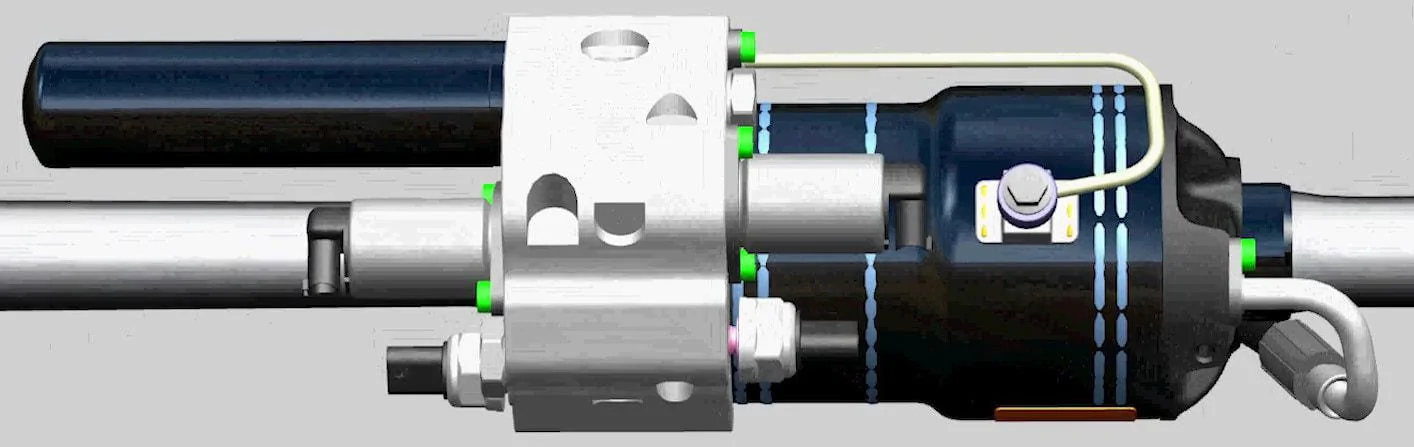
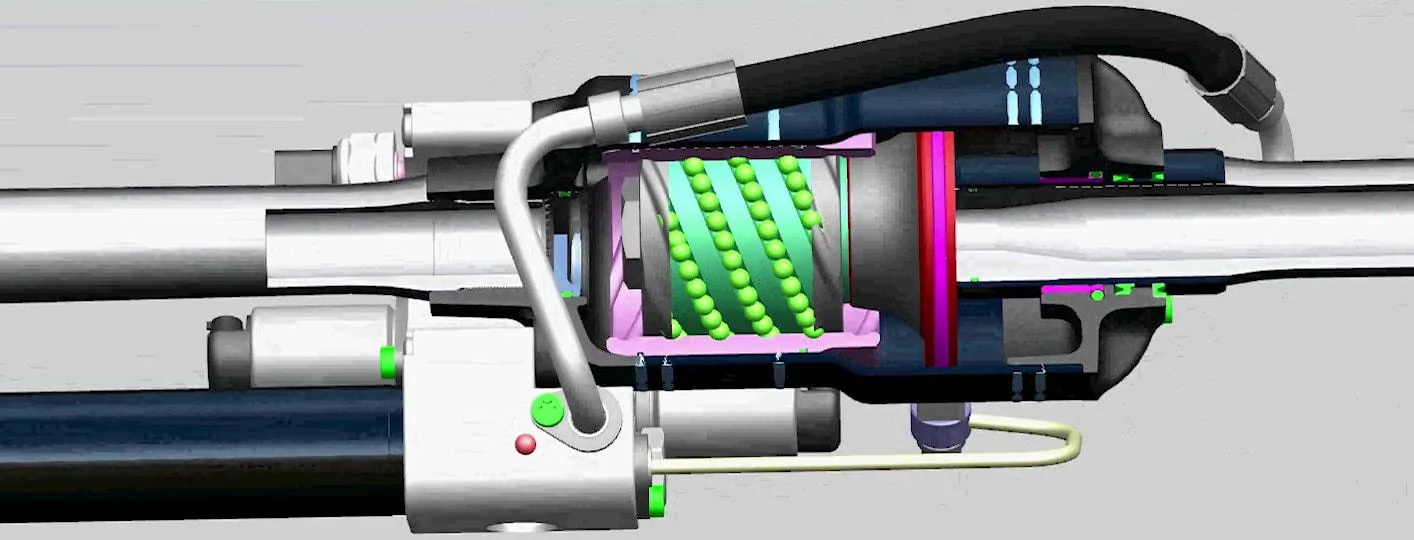
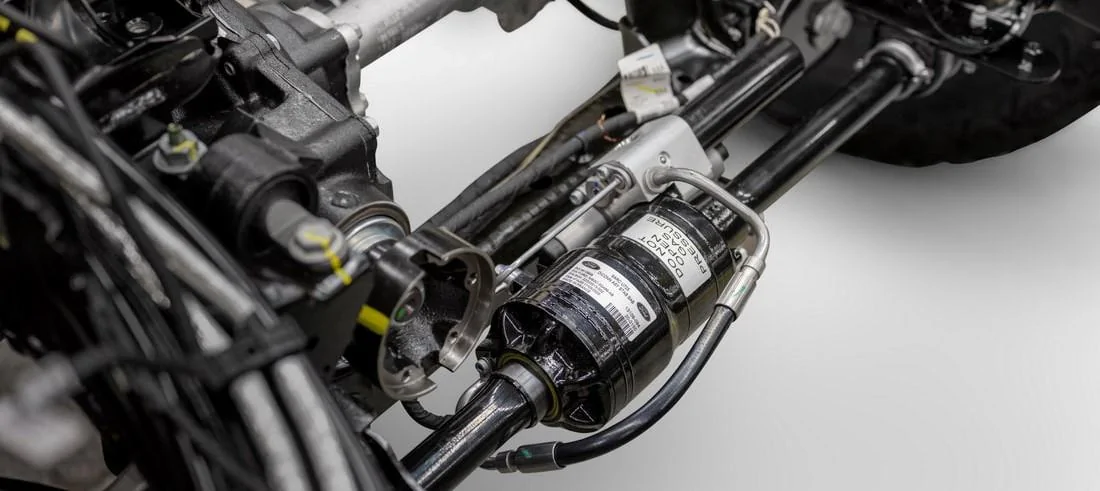
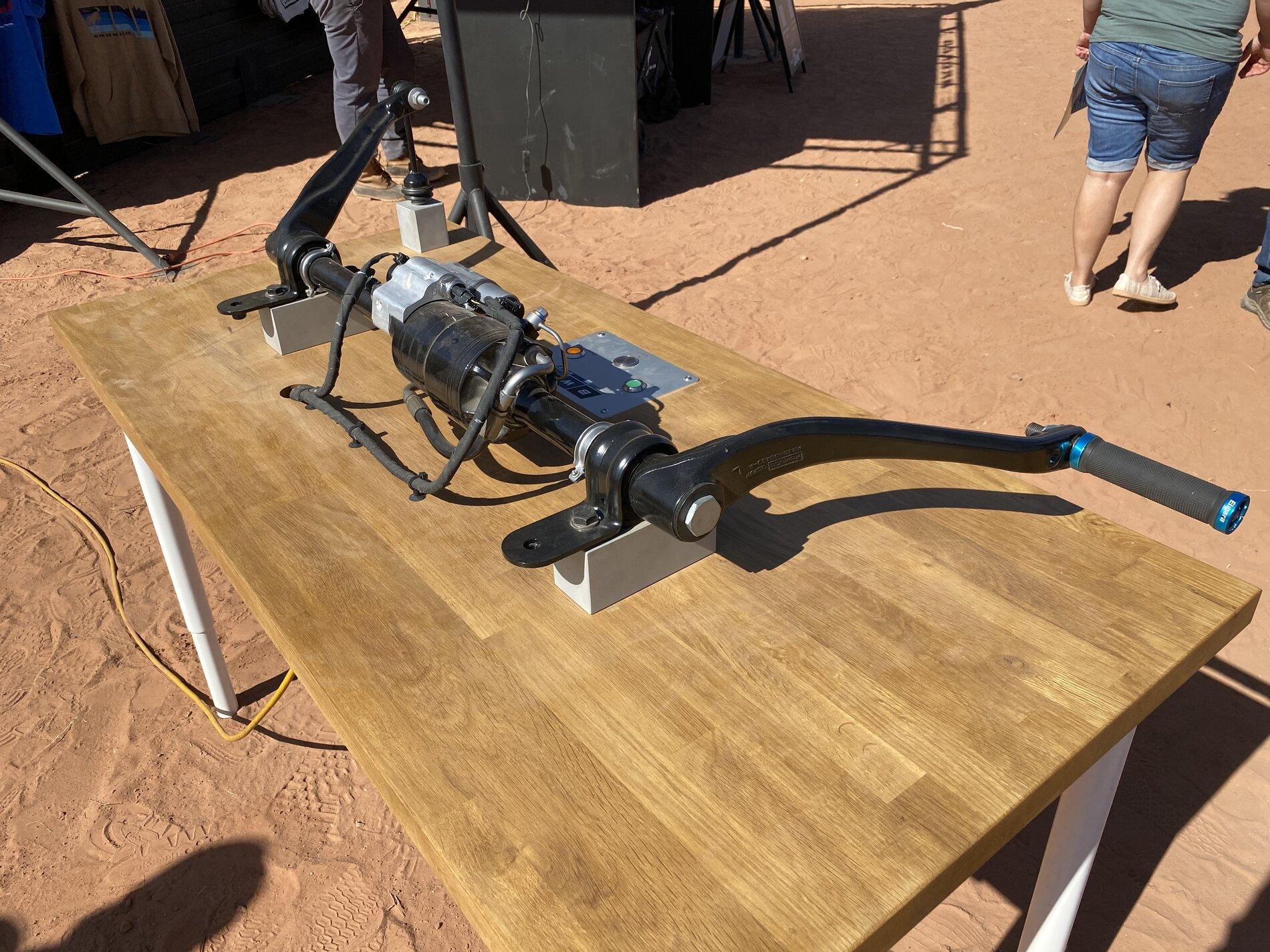
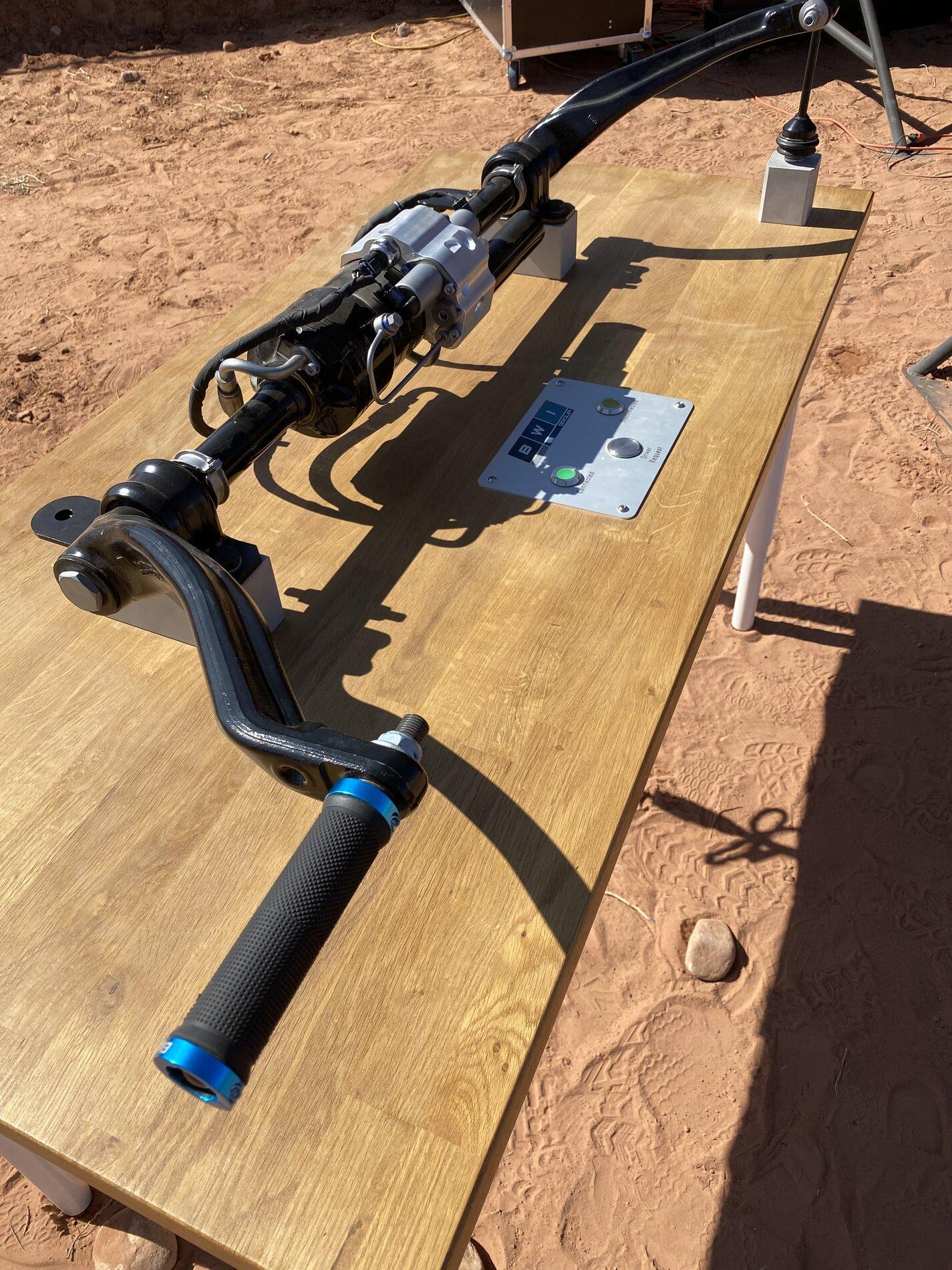
I found the July 13th announcements below that show the BWI Group is building the Bronco's Front Stabilizer Bar Disconnect, thanks to a tip from @Aman in another thread that they were the supplier. Below is some of the information on how the unit functions. This unit is only available on the Badlands and First Edition trims, there has been no information to indicate it will be an a la carte option on any other trims. As a reminder, this is a hydraulic system unlike the Jeep Rubicon's electronic sway bar disconnect system.

What are your thoughts, it seems like some very innovative engineering.


BWI Operational Video

BWI product page

BWI Group Front Stabilizer Bar Disconnect announcement 7/13/2020

BWI Bronco Front Stabilizer Bar Disconnect
7/13/2020

BWI Bronco Front Stabilizer Bar Disconnect.jpg


2021 Ford Bronco


The available front stabilizer bar disconnect off a unique to the segment design for increased articulation across the vehicle to help you up, over and around large obstacles.

BWI Group

ilizer-bar-disconnect-system-handbrake-moment_orig.jpg


izer-bar-disconnect-system-handbrake-moment-2_orig.jpg

Piston

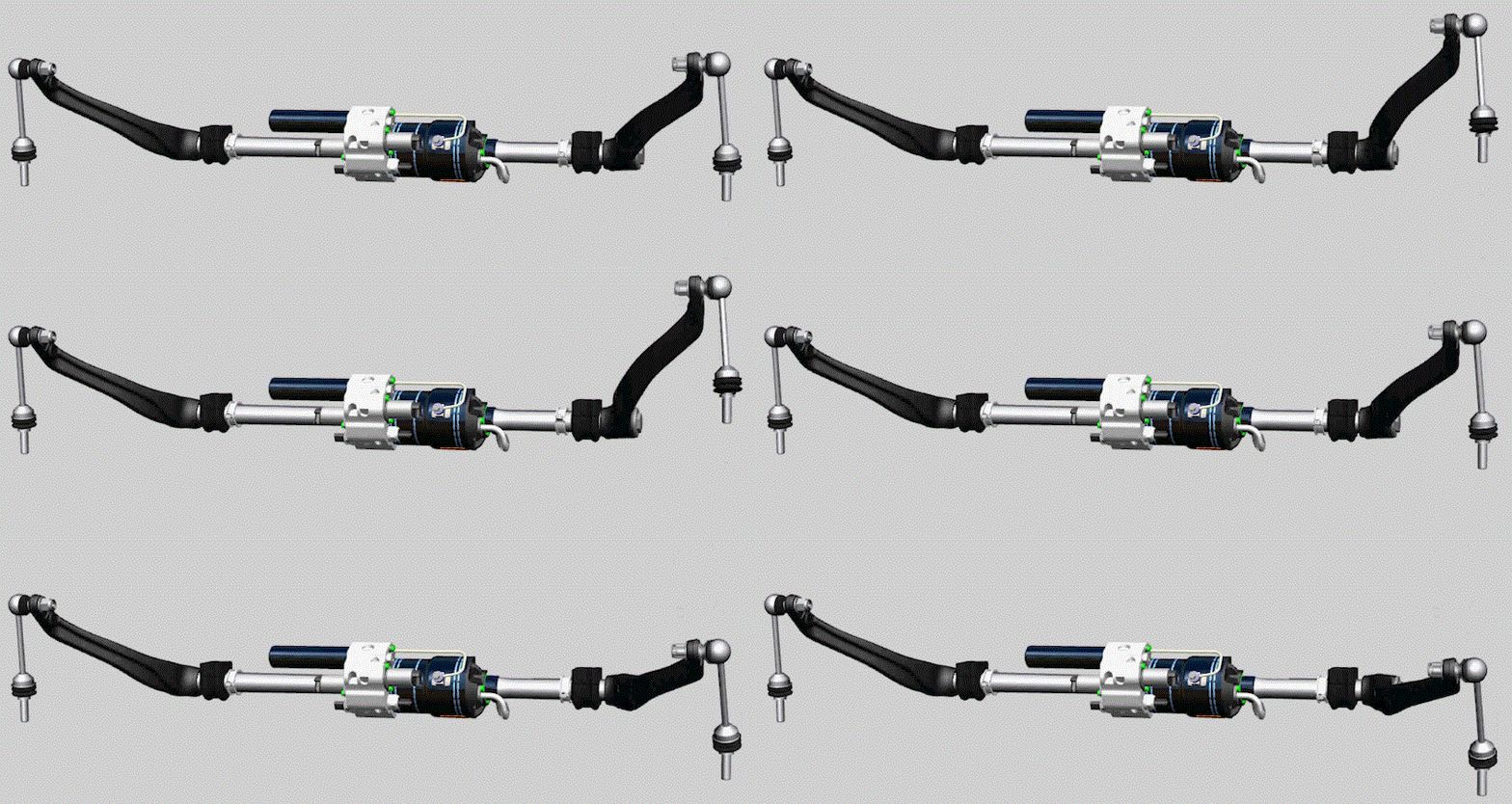
stabilizer-2_orig.gif


Stabilizer bar ends are disconnected and free to move on their own.

The solenoid valves are open and the piston (immersed in fluid) is free to move as fluid flushes in and out of the chambers on both sides of the piston.

Full suspension travel is possible. Wheel articulation is not limited by the stabilizer bar.

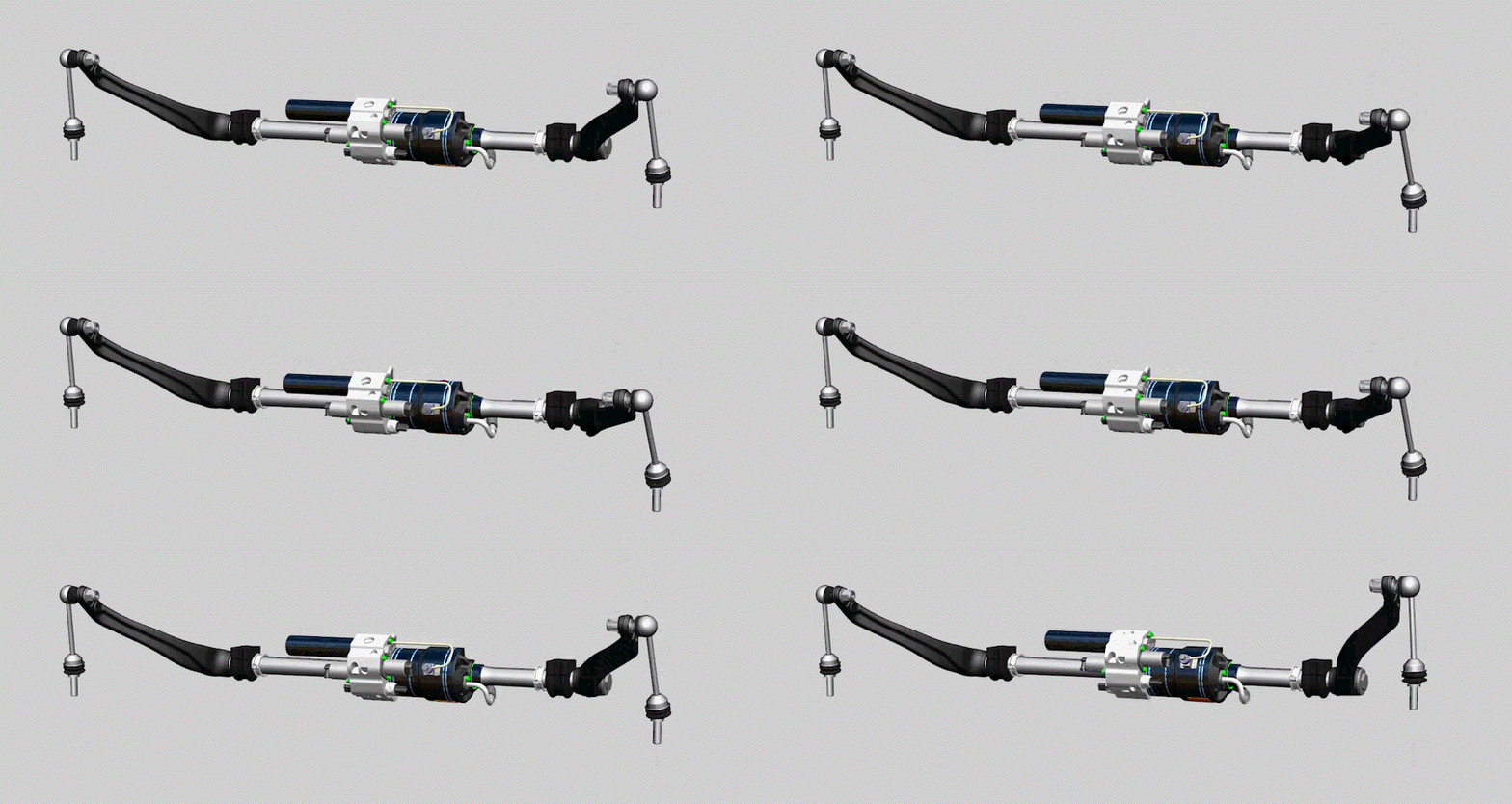
stabilizer-3_orig.gif


Stabilizer bar ends are now connected.

Both solenoid valves are closed, preventing fluid flow. The piston is hydraulically locked.

Total suspension roll stiffness is increased and vehicle body roll angle limited while cornering.

BWI Operational Video


.
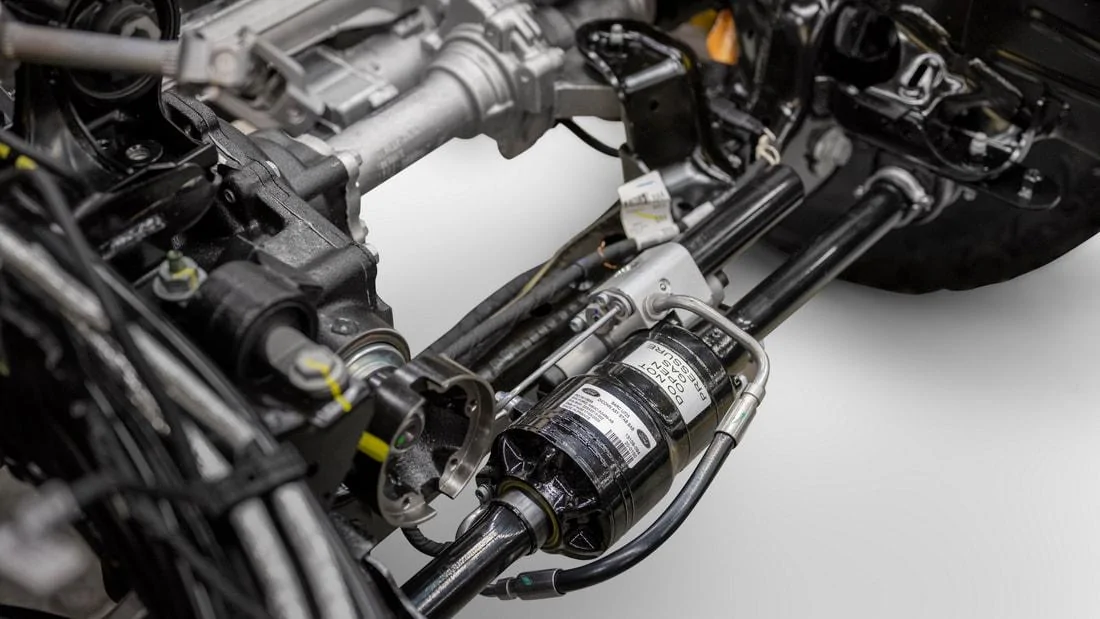
This looks heavy. Does anybody have an idea of how much the SBD weighs over a standard sway bar?
Sponsored

 
OP
OP
North7

North7

Well-Known Member
Joined
Feb 21, 2020
Threads
113
Messages
7,317
Reaction score
25,751
Location
North Texas
Vehicle(s)
SUV
Your Bronco Model
Undecided
Clubs
 
This looks heavy. Does anybody have an idea of how much the SBD weighs over a standard sway bar?
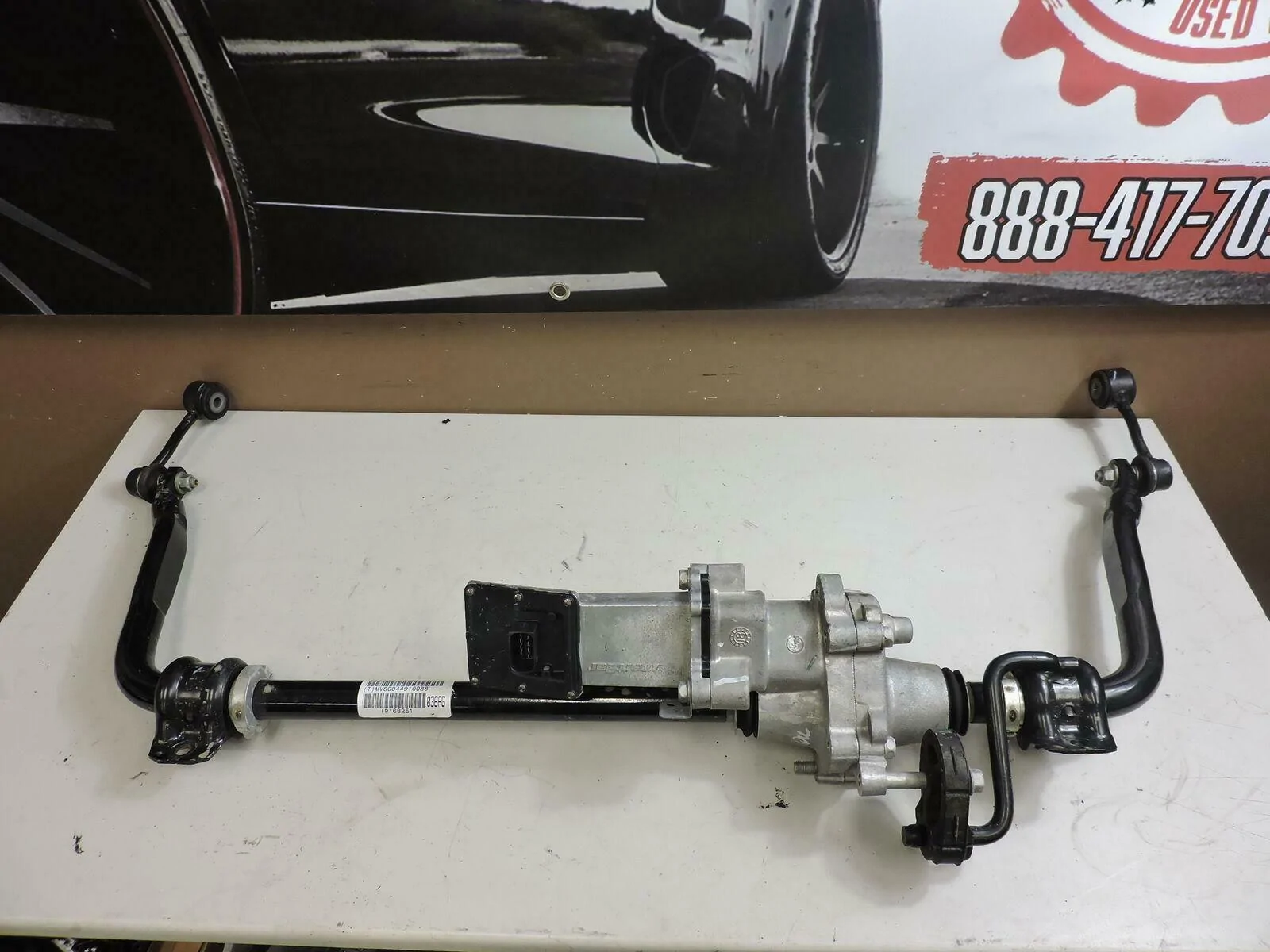
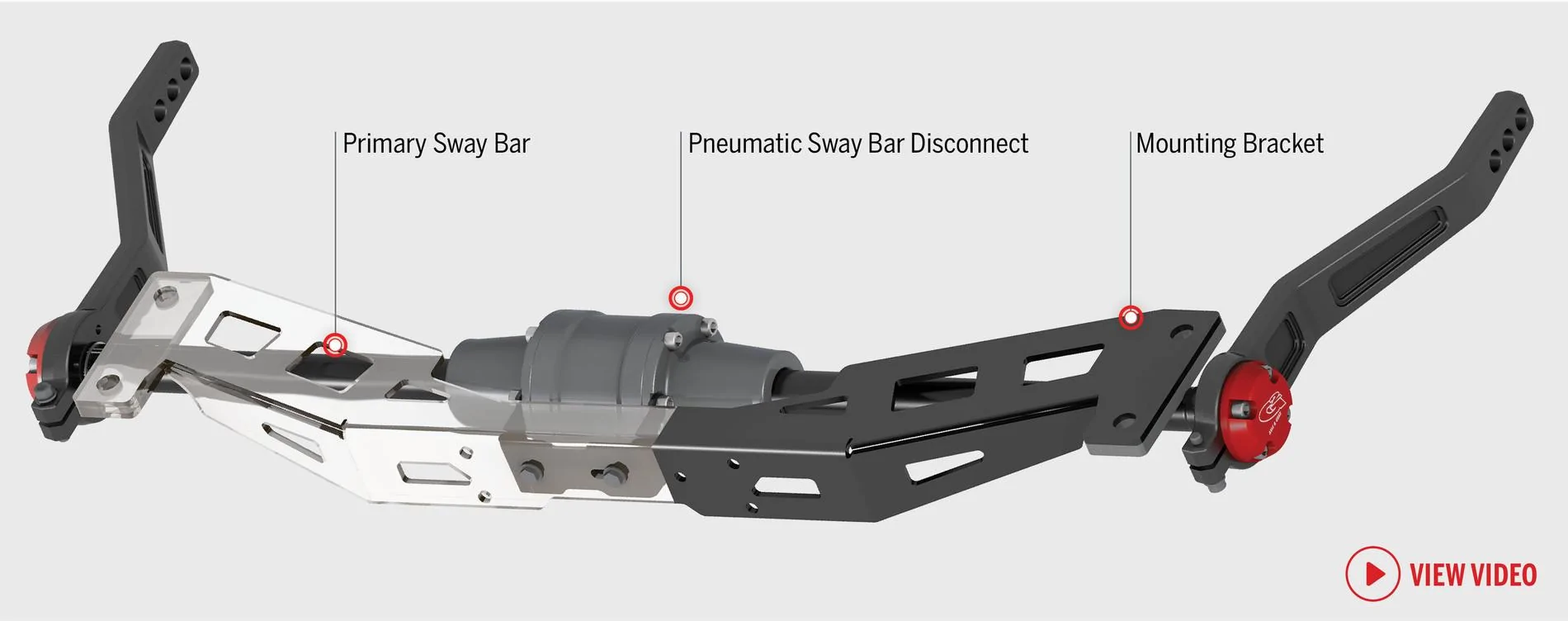
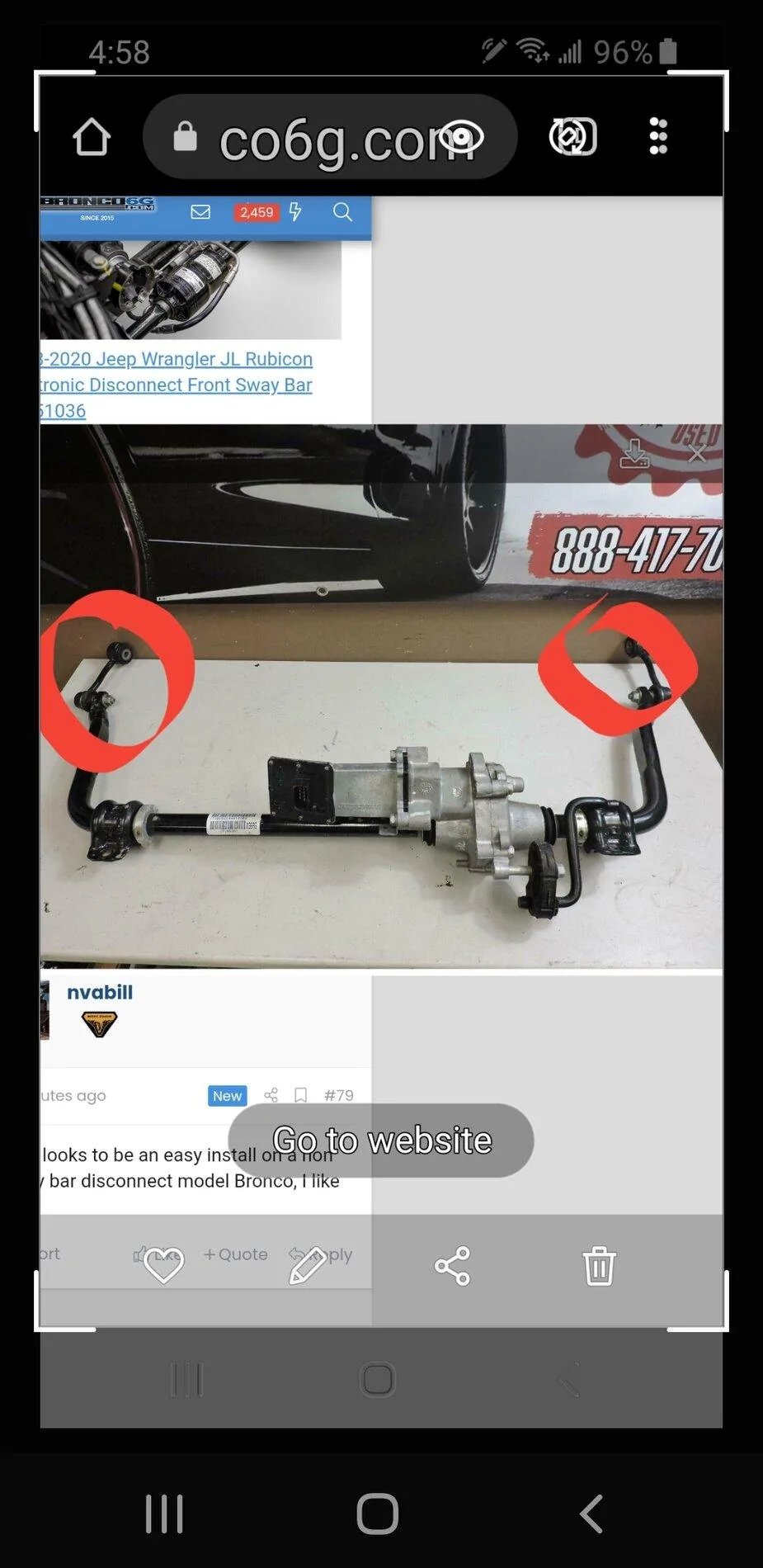
I don't know the weight but if I had to guess I would say 30-50 lbs vs the standard sway bar at 15-20 lbs, again guesses. But what matters is how does it compare to the competition, the Jeep Wrangler Rubicon JL with Electronic Sway Bar Disconnect, see the picture below, it looks every bit as heavy as the Bronco if not heavier. The second picture is a G2 CORE Dual Rate Sway Bar System, which is an aftermarket Jeep setup, even larger.

So weight is relative, it is the tool for the job, it is only available on the Badlands and First Edition, so if you don't need the benefits of a Sway Bar Disconnect any other trim level will not have it.

The Bronco looks to be the lightest of the three.
Ford Bronco BWI Bronco Stabilizer Bar Disconnect Technical Information BWI Bronco Front Stabilizer Bar Disconnect

2018-2020 Jeep Wrangler JL Rubicon Electronic Disconnect Front Sway Bar 68251036
Ford Bronco BWI Bronco Stabilizer Bar Disconnect Technical Information s-l1600


G2 CORE Dual Rate Sway Bar System
Ford Bronco BWI Bronco Stabilizer Bar Disconnect Technical Information drs_banner_1
 

Hoofnmouth

Banned
Base
Banned
Banned
First Name
mark
Joined
Jul 10, 2020
Threads
16
Messages
1,979
Reaction score
4,085
Location
N ca
Vehicle(s)
ford focus st
Your Bronco Model
Base
Clubs
 
Ford Bronco BWI Bronco Stabilizer Bar Disconnect Technical Information Screenshot_20210105-045858_Samsung captur
see those end links thats all you need to modify to disconnect why would i want to carry all that monkey motion around? I have made plenty of swaybar disconnects with simple piece of tubing or just wait for aftermarket. Whats next trained squirrels to check your oil?
 

BigFootie

Heritage
Well-Known Member
First Name
Steve
Joined
Oct 25, 2020
Threads
0
Messages
4,530
Reaction score
11,251
Location
Wisconsin
Vehicle(s)
2013 ES-350, 2022 Badlands Sport, 2023 Heritage
Your Bronco Model
Heritage
Clubs
 
Thanks for posting!
 

Sponsored

MotoCeptorMan

Badlands
Well-Known Member
First Name
Mike
Joined
Oct 6, 2020
Threads
1
Messages
95
Reaction score
190
Location
Florida
Vehicle(s)
2014 Mustang, 2013 Ram, 2003 Jeep Liberty 4x4
Your Bronco Model
Badlands
Clubs
 
I don't know the weight but if I had to guess I would say 30-50 lbs vs the standard sway bar at 15-20 lbs, again guesses. But what matters is how does it compare to the competition, the Jeep Wrangler Rubicon JL with Electronic Sway Bar Disconnect, see the picture below, it looks every bit as heavy as the Bronco if not heavier. The second picture is a G2 CORE Dual Rate Sway Bar System, which is an aftermarket Jeep setup, even larger.

So weight is relative, it is the tool for the job, it is only available on the Badlands and First Edition, so if you don't need the benefits of a Sway Bar Disconnect any other trim level will not have it.

The Bronco looks to be the lightest of the three.
BWI Bronco Front Stabilizer Bar Disconnect.jpg

2018-2020 Jeep Wrangler JL Rubicon Electronic Disconnect Front Sway Bar 68251036
s-l1600.jpg


G2 CORE Dual Rate Sway Bar System
drs_banner_1.jpg
Thanks for the response North7. The Bronco SBD design is innovative and does look lighter than the others. But my offroading travels may never need that extra articulation. With all of the GVWR discussions, I'm seriously thinking about dropping from BL to BD if it improves available payload. That extra 25-30 lb for a SBD could be an extra backpack to a trail head. Hopefully Ford will release more detail trim and powertrain specs before order time so we can make better-informed decisions.

.
 

BLUCYFR

Wildtrak
New Member
First Name
Bill
Joined
Jun 3, 2024
Threads
0
Messages
4
Reaction score
16
Location
Colorado
Vehicle(s)
2024 Wildtrack
Your Bronco Model
Wildtrak
I found the info in this site invaluable for doing this mod on my 2024 Wildtrack and wanted to share some things that I learned. I am new to this forum, but have been wheeling and mod'ing jeeps for 15+ years now.

  1. The new part number is MB3Z-5482-X. It has good availability and can be found online for ~$1300 shipped.
    • The raptor part number is NB3Z-5482-B. No idea what the difference is.
  2. Highly recommend the wiring harness pigtail: https://www.ebay.com/itm/254762922777
  3. The 4 wheel parts transmission skid plate 61271W works wonderfully with (and without) the new sta-bar disconnect. It fits great with about 3/8" clearance to the new sta-bar, and gives a nice smooth under-belly surface with no blocky thing hanging down to get hung up on rocks like some skids I've seen. My Wildtrack has the 2.7L and this fits with the extra diagonal supports that the larger engine has (hence the triangular shape). Plus it's cheap compared to all the boutique shop options. https://www.4wheelparts.com/p/4-wheel-parts-transmission-skid-plate-61271w/_/R-4WPBR-61271W
  4. The electronics on the sta-bar consist of 2 identical hydraulic solenoids, and two pressure sensors. No safety keeper pins or anything else. To hook up we need to wire the 2 solenoids to a switch and that's it - we just ignore the pressure sensors since those would need to go through a computer to be useful.
  5. When routing the wiring, attach the plug on top of the crossmember facing the front of the vehicle and bring the wires toward the front then up just behind the A-arm mounts on the left side. This avoids the super-hot catalytic converter (though I did still use some fire sleeve, just to overkill it a little https://www.amazon.com/gp/product/B0C45M7Q5J/?th=1).

Now here's the thing that I've done differently than everyone else I've seen online... and I think it's pretty important.

I think these solenoids are meant to operate at 6 volts - and here's why:

I hooked one up to a bench-top power supply. At 12 volts one solenoid draws just over 5 amps. That's 60 watts, more if you consider the voltage with the engine running is more like 13-14V.

That's really high for a solenoid this size. When it's just holding in place, all of that power gets converted to heat, and these things get hot hot hot! In my 60 degree garage I computed the part would get to ~215 degrees F (without hydro fluid) (an no, I didn't let mine get to full temp in testing it, this is an extrapolation).

This high temperature is really bad for the hydraulic fluid, which starts breaking down at 140 deg F with significant system damage occuring at 180F (thanks google!). Also the magnetic wire inside degrades faster at higher temps.

I did try to find some specs on these solenoids, but struck out. Here are the numbers printed on the side:
4332208
17w23-00045
22334325

Now one thing that most solenoid mfg's typically do is put the designed power in Watts somewhere on the unit. I think that's what the "17w" is.

Now the good part - at ~6.6 volts the unit draws ~ 2.6 amps, which is ~17 watts. So if we wire the two up in series they each see half the voltage from the battery, so 6-7 Volts, which is perfect to keep it in this 17 Watt range.

For this part of testing I put 7 volts to it on the bench and let it sit for several hours. The final temperature in my 60F garage was 125F. (I extrapolated this data to find the 215F @ 12V above).

I also turned the voltage way down to see where the solenoid would actuate. It works down to about 2.5-3 volts with no load on the sta-bar (or the little I could do by hand). So I think 6V is going to be plenty, and if it doesn't actuate under high load it will when closer to level, which is what the Jeeps do.

I did wire mine up this way and installed it. So far I've only tried it with one tire on the curb in the neighborhood and it worked great.

Now it is possible that the official ford install does something fancy like a 12v pulse for a half second then a lower holding voltage, but we're not going to get that done on this aftermarket install, so a straight 6v it is!

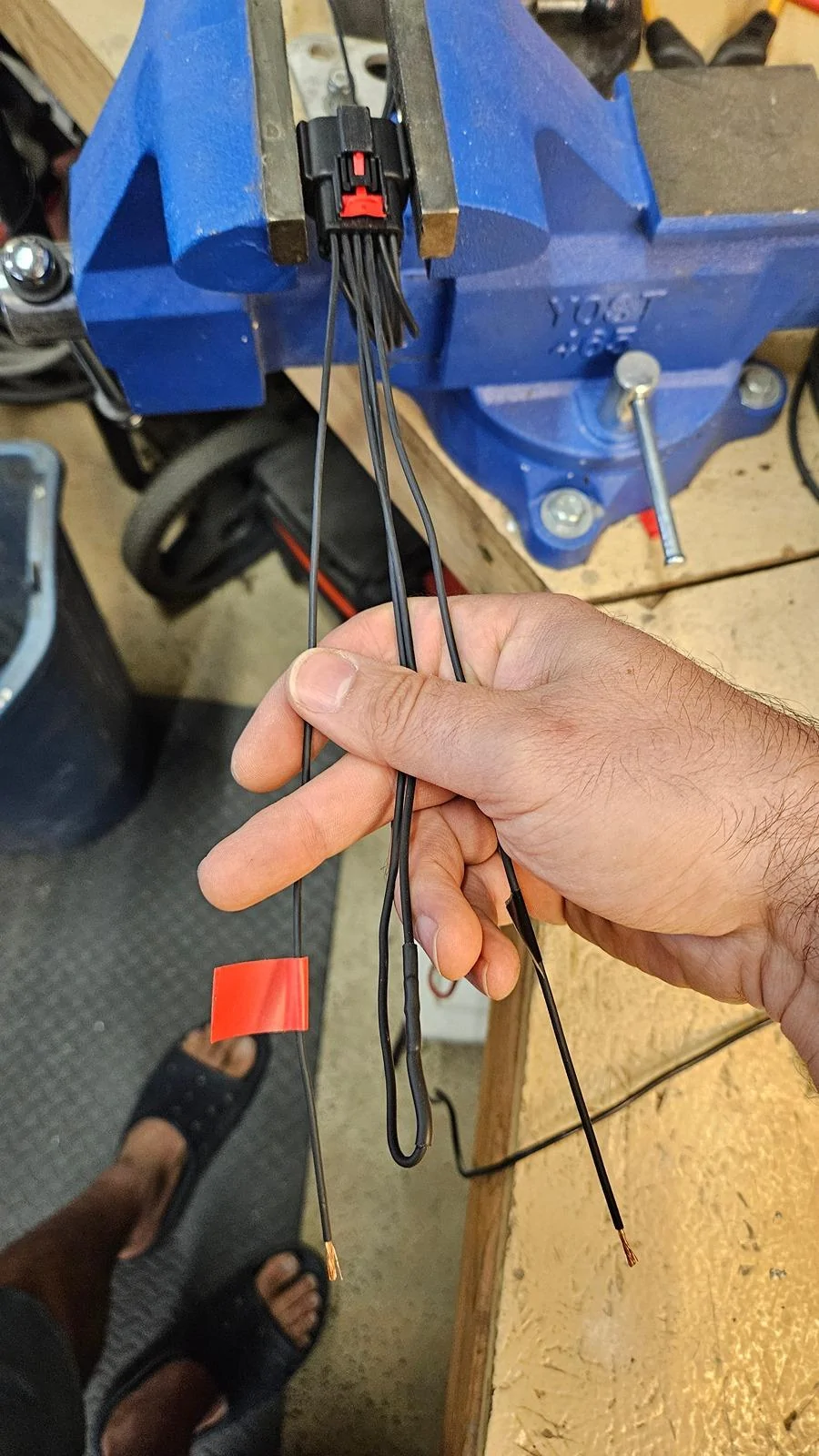
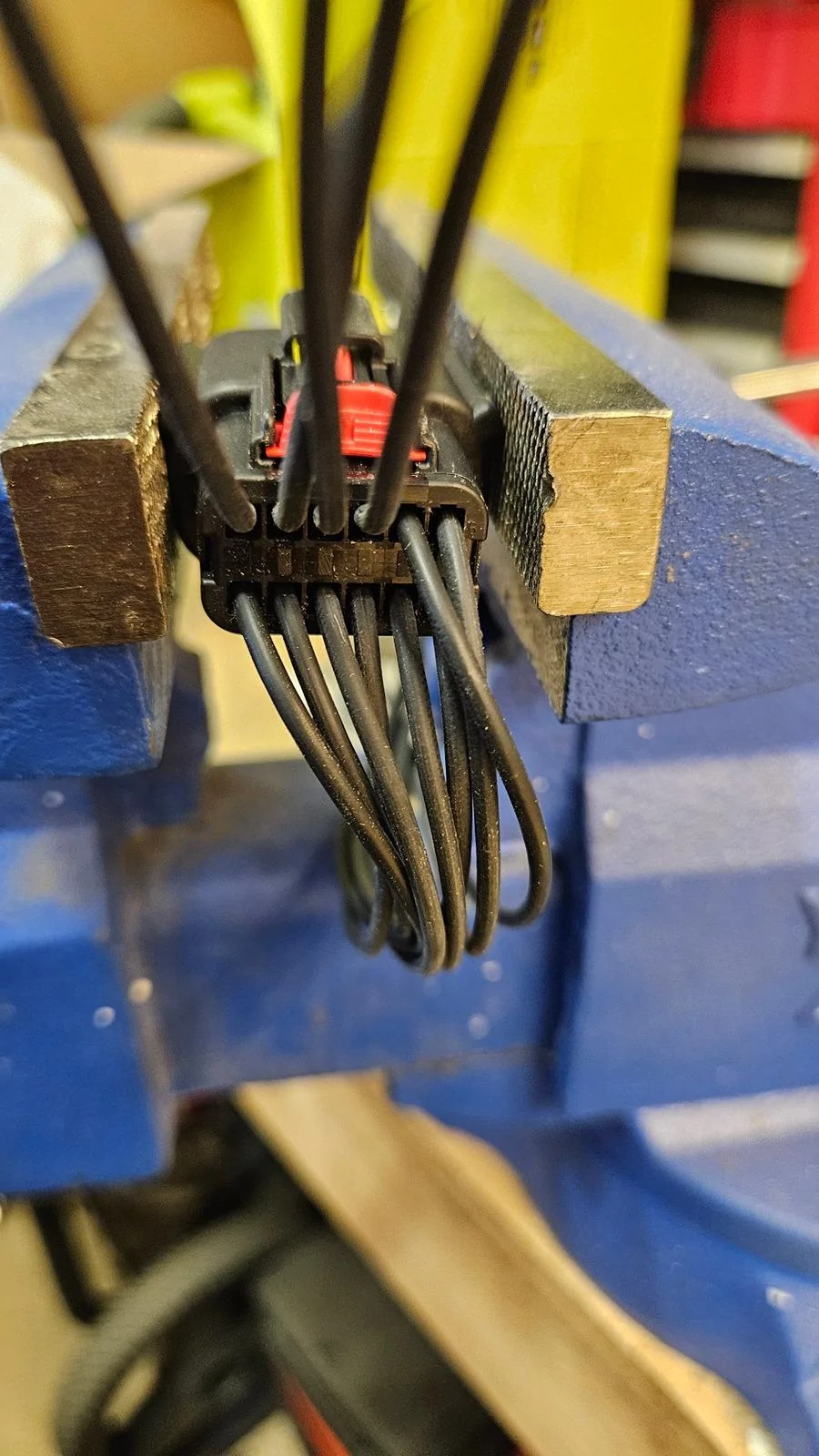
So to wire it up in series like this, what you want to do is connect the - from one solenoid to the + from the other, then the remaining two wires go to the battery. Looking at the wiring pigtail from the side with all the wires coming out and the red tab on top - starting at the upper left wire 1 goes to battery +, wires 2-3 get connected together, and wire 4 goes to battery -. I tried to get a couple of pics showing which wires I mean. The red electrical tape flag on the left goes to +, the black flag on the right to -.

Another nice thing is that any of the upfitter switches can handle the 2.6 amps of this setup, while only switch 1 can handle 11-12 amps if you use the full 12 volts.

I really hope this helps the next guy or gal interested in doing the mod. Once I did my testing and decided how to wire it up it was an easy mod, took a Saturday afternoon.

I was very disappointed that my new $70k vehicle didn't come with this feature that's been on my jeep since 2007 - C'mon Ford!!

But I will say it's a great design since it can release in any position, then when power is removed it will only move towards center, and stay there when it gets there.

Now I don't know anything here for 100% sure, just what I was able to reverse engineer, so take it all with the appropriate amount of salt grains. And yes, I am an engineer, but not an automotive one.

Ford Bronco BWI Bronco Stabilizer Bar Disconnect Technical Information 20240531_122306


Ford Bronco BWI Bronco Stabilizer Bar Disconnect Technical Information 20240531_122248
 

Arokcrwlr

Wildtrak
Well-Known Member
First Name
Kraig
Joined
Jun 2, 2021
Threads
32
Messages
887
Reaction score
1,632
Location
US - Alabama
Vehicle(s)
2014 F150, 2014 Focus, 1973 Bronco
Your Bronco Model
Wildtrak
Clubs
 
I found the info in this site invaluable for doing this mod on my 2024 Wildtrack and wanted to share some things that I learned. I am new to this forum, but have been wheeling and mod'ing jeeps for 15+ years now.

  1. The new part number is MB3Z-5482-X. It has good availability and can be found online for ~$1300 shipped.
    • The raptor part number is NB3Z-5482-B. No idea what the difference is.
  2. Highly recommend the wiring harness pigtail: https://www.ebay.com/itm/254762922777
  3. The 4 wheel parts transmission skid plate 61271W works wonderfully with (and without) the new sta-bar disconnect. It fits great with about 3/8" clearance to the new sta-bar, and gives a nice smooth under-belly surface with no blocky thing hanging down to get hung up on rocks like some skids I've seen. My Wildtrack has the 2.7L and this fits with the extra diagonal supports that the larger engine has (hence the triangular shape). Plus it's cheap compared to all the boutique shop options. https://www.4wheelparts.com/p/4-wheel-parts-transmission-skid-plate-61271w/_/R-4WPBR-61271W
  4. The electronics on the sta-bar consist of 2 identical hydraulic solenoids, and two pressure sensors. No safety keeper pins or anything else. To hook up we need to wire the 2 solenoids to a switch and that's it - we just ignore the pressure sensors since those would need to go through a computer to be useful.
  5. When routing the wiring, attach the plug on top of the crossmember facing the front of the vehicle and bring the wires toward the front then up just behind the A-arm mounts on the left side. This avoids the super-hot catalytic converter (though I did still use some fire sleeve, just to overkill it a little https://www.amazon.com/gp/product/B0C45M7Q5J/?th=1).

Now here's the thing that I've done differently than everyone else I've seen online... and I think it's pretty important.

I think these solenoids are meant to operate at 6 volts - and here's why:

I hooked one up to a bench-top power supply. At 12 volts one solenoid draws just over 5 amps. That's 60 watts, more if you consider the voltage with the engine running is more like 13-14V.

That's really high for a solenoid this size. When it's just holding in place, all of that power gets converted to heat, and these things get hot hot hot! In my 60 degree garage I computed the part would get to ~215 degrees F (without hydro fluid) (an no, I didn't let mine get to full temp in testing it, this is an extrapolation).

This high temperature is really bad for the hydraulic fluid, which starts breaking down at 140 deg F with significant system damage occuring at 180F (thanks google!). Also the magnetic wire inside degrades faster at higher temps.

I did try to find some specs on these solenoids, but struck out. Here are the numbers printed on the side:
4332208
17w23-00045
22334325

Now one thing that most solenoid mfg's typically do is put the designed power in Watts somewhere on the unit. I think that's what the "17w" is.

Now the good part - at ~6.6 volts the unit draws ~ 2.6 amps, which is ~17 watts. So if we wire the two up in series they each see half the voltage from the battery, so 6-7 Volts, which is perfect to keep it in this 17 Watt range.

For this part of testing I put 7 volts to it on the bench and let it sit for several hours. The final temperature in my 60F garage was 125F. (I extrapolated this data to find the 215F @ 12V above).

I also turned the voltage way down to see where the solenoid would actuate. It works down to about 2.5-3 volts with no load on the sta-bar (or the little I could do by hand). So I think 6V is going to be plenty, and if it doesn't actuate under high load it will when closer to level, which is what the Jeeps do.

I did wire mine up this way and installed it. So far I've only tried it with one tire on the curb in the neighborhood and it worked great.

Now it is possible that the official ford install does something fancy like a 12v pulse for a half second then a lower holding voltage, but we're not going to get that done on this aftermarket install, so a straight 6v it is!

So to wire it up in series like this, what you want to do is connect the - from one solenoid to the + from the other, then the remaining two wires go to the battery. Looking at the wiring pigtail from the side with all the wires coming out and the red tab on top - starting at the upper left wire 1 goes to battery +, wires 2-3 get connected together, and wire 4 goes to battery -. I tried to get a couple of pics showing which wires I mean. The red electrical tape flag on the left goes to +, the black flag on the right to -.

Another nice thing is that any of the upfitter switches can handle the 2.6 amps of this setup, while only switch 1 can handle 11-12 amps if you use the full 12 volts.

I really hope this helps the next guy or gal interested in doing the mod. Once I did my testing and decided how to wire it up it was an easy mod, took a Saturday afternoon.

I was very disappointed that my new $70k vehicle didn't come with this feature that's been on my jeep since 2007 - C'mon Ford!!

But I will say it's a great design since it can release in any position, then when power is removed it will only move towards center, and stay there when it gets there.

Now I don't know anything here for 100% sure, just what I was able to reverse engineer, so take it all with the appropriate amount of salt grains. And yes, I am an engineer, but not an automotive one.

20240531_122306.jpg


20240531_122248.jpg
Great work! It makes sense...
 

geargeek

Heritage
Well-Known Member
Joined
Sep 30, 2022
Threads
8
Messages
119
Reaction score
246
Location
Houston, TX
Vehicle(s)
23 Bronco HE, (also owned and sold a 21 Bronco Sport BL)
Your Bronco Model
Heritage
Clubs
 
Now here's the thing that I've done differently than everyone else I've seen online... and I think it's pretty important... wire it up in series...
It seems to make sense that they would design it to be wired in series, as you want to eliminate the chance that a short would leave one solenoid powered and the other not powered (which could happen with a parallel wiring setup).

Thanks for doing all of the testing - that's how I'm going to set mine up.
 

Sponsored

jsoa

Heritage
Well-Known Member
First Name
Jose
Joined
Jan 26, 2024
Threads
9
Messages
604
Reaction score
1,467
Location
Delaware
Vehicle(s)
2024 Bronco 4dr
Your Bronco Model
Heritage
Clubs
 
I found the info in this site invaluable for doing this mod on my 2024 Wildtrack and wanted to share some things that I learned. I am new to this forum, but have been wheeling and mod'ing jeeps for 15+ years now.

  1. The new part number is MB3Z-5482-X. It has good availability and can be found online for ~$1300 shipped.
    • The raptor part number is NB3Z-5482-B. No idea what the difference is.
  2. Highly recommend the wiring harness pigtail: https://www.ebay.com/itm/254762922777
  3. The 4 wheel parts transmission skid plate 61271W works wonderfully with (and without) the new sta-bar disconnect. It fits great with about 3/8" clearance to the new sta-bar, and gives a nice smooth under-belly surface with no blocky thing hanging down to get hung up on rocks like some skids I've seen. My Wildtrack has the 2.7L and this fits with the extra diagonal supports that the larger engine has (hence the triangular shape). Plus it's cheap compared to all the boutique shop options. https://www.4wheelparts.com/p/4-wheel-parts-transmission-skid-plate-61271w/_/R-4WPBR-61271W
  4. The electronics on the sta-bar consist of 2 identical hydraulic solenoids, and two pressure sensors. No safety keeper pins or anything else. To hook up we need to wire the 2 solenoids to a switch and that's it - we just ignore the pressure sensors since those would need to go through a computer to be useful.
  5. When routing the wiring, attach the plug on top of the crossmember facing the front of the vehicle and bring the wires toward the front then up just behind the A-arm mounts on the left side. This avoids the super-hot catalytic converter (though I did still use some fire sleeve, just to overkill it a little https://www.amazon.com/gp/product/B0C45M7Q5J/?th=1).

Now here's the thing that I've done differently than everyone else I've seen online... and I think it's pretty important.

I think these solenoids are meant to operate at 6 volts - and here's why:

I hooked one up to a bench-top power supply. At 12 volts one solenoid draws just over 5 amps. That's 60 watts, more if you consider the voltage with the engine running is more like 13-14V.

That's really high for a solenoid this size. When it's just holding in place, all of that power gets converted to heat, and these things get hot hot hot! In my 60 degree garage I computed the part would get to ~215 degrees F (without hydro fluid) (an no, I didn't let mine get to full temp in testing it, this is an extrapolation).

This high temperature is really bad for the hydraulic fluid, which starts breaking down at 140 deg F with significant system damage occuring at 180F (thanks google!). Also the magnetic wire inside degrades faster at higher temps.

I did try to find some specs on these solenoids, but struck out. Here are the numbers printed on the side:
4332208
17w23-00045
22334325

Now one thing that most solenoid mfg's typically do is put the designed power in Watts somewhere on the unit. I think that's what the "17w" is.

Now the good part - at ~6.6 volts the unit draws ~ 2.6 amps, which is ~17 watts. So if we wire the two up in series they each see half the voltage from the battery, so 6-7 Volts, which is perfect to keep it in this 17 Watt range.

For this part of testing I put 7 volts to it on the bench and let it sit for several hours. The final temperature in my 60F garage was 125F. (I extrapolated this data to find the 215F @ 12V above).

I also turned the voltage way down to see where the solenoid would actuate. It works down to about 2.5-3 volts with no load on the sta-bar (or the little I could do by hand). So I think 6V is going to be plenty, and if it doesn't actuate under high load it will when closer to level, which is what the Jeeps do.

I did wire mine up this way and installed it. So far I've only tried it with one tire on the curb in the neighborhood and it worked great.

Now it is possible that the official ford install does something fancy like a 12v pulse for a half second then a lower holding voltage, but we're not going to get that done on this aftermarket install, so a straight 6v it is!

So to wire it up in series like this, what you want to do is connect the - from one solenoid to the + from the other, then the remaining two wires go to the battery. Looking at the wiring pigtail from the side with all the wires coming out and the red tab on top - starting at the upper left wire 1 goes to battery +, wires 2-3 get connected together, and wire 4 goes to battery -. I tried to get a couple of pics showing which wires I mean. The red electrical tape flag on the left goes to +, the black flag on the right to -.

Another nice thing is that any of the upfitter switches can handle the 2.6 amps of this setup, while only switch 1 can handle 11-12 amps if you use the full 12 volts.

I really hope this helps the next guy or gal interested in doing the mod. Once I did my testing and decided how to wire it up it was an easy mod, took a Saturday afternoon.

I was very disappointed that my new $70k vehicle didn't come with this feature that's been on my jeep since 2007 - C'mon Ford!!

But I will say it's a great design since it can release in any position, then when power is removed it will only move towards center, and stay there when it gets there.

Now I don't know anything here for 100% sure, just what I was able to reverse engineer, so take it all with the appropriate amount of salt grains. And yes, I am an engineer, but not an automotive one.

20240531_122306.jpg


20240531_122248.jpg
sorry to bug you, just wanted to make sure I understand since I read things quite literally and don't want to screw anything up

If wire 1 is + battery and wire 4 is - battery and other two are connected, which wires connect to the aux switch? Or is wire 1 to aux switch and wire 4 to ground?

Another question, with this setup are you saying aux switch 5 (for example) is ok to use instead of aux 1 (my initial thought to use)

Thanks, I'm a noob when it comes to electrical, even though it's fun to do
 

RideClimbNJ

Wildtrak
Well-Known Member
Joined
Feb 28, 2024
Threads
10
Messages
142
Reaction score
117
Location
NJ
Vehicle(s)
23Wildtrak
Your Bronco Model
Wildtrak
I found the info in this site invaluable for doing this mod on my 2024 Wildtrack and wanted to share some things that I learned. I am new to this forum, but have been wheeling and mod'ing jeeps for 15+ years now.

  1. The new part number is MB3Z-5482-X. It has good availability and can be found online for ~$1300 shipped.
    • The raptor part number is NB3Z-5482-B. No idea what the difference is.
  2. Highly recommend the wiring harness pigtail: https://www.ebay.com/itm/254762922777
  3. The 4 wheel parts transmission skid plate 61271W works wonderfully with (and without) the new sta-bar disconnect. It fits great with about 3/8" clearance to the new sta-bar, and gives a nice smooth under-belly surface with no blocky thing hanging down to get hung up on rocks like some skids I've seen. My Wildtrack has the 2.7L and this fits with the extra diagonal supports that the larger engine has (hence the triangular shape). Plus it's cheap compared to all the boutique shop options. https://www.4wheelparts.com/p/4-wheel-parts-transmission-skid-plate-61271w/_/R-4WPBR-61271W
  4. The electronics on the sta-bar consist of 2 identical hydraulic solenoids, and two pressure sensors. No safety keeper pins or anything else. To hook up we need to wire the 2 solenoids to a switch and that's it - we just ignore the pressure sensors since those would need to go through a computer to be useful.
  5. When routing the wiring, attach the plug on top of the crossmember facing the front of the vehicle and bring the wires toward the front then up just behind the A-arm mounts on the left side. This avoids the super-hot catalytic converter (though I did still use some fire sleeve, just to overkill it a little https://www.amazon.com/gp/product/B0C45M7Q5J/?th=1).

Now here's the thing that I've done differently than everyone else I've seen online... and I think it's pretty important.

I think these solenoids are meant to operate at 6 volts - and here's why:

I hooked one up to a bench-top power supply. At 12 volts one solenoid draws just over 5 amps. That's 60 watts, more if you consider the voltage with the engine running is more like 13-14V.

That's really high for a solenoid this size. When it's just holding in place, all of that power gets converted to heat, and these things get hot hot hot! In my 60 degree garage I computed the part would get to ~215 degrees F (without hydro fluid) (an no, I didn't let mine get to full temp in testing it, this is an extrapolation).

This high temperature is really bad for the hydraulic fluid, which starts breaking down at 140 deg F with significant system damage occuring at 180F (thanks google!). Also the magnetic wire inside degrades faster at higher temps.

I did try to find some specs on these solenoids, but struck out. Here are the numbers printed on the side:
4332208
17w23-00045
22334325

Now one thing that most solenoid mfg's typically do is put the designed power in Watts somewhere on the unit. I think that's what the "17w" is.

Now the good part - at ~6.6 volts the unit draws ~ 2.6 amps, which is ~17 watts. So if we wire the two up in series they each see half the voltage from the battery, so 6-7 Volts, which is perfect to keep it in this 17 Watt range.

For this part of testing I put 7 volts to it on the bench and let it sit for several hours. The final temperature in my 60F garage was 125F. (I extrapolated this data to find the 215F @ 12V above).

I also turned the voltage way down to see where the solenoid would actuate. It works down to about 2.5-3 volts with no load on the sta-bar (or the little I could do by hand). So I think 6V is going to be plenty, and if it doesn't actuate under high load it will when closer to level, which is what the Jeeps do.

I did wire mine up this way and installed it. So far I've only tried it with one tire on the curb in the neighborhood and it worked great.

Now it is possible that the official ford install does something fancy like a 12v pulse for a half second then a lower holding voltage, but we're not going to get that done on this aftermarket install, so a straight 6v it is!

So to wire it up in series like this, what you want to do is connect the - from one solenoid to the + from the other, then the remaining two wires go to the battery. Looking at the wiring pigtail from the side with all the wires coming out and the red tab on top - starting at the upper left wire 1 goes to battery +, wires 2-3 get connected together, and wire 4 goes to battery -. I tried to get a couple of pics showing which wires I mean. The red electrical tape flag on the left goes to +, the black flag on the right to -.

Another nice thing is that any of the upfitter switches can handle the 2.6 amps of this setup, while only switch 1 can handle 11-12 amps if you use the full 12 volts.

I really hope this helps the next guy or gal interested in doing the mod. Once I did my testing and decided how to wire it up it was an easy mod, took a Saturday afternoon.

I was very disappointed that my new $70k vehicle didn't come with this feature that's been on my jeep since 2007 - C'mon Ford!!

But I will say it's a great design since it can release in any position, then when power is removed it will only move towards center, and stay there when it gets there.

Now I don't know anything here for 100% sure, just what I was able to reverse engineer, so take it all with the appropriate amount of salt grains. And yes, I am an engineer, but not an automotive one.

20240531_122306.jpg


20240531_122248.jpg
Thank you for this. I wired mine the original way that Stinkyfab did and used aux switch 2. I’ve used it a bunch. Questions (1) did I do any permanent damage (2) if so, what damage is likely and can I fix it (3) think I can just rewire with my current connector or do I need to buy a new one and start over
 

Bearcat1

Black Diamond
Well-Known Member
First Name
Travis
Joined
Oct 20, 2021
Threads
2
Messages
283
Reaction score
387
Location
45244
Vehicle(s)
2017 Expedition Limited, 2006 BMW 330xi
Your Bronco Model
Black Diamond
Clubs
 
I found the info in this site invaluable for doing this mod on my 2024 Wildtrack and wanted to share some things that I learned. I am new to this forum, but have been wheeling and mod'ing jeeps for 15+ years now.

  1. The new part number is MB3Z-5482-X. It has good availability and can be found online for ~$1300 shipped.
    • The raptor part number is NB3Z-5482-B. No idea what the difference is.
  2. Highly recommend the wiring harness pigtail: https://www.ebay.com/itm/254762922777
  3. The 4 wheel parts transmission skid plate 61271W works wonderfully with (and without) the new sta-bar disconnect. It fits great with about 3/8" clearance to the new sta-bar, and gives a nice smooth under-belly surface with no blocky thing hanging down to get hung up on rocks like some skids I've seen. My Wildtrack has the 2.7L and this fits with the extra diagonal supports that the larger engine has (hence the triangular shape). Plus it's cheap compared to all the boutique shop options. https://www.4wheelparts.com/p/4-wheel-parts-transmission-skid-plate-61271w/_/R-4WPBR-61271W
  4. The electronics on the sta-bar consist of 2 identical hydraulic solenoids, and two pressure sensors. No safety keeper pins or anything else. To hook up we need to wire the 2 solenoids to a switch and that's it - we just ignore the pressure sensors since those would need to go through a computer to be useful.
  5. When routing the wiring, attach the plug on top of the crossmember facing the front of the vehicle and bring the wires toward the front then up just behind the A-arm mounts on the left side. This avoids the super-hot catalytic converter (though I did still use some fire sleeve, just to overkill it a little https://www.amazon.com/gp/product/B0C45M7Q5J/?th=1).

Now here's the thing that I've done differently than everyone else I've seen online... and I think it's pretty important.

I think these solenoids are meant to operate at 6 volts - and here's why:

I hooked one up to a bench-top power supply. At 12 volts one solenoid draws just over 5 amps. That's 60 watts, more if you consider the voltage with the engine running is more like 13-14V.

That's really high for a solenoid this size. When it's just holding in place, all of that power gets converted to heat, and these things get hot hot hot! In my 60 degree garage I computed the part would get to ~215 degrees F (without hydro fluid) (an no, I didn't let mine get to full temp in testing it, this is an extrapolation).

This high temperature is really bad for the hydraulic fluid, which starts breaking down at 140 deg F with significant system damage occuring at 180F (thanks google!). Also the magnetic wire inside degrades faster at higher temps.

I did try to find some specs on these solenoids, but struck out. Here are the numbers printed on the side:
4332208
17w23-00045
22334325

Now one thing that most solenoid mfg's typically do is put the designed power in Watts somewhere on the unit. I think that's what the "17w" is.

Now the good part - at ~6.6 volts the unit draws ~ 2.6 amps, which is ~17 watts. So if we wire the two up in series they each see half the voltage from the battery, so 6-7 Volts, which is perfect to keep it in this 17 Watt range.

For this part of testing I put 7 volts to it on the bench and let it sit for several hours. The final temperature in my 60F garage was 125F. (I extrapolated this data to find the 215F @ 12V above).

I also turned the voltage way down to see where the solenoid would actuate. It works down to about 2.5-3 volts with no load on the sta-bar (or the little I could do by hand). So I think 6V is going to be plenty, and if it doesn't actuate under high load it will when closer to level, which is what the Jeeps do.

I did wire mine up this way and installed it. So far I've only tried it with one tire on the curb in the neighborhood and it worked great.

Now it is possible that the official ford install does something fancy like a 12v pulse for a half second then a lower holding voltage, but we're not going to get that done on this aftermarket install, so a straight 6v it is!

So to wire it up in series like this, what you want to do is connect the - from one solenoid to the + from the other, then the remaining two wires go to the battery. Looking at the wiring pigtail from the side with all the wires coming out and the red tab on top - starting at the upper left wire 1 goes to battery +, wires 2-3 get connected together, and wire 4 goes to battery -. I tried to get a couple of pics showing which wires I mean. The red electrical tape flag on the left goes to +, the black flag on the right to -.

Another nice thing is that any of the upfitter switches can handle the 2.6 amps of this setup, while only switch 1 can handle 11-12 amps if you use the full 12 volts.

I really hope this helps the next guy or gal interested in doing the mod. Once I did my testing and decided how to wire it up it was an easy mod, took a Saturday afternoon.

I was very disappointed that my new $70k vehicle didn't come with this feature that's been on my jeep since 2007 - C'mon Ford!!

But I will say it's a great design since it can release in any position, then when power is removed it will only move towards center, and stay there when it gets there.

Now I don't know anything here for 100% sure, just what I was able to reverse engineer, so take it all with the appropriate amount of salt grains. And yes, I am an engineer, but not an automotive one.

20240531_122306.jpg


20240531_122248.jpg
I installed my disconnect in a Black Diamond a few months ago, have only had a chance to use it a few times. Your theory makes sense to me, I rewired mine to match yours in series 6v each and it seems to be working fine after testing it a few times. I agree that both solenoids should be activated so series wiring makes that a little more fool proof. If they activate at 6V and run cooler, all the better. Thanks for the post!
 

Bearcat1

Black Diamond
Well-Known Member
First Name
Travis
Joined
Oct 20, 2021
Threads
2
Messages
283
Reaction score
387
Location
45244
Vehicle(s)
2017 Expedition Limited, 2006 BMW 330xi
Your Bronco Model
Black Diamond
Clubs
 
sorry to bug you, just wanted to make sure I understand since I read things quite literally and don't want to screw anything up

If wire 1 is + battery and wire 4 is - battery and other two are connected, which wires connect to the aux switch? Or is wire 1 to aux switch and wire 4 to ground?

Another question, with this setup are you saying aux switch 5 (for example) is ok to use instead of aux 1 (my initial thought to use)

Thanks, I'm a noob when it comes to electrical, even though it's fun to do
I just rewired mine to match the in series 6Volt suggestion. Wire 1 should go to your aux switch, wires 2&3 get tied together, wire 4 to ground. Worked perfectly for me.
 

BLUCYFR

Wildtrak
New Member
First Name
Bill
Joined
Jun 3, 2024
Threads
0
Messages
4
Reaction score
16
Location
Colorado
Vehicle(s)
2024 Wildtrack
Your Bronco Model
Wildtrak
Thank you for this. I wired mine the original way that Stinkyfab did and used aux switch 2. I’ve used it a bunch. Questions (1) did I do any permanent damage (2) if so, what damage is likely and can I fix it (3) think I can just rewire with my current connector or do I need to buy a new one and start over
It's more a faster wear thing than permanent damage, but I would change it over ASAP. In the mean time if you use it for a few minutes at a time it won't heat up too bad.

I would think you could just rewire the current connector.
Sponsored


Top