

- First Name
- Burke
- Joined
- Apr 21, 2026
- Threads
- 3
- Messages
- 29
- Reaction score
- 21
- Location
- California
- Vehicle(s)
- 2025 Bronco Badlands SAS
- Your Bronco Model
- Badlands
- Thread starter
- #1
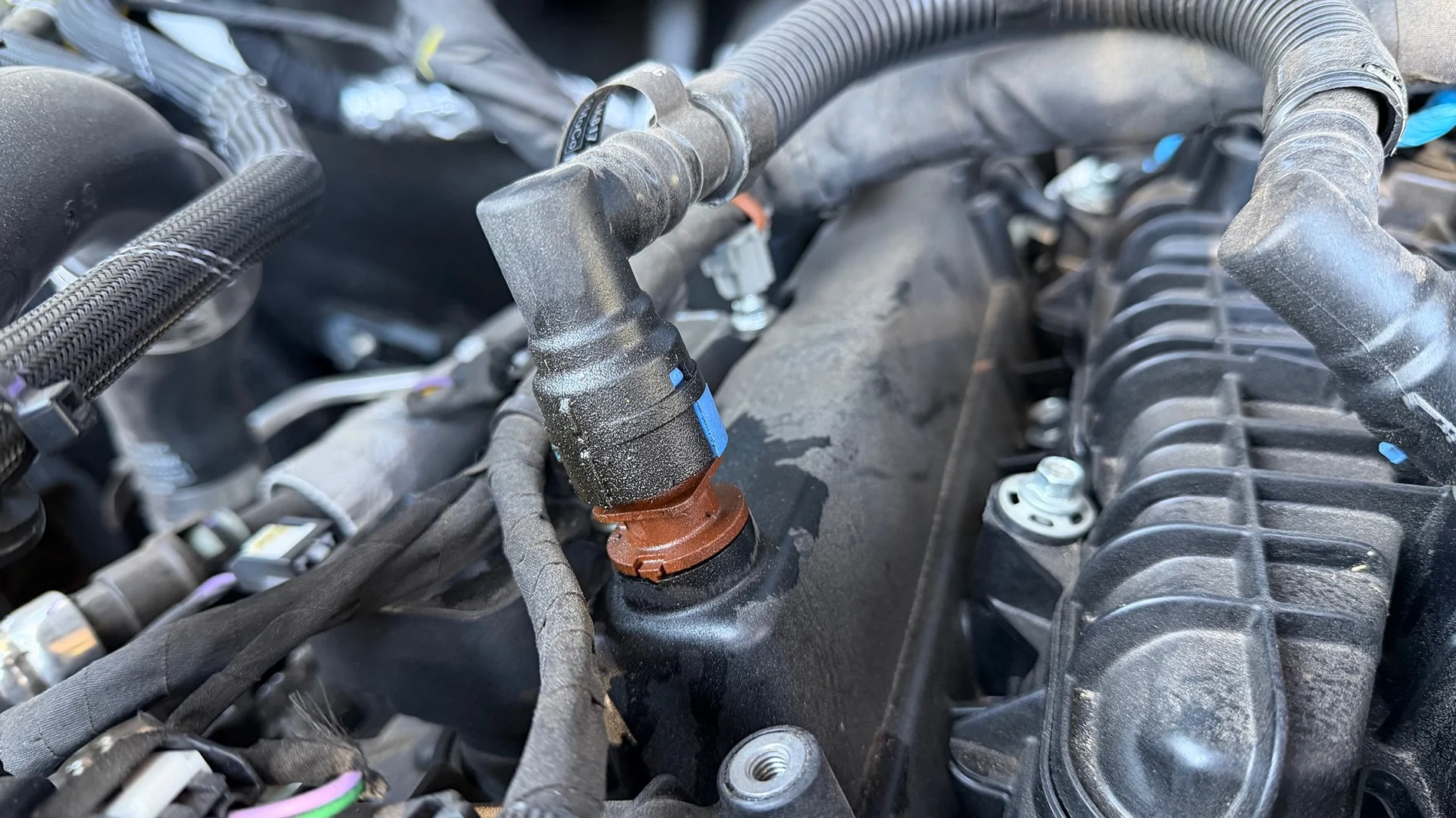
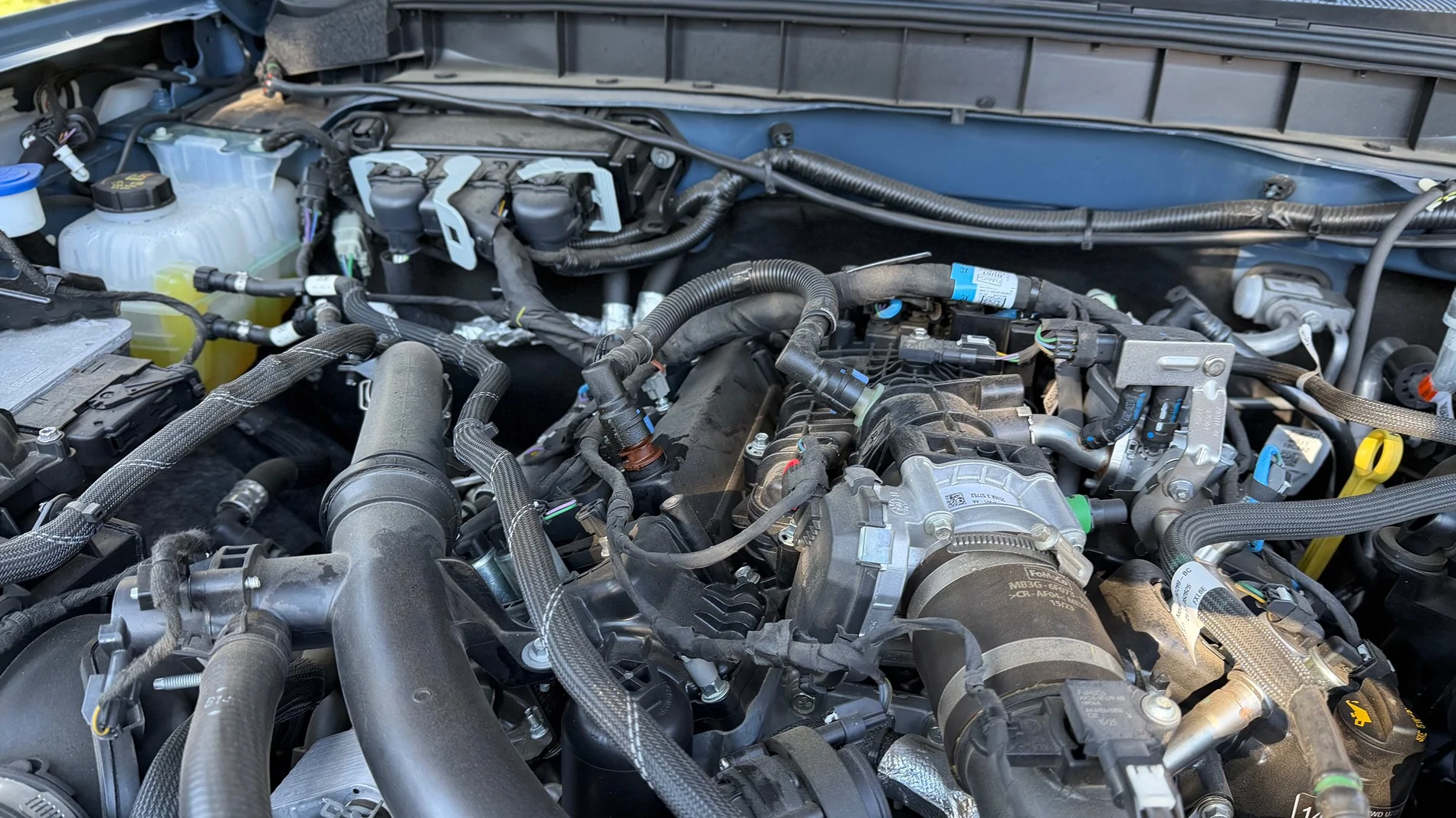
Just wrapped my third trip of Spring/Summer on my 2025 Badlands SAS at 15,000 miles. I opened the hood and saw this.
Before I bring it in, does anyone know what this problem is called?
Gemini had the below and I don’t know enough to verify:

Before I bring it in, does anyone know what this problem is called?
Gemini had the below and I don’t know enough to verify:
This component is part of your Positive Crankcase Ventilation (PCV) system. Specifically, that is the quick-connect hose assembly that vents crankcase gases from the valve cover back into the engine's intake system.
The "oil leak" you see is very common, particularly on the turbocharged EcoBoost engines found in Ford Broncos.
What is Happening?
What you are seeing is oil vapor seepage. Inside the engine, the PCV system recirculates oily gases from the crankcase to be burned in the combustion chamber. Over time, the O-ring seal inside that plastic quick-connect fitting begins to lose its integrity. As a result, a small amount of oil vapor escapes the connection point and accumulates as an oily residue on the outside of the valve cover.
Is it a Major Problem?
In most cases, this is cosmetic and minor. It does not usually indicate a catastrophic engine failure. However, you should address it to ensure it does not worsen, as a failing connection can eventually lead to:
Vacuum leaks: If the seal fails significantly, it can affect engine idle and performance.
Mess: Oil collecting on the engine block can attract dirt and grime.
Recommended Steps
1. Clean the area: Use a mild engine degreaser and a clean shop rag to wipe away the existing oil. This will allow you to see if the leak returns quickly or if it takes a long time to build up again.
2. Inspect the fitting: Gently wiggle the black plastic connector while the engine is off. It should be firm. Check the blue plastic clip to ensure it is fully locked into place and not cracked or broken.
3. Check for "Blow-by": If the area gets dirty again very quickly, it could indicate excessive crankcase pressure (blow-by). If the engine otherwise runs smoothly with no check engine lights, it is likely just a worn-out seal or plastic fitting.
4. Replace the hose assembly: If the residue continues to accumulate significantly, the fix is usually to replace the PCV hose assembly. These are modular "click-in" parts and are generally inexpensive and easy to install without professional help.
5. Consider an Oil Catch Can: Many Ford Bronco owners with EcoBoost engines install an "oil catch can." This is an aftermarket device that installs between the PCV line and the intake. It traps the oil vapor before it enters the intake manifold, keeping your intake cleaner and preventing this type of buildup around the connections.
Sponsored