


- First Name
- John
- Joined
- Sep 3, 2021
- Threads
- 25
- Messages
- 2,528
- Reaction score
- 2,437
- Location
- Pennsylania
- Vehicle(s)
- X4
- Your Bronco Model
- Outer Banks
Good clarity added. What drivers need to understand is that the onboard voltmeter measures the instantaneous voltage of the entire system, not isolated terminal voltage. This of course includes the charging input. When engine is stopped at a light the voltage will drop since there is no charging, but when engine restarts voltage will increase to the alternator output level (minus any resistance voltage losses)I‘m not sure that a 12V 100Ah LiFePO4 battery — popular for off-grid solar power systems and often used as a drop-in replacement for 12V lead acid batteries — is the correct baseline to use when talking about the Bronco’s OEM lead acid battery. According to that link, the LiFePO4 battery is fully charged at 14.6V (or 13.6V resting).
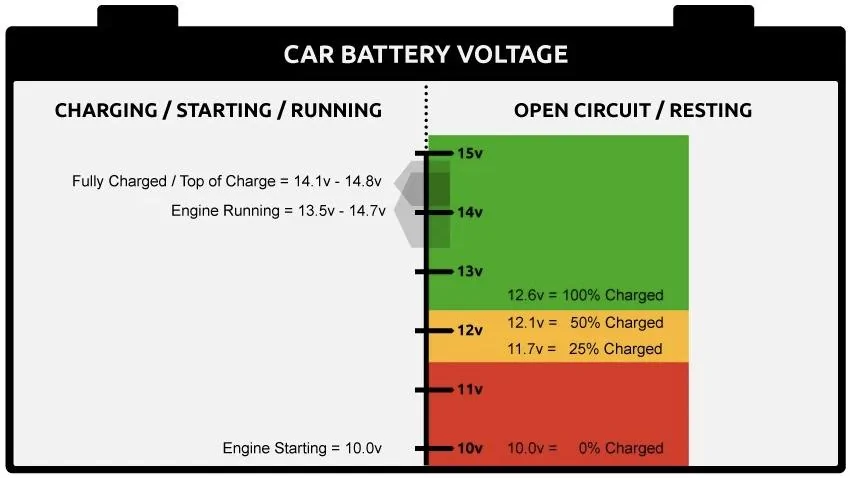
The Bronco’s OEM lead acid battery is a typical, “12V” car battery, but each cell is actually 2.1V, so a “12V” battery is actually fully charged at 12.6V.
The full operating range when the vehicle and charging system are both active is anywhere from 12.6V to just a little over 15.0V (i.e., the green range shown on the chart below).

This chart is listed on the BatteriesPlus Blog at the link below, which provides lots of useful information.
Source: How Do I Find The Voltage of My Car Battery
With the internal diode bypassed a vehicle alternator can put out over 100 volts and we have done so on farm tractors for years to run household tools in the field without an inverter. But 100 volts directly to a 12 volt battery would in short order boil off the electrolyte or otherwise fry the insides. That's why a practical limit of charging systems is somewhere around 15-16 only
Sponsored