
Sponsored
Search results
-
Best Transport Company to ship Bronco?
At work, we always use Reliable. I have also used Pilot successfully (not a Bronco) when Reliable gave me a 'we are too busy/don't want to do it' quote.- mj63
- Post #3
- Forum: General Bronco Topics
-
Another 2.3 brakes issue thread: it's a real problem this time
Thinking about this, it might be a failing (or not properly tightened) front wheel bearing allowing the wheel and brake rotor to twist around the axle/caliper with high lateral force pushing the brake caliper piston in. It might explain the whole 2nd push on the brake pedal seeming to work...- mj63
- Post #23
- Forum: Issues, Repairs, Warranty, TSB, Recalls
-
Another 2.3 brakes issue thread: it's a real problem this time
Just out of curiosity, do you have different diameter tires on the vehicle than what it was built with/configured for? If so, it might be some sort of corruption of the ABS reference speed and ABS thinking that the tires are slipping/skidding.- mj63
- Post #2
- Forum: Issues, Repairs, Warranty, TSB, Recalls
-
Any tall drivers have problems seeing around B pillar in 4 dr?
6"4' here; when I drive a 4dr (work) the b pillar blocks my view and when I drive my wife's 2dr the b pillar doesn't block my view.- mj63
- Post #12
- Forum: General Bronco Topics
-
Brake Failure - Christmas Tree and Check Brake System
All of those functions/features are within the ABS module. If the service department techs are able to pull snapshot data along with each DTC, there might be enough info to figure out which happened first and why. What you felt was what is called "fallback" braking - basically you have to...- mj63
- Post #7
- Forum: Issues, Repairs, Warranty, TSB, Recalls
-
Brake Failure - Christmas Tree and Check Brake System
Diagnostic trouble codes should be stored, if you get a good tech they might be able to figure out what caused the cascading failure.- mj63
- Post #2
- Forum: Issues, Repairs, Warranty, TSB, Recalls
-
Will brakes from Ranger Police Vehicle fit?
Your last thought is actually a really interesting one; the initial build up of brake torque happens at the highest vehicle speed and thus has an out-sized influence on stopping distance. On vacuum boosted brake systems like the 2.3l has, there is generally a piece of open cell foam around the...- mj63
- Post #23
- Forum: Tires, Wheels, Brakes
-
Will brakes from Ranger Police Vehicle fit?
The problem with the logic above is that in reality you are limited by the tire-road friction rather than the torque that your brakes can deliver (at least on the first few panic stops in a row when thermal mass and heat dissipation can limit smaller brake's output torque).- mj63
- Post #15
- Forum: Tires, Wheels, Brakes
-
How much tire pressure do you lose when temps drop?
You can calculate it if you want; assuming that air behaves as an ideal gas (it is close enough), the tire isn't leaking, and the volume is constant (also a pretty good assumption). P * V = n * R * T Where P = pressure, V = volume, n = number of air molecules, R = ideal gas constant, & T =...- mj63
- Post #7
- Forum: Tires, Wheels, Brakes
-
ABS light, Service AdvanceTrac, Park Aid Fault, etc
#5 would concern me as well, sounds like a really delayed fault recognition, and in the interim between failed sensor and fault recognition calculating the reference speed with one of the two rear wheelspeed sensors reading zero - in effect cutting the vehicle speed being reported to the cruise...- mj63
- Post #50
- Forum: Issues, Repairs, Warranty, TSB, Recalls
-
Aviation Photo and BS thread
Working on my instrument rating, slower than I would like...- mj63
- Post #283
- Forum: General Auto & Other Vehicles Talk
-
Michigan Bronco Club
My wife and I will likely go (registered at the link provided), but may end up canceling at the last minute depending on how she is feeling after her flu shot on Friday afternoon. -
I ordered a Ford Maverick, anyone else?
The Maverick Tremor is more capable off-road than it has any right to be. On deformable surfaces, in Sand mode (i.e. full torque vectoring) with traction control turned off it feels like a long wheelbase Focus RS!- mj63
- Post #34
- Forum: General Auto & Other Vehicles Talk
-
Used Premium Fuel for the First Time
Because the in tank fuel pump is cooled by being immersed in fuel, when the tank is very low there is little to no cooling available for the in tank fuel pump.- mj63
- Post #66
- Forum: General Bronco Topics
-
A nightmare experience with these guys
You have nothing to worry about if you only made it for your own use; IP protection for the owner of the IP only applies if you try to sell the widget.- mj63
- Post #12
- Forum: Vendor / Dealer Reviews and Feedback
-
October 2022 production run
It looks like you are scheduled to be built 10/22/22- mj63
- Post #10
- Forum: Ordering, Pricing, Production, Tracking, Delivery
-
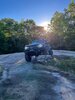
1st wheeling trip, all went great, but have questions?
It is my day job... (though not on the Bronco) You can read all 169 pages of the proposed rule here (probably the easiest to read): https://www.nhtsa.gov/sites/nhtsa.gov/files/fmvss/ESC_FRIA_%2003_2007_0.pdf You will likely be most interested in section E on page II-12 and II-13 Actual law...- mj63
- Post #17
- Forum: Trip Reports / Journals
-
1st wheeling trip, all went great, but have questions?
In this case, it is actually a FMVSS 126 regulation - one of the requirements within the regulation is that the vehicle must be in a FMVSS 126 compliant mode when the vehicle is started (i.e. user input is required in order to go into a mode with potentially less effective stability control)...- mj63
- Post #14
- Forum: Trip Reports / Journals
-
lockers quit working
Sounds like an ABS module that wasn't able to find center (steering) after a fault, so wasn't able to clear the fault to me.- mj63
- Post #3
- Forum: Issues, Repairs, Warranty, TSB, Recalls
-
Rear sway bar
In theory, it shouldn't (i.e. with frictionless rotating bushings)... but in the real world, delrin/plastic sway bar bushings get worn and noisy so the OEMs tend towards using a rubber bushing bonded to the sway bar. That bushing gets twisted when going into either jounce or rebound (obviously...- mj63
- Post #19
- Forum: Suspension, Chassis, Steering