

- Thread starter
- #1
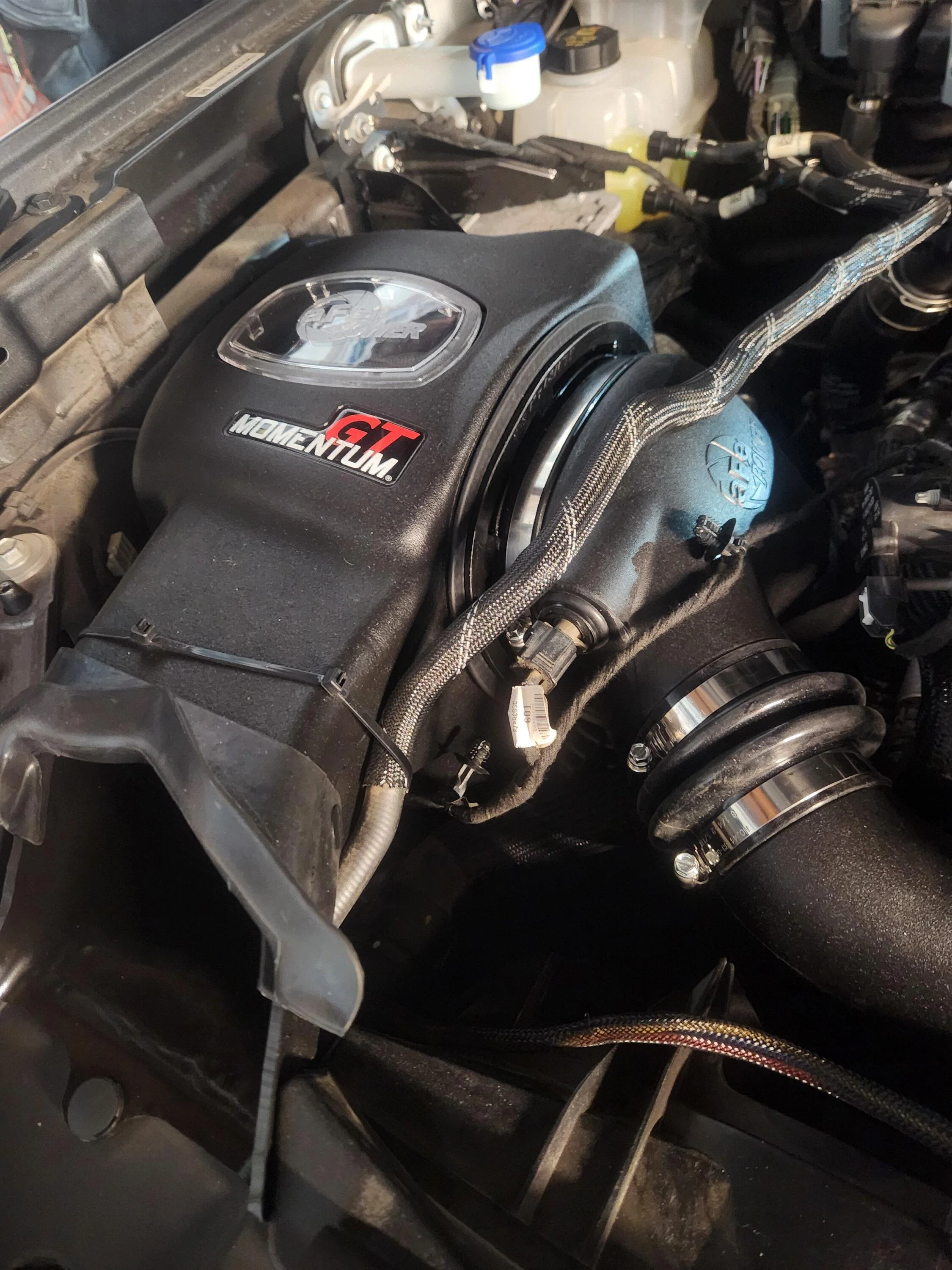
I recently scored an aFe cold air box. Enticed by horsepower and torque increase claims, I relentlessly studied offerings from K&N, Mishimoto, Ingen, and aFe. Mishimoto with several weeks or months out, Injen had not yet been released, and I passed on K&N. I didn't even consider the Roush offering because it was air filter only. If you live in California, note that many vendors will not ship to you because their unit is not CARB compliant. Some vendors will have you click a box that says it's for off-road use only, and then you'll be able to get it delivered when it becomes available.
Note that whether or not you should get a cold air box depends entirely on what your goal is. If your goal is to reduce a suspected restrictive air box, the simple way to determine if you have a restrictive one is to dyno test with your air filter and OEM box intact, and then do a run with the air filter removed. If there is even a slight increase, then you can fault the air filter itself. Note that that test would not account for restrictions in the plumbing after the air box to the turbos or for the design of the air box itself. Also note that our OEM air box already is a "cold air" box because it routes to the area right above the grill on the passenger side and does not allow in any underhood air.
If your goal is to go the teenager route and make a whole bunch of noise under the hood, then the K&N design would work... because it has an open panel on the top of the air box that cannot be closed...it sucks hot air from under the hood, and although at certain ambient temperatures before engine is full operating temp It may be effective, I passed on it because I do a lot of crawling and the last thing I want is to be sucking in superheated air from under my hood. I also found that with an open air box design on my LJ that all that added noise gets old after a while. If open boxes your style, at least when you step on the accelerator it'll sound like you're going faster...
If your goal is to have the most efficient filtering, then the OEM filter in box is adequate. If you want to have a larger capacity filter, then any of the aftermarket options offers that...I personally chose to go with a dry filter design so that I could wash it when needed but not have to worry about oiling. Although everyone was going to have a different opinion on this, I had a bad experience with a K&N filter on a Porsche that almost immediately wiped out my mass air flow sensor...even though I use the exact amount of measured oil applied exactly as KN instructed me to do so. Some sensors are more sensitive than others, and I just didn't want to take the chance of going through that headache with the Bronco. Additionally, although a K&N filter that's oiled does allow slightly more air flow than a dry filter, the reason it does so is because it lets more air in...along with more dirt particles. Yes, the oil will trap some if not most of the particles, but there have been very accurate tests conducted with dry and oiled and OEM filters and time and time again OEM filters the best followed by a dry filter and in last place is the oiled filter.
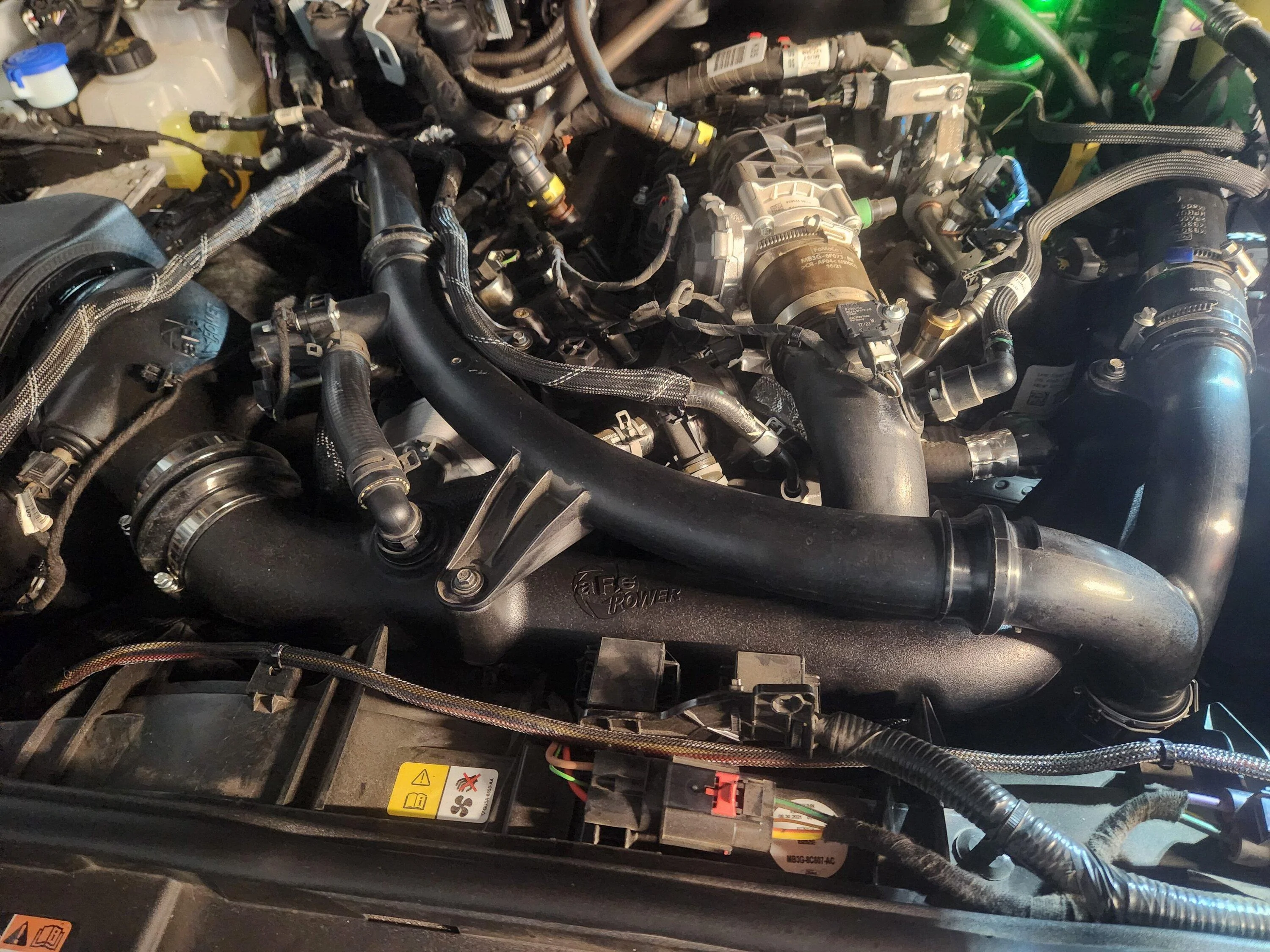
On to my impressions...the air box and associated plumbing was very easy to install. The only pain in the ass was getting the spring clip off the turbo housing. I was able to squeeze it with a pair of pliers to the point where It almost locked open, but properly remove the clamp you should have one of those spring clamp tools with a 90° bend in it. After installing the immediate thing I noticed is that when you put the filter into the air box there is a pretty significant gap all the way around the filter...and there is no way that that gap would not allow the filter to suck in some hot air from under the hood. That may not bother most people, but I'm a little OCD and for me I wanted a good tight seal. I emailed tech support and got routed to an engineer from AFE, and he claims that the tolerances are as intended based on the drawings. I still didn't like it, so I went to McMaster-Carr and purchased some half inch wide u channel that was heat resistant flexible and easily installed. After installing the channel, the filter became a very tight fit and I'm confident that no underhood air will get sucked in. The downside is that it's such a tight fit that I wasn't able to put a mesh pre-filter over the pleated filter because there's just not enough clearance left. Based on the design alone, and the fact that you have to do a modification to a $500 product to get it to work as most people would want it to, I would have in retrospect gone with the Mishimoto or the Injen...but not having either kit in front of me I can't ascertain as to whether or not those filters fit tightly either.
The other reason I would recommend going with an Injen In addition to the filter possibly sealing up against the box better is the fact that they also replace the driver side 90° plastic ductwork that goes directly above the turbo...the Mishimoto and the aFe kids do not replace that piece. Interestingly enough, the Injen website also claims a higher horsepower gain than either AFE or K&N boasts...and I'm not sure if that's just wishful dynamometer work or if it's because the kit eliminates another potential restriction. If that is the case, I'm not sure if the other kids without addressing that restriction supply and unequal balance of fresh air to the turbos or if that even matters...there is no equalization tube, and I suspect that not replacing that restriction doesn't have too negative of an effect because our engines probably already breathe with all the air they need.
In regard to performance, there is definitely no seat of the pants immediate noticeable increase in anything. Hopefully it means my engine can breathe better, and I can go slightly longer between filter changes (or in this case cleanings), but in retrospect I would have held out for the Injen system.
Note that whether or not you should get a cold air box depends entirely on what your goal is. If your goal is to reduce a suspected restrictive air box, the simple way to determine if you have a restrictive one is to dyno test with your air filter and OEM box intact, and then do a run with the air filter removed. If there is even a slight increase, then you can fault the air filter itself. Note that that test would not account for restrictions in the plumbing after the air box to the turbos or for the design of the air box itself. Also note that our OEM air box already is a "cold air" box because it routes to the area right above the grill on the passenger side and does not allow in any underhood air.
If your goal is to go the teenager route and make a whole bunch of noise under the hood, then the K&N design would work... because it has an open panel on the top of the air box that cannot be closed...it sucks hot air from under the hood, and although at certain ambient temperatures before engine is full operating temp It may be effective, I passed on it because I do a lot of crawling and the last thing I want is to be sucking in superheated air from under my hood. I also found that with an open air box design on my LJ that all that added noise gets old after a while. If open boxes your style, at least when you step on the accelerator it'll sound like you're going faster...
If your goal is to have the most efficient filtering, then the OEM filter in box is adequate. If you want to have a larger capacity filter, then any of the aftermarket options offers that...I personally chose to go with a dry filter design so that I could wash it when needed but not have to worry about oiling. Although everyone was going to have a different opinion on this, I had a bad experience with a K&N filter on a Porsche that almost immediately wiped out my mass air flow sensor...even though I use the exact amount of measured oil applied exactly as KN instructed me to do so. Some sensors are more sensitive than others, and I just didn't want to take the chance of going through that headache with the Bronco. Additionally, although a K&N filter that's oiled does allow slightly more air flow than a dry filter, the reason it does so is because it lets more air in...along with more dirt particles. Yes, the oil will trap some if not most of the particles, but there have been very accurate tests conducted with dry and oiled and OEM filters and time and time again OEM filters the best followed by a dry filter and in last place is the oiled filter.
On to my impressions...the air box and associated plumbing was very easy to install. The only pain in the ass was getting the spring clip off the turbo housing. I was able to squeeze it with a pair of pliers to the point where It almost locked open, but properly remove the clamp you should have one of those spring clamp tools with a 90° bend in it. After installing the immediate thing I noticed is that when you put the filter into the air box there is a pretty significant gap all the way around the filter...and there is no way that that gap would not allow the filter to suck in some hot air from under the hood. That may not bother most people, but I'm a little OCD and for me I wanted a good tight seal. I emailed tech support and got routed to an engineer from AFE, and he claims that the tolerances are as intended based on the drawings. I still didn't like it, so I went to McMaster-Carr and purchased some half inch wide u channel that was heat resistant flexible and easily installed. After installing the channel, the filter became a very tight fit and I'm confident that no underhood air will get sucked in. The downside is that it's such a tight fit that I wasn't able to put a mesh pre-filter over the pleated filter because there's just not enough clearance left. Based on the design alone, and the fact that you have to do a modification to a $500 product to get it to work as most people would want it to, I would have in retrospect gone with the Mishimoto or the Injen...but not having either kit in front of me I can't ascertain as to whether or not those filters fit tightly either.
The other reason I would recommend going with an Injen In addition to the filter possibly sealing up against the box better is the fact that they also replace the driver side 90° plastic ductwork that goes directly above the turbo...the Mishimoto and the aFe kids do not replace that piece. Interestingly enough, the Injen website also claims a higher horsepower gain than either AFE or K&N boasts...and I'm not sure if that's just wishful dynamometer work or if it's because the kit eliminates another potential restriction. If that is the case, I'm not sure if the other kids without addressing that restriction supply and unequal balance of fresh air to the turbos or if that even matters...there is no equalization tube, and I suspect that not replacing that restriction doesn't have too negative of an effect because our engines probably already breathe with all the air they need.
In regard to performance, there is definitely no seat of the pants immediate noticeable increase in anything. Hopefully it means my engine can breathe better, and I can go slightly longer between filter changes (or in this case cleanings), but in retrospect I would have held out for the Injen system.
Sponsored